Apollo
logo
Select Delivery Location
Best Price

₹162 with bank offers

View
OffersOffers & Discounts

Get Free delivery (₹99) with circle icon

Join Circle
coupon
Extra 10% Off with Bank Offers
bank offer
bank offer
bank offer

More about the Product

Manufacturer/Marketer :

Zuventus Healthcare Ltd

Consume Type :

Topical

Expires on or after :

Jun-27

Return Policy :

Not Returnable

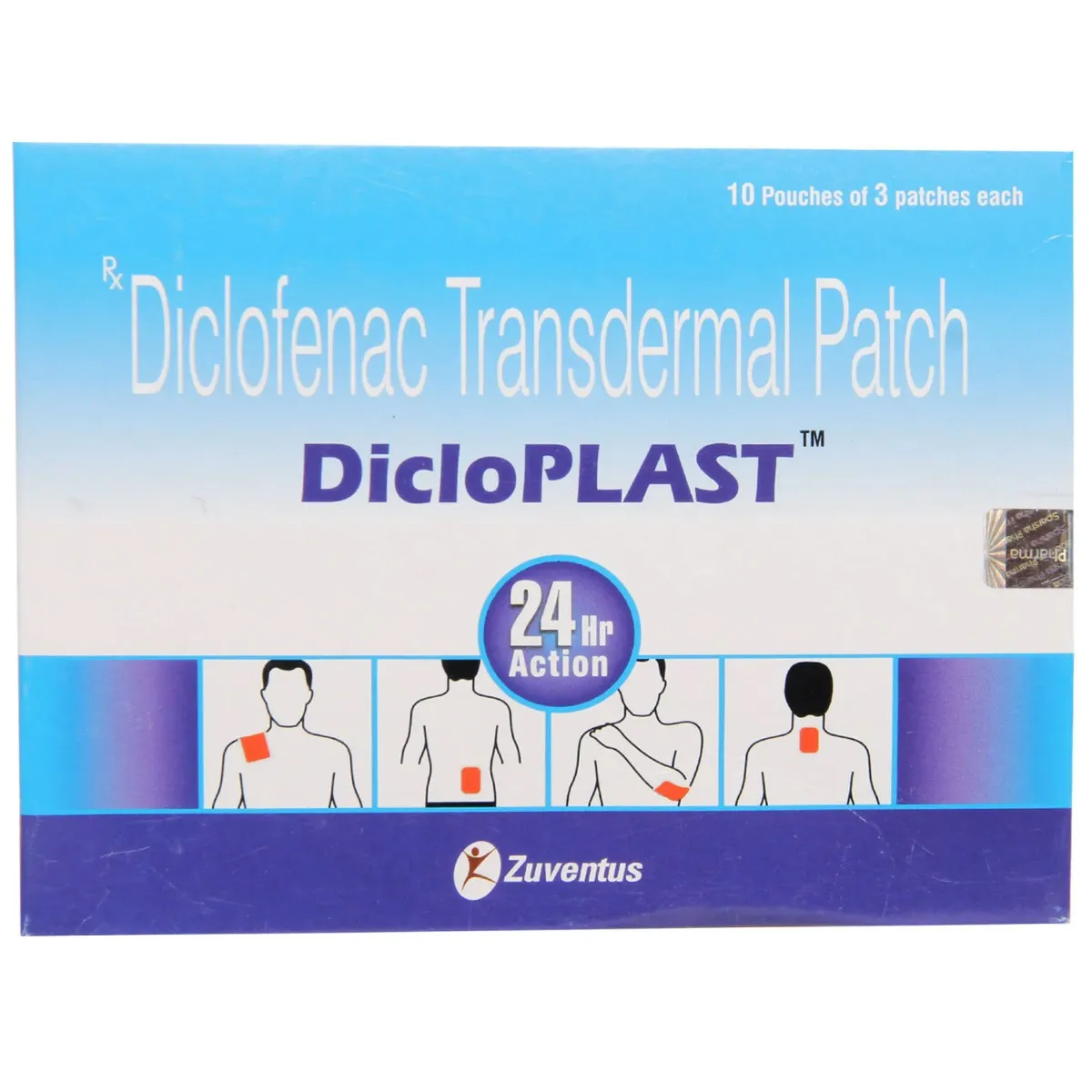
About Dicloplast Patch

Dicloplast Patch is a topical pain-relieving medicine used to treat pain, swelling, and inflammation in your joints, muscles, and ligaments. It is commonly prescribed for conditions like osteoarthritis, sprains, strains, and sports injuries. By targeting the pain directly at the source, it helps restore your physical comfort and mobility.

For the best results, you should apply Dicloplast Patch consistently at the same times every day as directed by your doctor. Because this is a skin application, food does not affect how it works, but you should always apply it to clean, dry, and unbroken skin. Combining this treatment with gentle stretching, adequate rest, and maintaining a healthy weight can significantly improve your recovery.

While Dicloplast Patch is generally well-tolerated, some people may experience mild skin irritation, redness, or itching where it is applied. If you develop severe skin peeling, shortness of breath, or swelling of the face, stop using it immediately and seek medical attention. Talk to your doctor if your symptoms do not improve after a few days of regular use.

Do not use Dicloplast Patch if you have ever had an allergic reaction, asthma attack, or hives after taking aspirin or other pain relievers. You should also avoid applying it to open wounds, skin infections, or severely damaged skin. Talk to your doctor before starting Dicloplast Patch if you have a history of stomach ulcers, kidney problems, or heart disease.

Although skin absorption is low, using Dicloplast Patch alongside other oral pain relievers may increase the risk of side effects like stomach irritation. Avoid smoking and limit alcohol consumption, as they can worsen the risk of stomach ulcers associated with pain medications. If you are pregnant, breastfeeding, or an older adult, consult your doctor or pharmacist before using Dicloplast Patch.

Uses of Dicloplast Patch

Dicloplast Patch is used in the treatment of pain and inflammation of muscles and joints. The detailed uses of Dicloplast Patch are as follows:

  • Osteoarthritis: Dicloplast Patch helps reduce pain, swelling, and stiffness in affected joints, improving movement and daily activities.
  • Sprains and Strains: It helps relieve pain and inflammation caused by muscle strains, ligament injuries, and sports-related trauma.
  • Tendonitis and Bursitis: It helps reduce inflammation and pain in tendons and bursae, improving comfort and joint function.
  • Backache and Muscle Soreness: It helps relieve muscular pain, stiffness, and inflammation in the back, neck, shoulders, and other affected muscles.

Key Benefits

Dicloplast Patch helps relieve pain and inflammation by acting directly at the affected area. Its topical formulation provides targeted relief while helping improve movement and supporting recovery from musculoskeletal conditions.

Benefits may include:

  • Helps provide targeted relief from localized muscle and joint pain.
  • Reduces swelling, inflammation, and stiffness, improving comfort and flexibility.
  • Supports faster recovery from minor injuries such as sprains, strains, and sports-related injuries.
  • Helps restore joint mobility, making daily activities and exercise more comfortable.
  • Has minimal absorption into the bloodstream compared with oral pain medicines, which may reduce the risk of body-wide side effects.
  • Improves overall physical function and quality of life when used as prescribed.

Key Ingredients

Diclofenac Diethylamine Bp
Side effects of Dicloplast Patch
Dealing with Medication-Induced Headache:
  • Hydrate your body: Drink enough water to prevent dehydration and headaches.
  • Calm Your Mind: Deep breathing and meditation can help you relax and relieve stress.
  • Rest and Recharge: Sleep for 7-8 hours to reduce headache triggers.
  • Take rest: lie down in a quiet, dark environment.
  • Cold or warm compresses can help reduce tension.
  • Stay Upright: Maintain good posture to keep symptoms from getting worse.
  • To treat headaches naturally, try acupuncture or massage therapy.
  • Over-the-counter pain relievers include acetaminophen and ibuprofen.
  • Prescription Assistance: Speak with your doctor about more substantial drug alternatives.
  • Severe Headaches: Seek emergency medical assistance for sudden, severe headaches.
  • Frequent Headaches: If you get reoccurring headaches, consult your doctor.
  • Headaches with Symptoms: Seek medical attention if your headaches include fever, disorientation, or weakness.

Directions for Use

  • One patch to be applied for one day or as advised by your doctor.
  • Apply the patch directly onto the affected area of your skin. Make sure the skin is clean, dry, and free from any cuts or irritation before applying the patch. Press it gently to ensure it sticks well.
  • Apply immediately after removing the protective covering. Do not cut the patch.
  • The patch should be applied to the non-hairy area.

How Dicloplast Patch Works

Dicloplast Patch is a topical non-steroidal anti-inflammatory drug (NSAID) that works by penetrating through the skin to reach the affected muscles, joints, and tissues. It blocks cyclooxygenase (COX) enzymes that produce prostaglandins, the chemical messengers responsible for pain, redness, swelling, and inflammation. By reducing these inflammatory chemicals at the site of application, it helps relieve pain, decrease swelling, and improve movement, providing targeted relief with minimal absorption into the rest of the body.
bannner image

Alcohol

Consult your doctor

It is not known if alcohol affects Dicloplast Patch. Please consult a doctor.

bannner image

Pregnancy

Consult your doctor

Please consult your doctor if you have any concerns regarding this; your doctor will prescribe only if the benefits outweigh the risks.

bannner image

Breast Feeding

Consult your doctor

Consult your doctor if you are breastfeeding; your doctor will decide whether Dicloplast Patch can be used by breastfeeding mothers or not.

bannner image

Driving

Safe if prescribed

Dicloplast Patch is unlikely to affect your ability to drive.

bannner image

Liver

Consult your doctor

Please consult your doctor if you have a liver impairment or any concerns regarding this.

bannner image

Kidney

Consult your doctor

Please consult your doctor if you have kidney impairment or any concerns regarding this.

bannner image

Children

Caution

The safety of Dicloplast Patch in children has not been established. If you have any concerns regarding the use of Dicloplast Patch for children, please consult a doctor.

bannner image

Heart

Caution

Dicloplast Patch should be used with caution in patients with heart problems. Therefore, please inform your doctor before using Dicloplast Patch.

bannner image

Geriatrics

Caution

Dicloplast Patch should be used with caution in elderly patients due to an increased risk of side effects. If you have any concerns about using Dicloplast Patch for geriatrics, please consult a doctor

What if I have taken an overdose of Dicloplast Patch

An overdose is highly unlikely when Dicloplast Patch is applied to the skin as directed. However, if you or someone else accidentally swallows Dicloplast Patch, or if you apply far too much over a large area, contact a doctor or go to the nearest emergency room immediately.

Diet & Lifestyle Advise

  • Maintain a healthy weight: Excess weight places extra stress on weight-bearing joints like your knees and hips, which can worsen joint pain.
  • Engage in low-impact exercise: Activities like swimming, cycling, and walking strengthen the muscles around your joints without putting excessive pressure on them.
  • Apply cold or warm compresses: Use an ice pack for acute swelling and injuries, or a warm compress for chronic muscle stiffness, in between your scheduled applications of Dicloplast Patch.
  • Eat an anti-inflammatory diet: Incorporate foods rich in omega-3 fatty acids (like fish, walnuts, and flaxseeds) and antioxidants (like berries and leafy greens) to help naturally manage inflammation.
  • Practice proper posture: Maintain good posture when sitting or lifting heavy objects to protect your spine and back muscles from unnecessary strain.
health query

Have a query?

How Soon It Starts Working

  • The time required for Dicloplast Patch to start to work: Dicloplast Patch ideally shows its action within few hours after application.
  • The time for which the effects of Dicloplast Patch last: The duration of action for Dicloplast Patch is unknown.

What if you forget to take Dicloplast Patch

If you forget to apply Dicloplast Patch, apply it as soon as you remember. However, if it is almost time for your next scheduled application, skip the missed dose and continue with your regular schedule. Do not apply double the amount to make up for a missed application.

Storage

• Store Dicloplast Patch at room temperature, ideally between 15°C and 30°C (59°F to 86°F).

Drug Warnings

  • Apply only to healthy skin: Do not apply Dicloplast Patch to open wounds, cuts, scrapes, eczema, or infected skin.
  • Avoid contact with sensitive areas: Keep Dicloplast Patch away from your eyes, nose, mouth, and other mucous membranes. If accidental contact occurs, rinse the area immediately with plenty of clean water.
  • Do not cover or heat the treated area: Avoid using airtight bandages, plastic wraps, heating pads, or other heat sources over the application site, as this may increase medicine absorption and the risk of side effects.
  • Protect the treated skin from sunlight: Avoid direct sunlight and sunlamps while using Dicloplast Patch, as the treated skin may become more sensitive to sunburn.
  • Avoid applying other topical products: Do not apply cosmetics, sunscreen, insect repellent, or other topical products to the treated area at the same time unless advised by your healthcare provider.
  • Consult your doctor if: Stop using the gel and seek medical advice if you develop severe skin dryness, redness, irritation, blistering, or a rash while using Dicloplast Patch.

Drug-Drug Interactions

verifiedApollotooltip
  • Blood thinners (e.g., warfarin): Taking these medicines with Dicloplast Patch may slightly increase the risk of bruising or bleeding, especially with prolonged use or application over large areas.
  • Corticosteroids (e.g., prednisolone, prednisone): Using these medicines alongside Dicloplast Patch may increase the risk of stomach irritation, ulcers, or gastrointestinal bleeding.

Drug-Drug Interactions

Login/Sign Up

How does the drug interact with Dicloplast Patch:
Co-administration of Dicloplast Patch with Meloxicam can increase the risk or severity of gastrointestinal side effects.

How to manage the interaction:
Taking Meloxicam with Dicloplast Patch is not recommended as it can possibly result in an interaction, it can be taken if your doctor has advised it. However, consult your doctor immediately if you experience symptoms such as dizziness, lightheadedness, red or black, tarry stools, coughing up or vomiting fresh or dried blood that looks like coffee grounds, severe headache, and weakness. Do not stop any medication without doctor's advise.
How does the drug interact with Dicloplast Patch:
Taking Dasatinib together with Dicloplast Patch may increase the risk of bleeding.

How to manage the interaction:
There may be a possible interaction between Dicloplast Patch and Dasatinib but they can be taken together if a doctor has prescribed them. However, consult a doctor immediately if you experience dizziness, red or black, tarry stools, or severe headaches. Do not discontinue any medications without consulting a doctor.
How does the drug interact with Dicloplast Patch:
Coadministration of Dicloplast Patch with Ketoconazole may increase the risk of liver problems.

How to manage the interaction:
There may be a possible interaction between Dicloplast Patch and Ketoconazole, but they can be taken together if a doctor has prescribed them. However, consult a doctor immediately if you have fever, chills, joint pain or swelling, unusual bleeding or bruising, skin rash, itching, loss of appetite, fatigue, nausea, vomiting, abdominal pain, dark colored urine, light colored stools, and/or yellowing of the skin or eyes. Do not discontinue any medications without consulting a doctor.
How does the drug interact with Dicloplast Patch:
Taking Dicloplast Patch with human immunoglobulin may increase the risk of kidney problems.

How to manage the interaction:
Although there is an interaction between Human immunoglobulin and Dicloplast Patch, you can take these medicines together if prescribed by a doctor. However, consult the doctor immediately if you experience symptoms such as nausea, vomiting, loss of appetite, increased or decreased urination, sudden weight gain or weight loss, fluid retention, swelling, shortness of breath, muscle cramps, tiredness, weakness, dizziness, confusion, and irregular heart rhythm. Do not discontinue any medications without consulting a doctor.
How does the drug interact with Dicloplast Patch:
The combined use of Dicloplast Patch and Indomethacin can increase the risk of stomach bleeding and ulcers.

How to manage the interaction:
Co-administration of Dicloplast Patch and Indomethacin can lead to an interaction, it can be taken if advised by your doctor. However, if you experience any symptoms like unusual bleeding or bruising, dizziness, lightheadedness, red or black, tarry stools, coughing up or vomiting fresh or dried blood that looks like coffee grounds, severe headache, and weakness, consult a doctor immediately. Do not stop using any medications without a doctor's advice.
DiclofenacMipomersen
Severe
How does the drug interact with Dicloplast Patch:
Co-administration of Dicloplast Patch with Mipomersen may cause liver problems.

How to manage the interaction:
Co-administration of Dicloplast Patch and Mipomersen can lead to an interaction, it can be taken if advised by your doctor. However, if you experience any symptoms like fever, chills, joint pain or swelling, unusual bleeding or bruising, skin rash, itching, loss of hunger, fatigue, nausea, vomiting, abdominal pain, dark urine, pale stools, and/or yellowing of the skin or eyes. Do not discontinue any medications without consulting a doctor.
How does the drug interact with Dicloplast Patch:
Co-administration of Dicloplast Patch and Ramucirumab can cause bleeding and ulcers.

How to manage the interaction:
Co-administration of Dicloplast Patch and Ramucirumab can lead to an interaction; it can be taken if advised by your doctor. However, if you experience any symptoms like unusual bleeding or bruising, dizziness, lightheadedness, red or black, tarry stools, coughing up or vomiting fresh or dried blood that looks like coffee grounds, severe headache, and weakness, consult your doctor immediately. Do not stop using any medications without a doctor's advice.
DiclofenacOxaprozin
Severe
How does the drug interact with Dicloplast Patch:
Taking Dicloplast Patch and oxaprozin can increase the risk of side effects.

How to manage the interaction:
Co-administration of Dicloplast Patch and oxaprozin can lead to an interaction; it can be taken if advised by your doctor. However, if you experience any symptoms like unusual bleeding or bruising, dizziness, lightheadedness, red or black, tarry stools, coughing up or vomiting fresh or dried blood that looks like coffee grounds, severe headache, and weakness, consult your doctor immediately. Do not stop using any medications without a doctor's advice.
How does the drug interact with Dicloplast Patch:
Taking Dicloplast Patch with Panobinostat can increase the risk of bleeding complications.

How to manage the interaction:
There may be a possible interaction between Dicloplast Patch and Panobinostat, but they can be taken together if your doctor has prescribed them. However, consult your doctor immediately if you experience any unusual bleeding or have other signs of bleeding like dizziness, lightheadedness, red or black, tarry stools, coughing up or vomiting fresh or dried blood that looks like coffee grounds, severe headaches. Do not discontinue any medications without consulting your doctor.
DiclofenacLomitapide
Severe
How does the drug interact with Dicloplast Patch:
Taking Dicloplast Patch with Lomitapide will have an additive effect and may cause liver problems.

How to manage the interaction:
There may be a possible interaction between Dicloplast Patch and Lomitapide, but they can be taken together if your doctor has prescribed them. However, consult your doctor immediately if you have fever, chills, joint pain or swelling, unusual bleeding or bruising, skin rash, itching, loss of appetite, fatigue, nausea, vomiting, abdominal pain, dark colored urine, light colored stools, and/or yellowing of the skin or eyes. Do not stop using any medications without a doctor's advice.

Drug-Food Interactions

verifiedApollotooltip
  • No clinically significant food interactions are known with Dicloplast Patch when used as directed.
No Drug - Food interactions found in our database. Some may be unknown. Consult your doctor for what to avoid during medication.

Drug-Food Interactions

Login/Sign Up

Habit Forming

No

Therapeutic Class

[ANALGESICS]

FAQs

Dicloplast Patch is used to relieve pain and inflammation associated with tennis elbow (swelling of tendons in the elbow), arthritis (joint pain), scapular inflammation (inflammation in the bursa under the shoulder blade), tendovaginitis (inflammation of the tendon sheath), peritendinitis (inflammation of the tendon), swelling and pain after trauma, and myalgia (muscle pain).
Dicloplast Patch works by blocking the effect of chemical messengers that cause pain and inflammation at the injured or damaged site. Thereby, Dicloplast Patch helps in providing relief from pain.
Dicloplast Patch is used to reduce and relieve pain and inflammation associated with osteoarthritis. It is a joint disease in which the two ends of the joints come together due to the breakdown of a protective covering called cartilage.
Avoid concomitant use of Dicloplast Patch with other topical products such as cosmetics, sunscreens, lotions, moisturisers, insect repellent creams, and other gels.
The side effects of Dicloplast Patch are typically mild and limited to the application site. Common side effects include itching, redness, and dryness. Most of these side effects are temporary and resolve on their own over time. However, if any of these side effects persist or worsen, it's essential to consult your doctor for further guidance.
Dicloplast Patchl is generally considered safe when used as directed by your doctor for short-term relief of pain and inflammation in conditions like muscle strains, sprains, and arthritis. However, it's essential to use it responsibly and avoid applying it to broken or irritated skin, near the eyes, or using it excessively.
Dicloplast Patch should not be used by people who are allergic to any of its components, or have aspirin-induced asthma or a history of asthma. It should be used carefully in patients with bronchial asthma.
Dicloplast Patch should be used during pregnancy only if specifically recommended by a healthcare provider. Avoid using it during the last three months of pregnancy, as medicines of this type may harm the unborn baby or cause complications during delivery. During earlier stages of pregnancy, use it only when the expected benefit outweighs the potential risk and as advised by your doctor.
No. Do not apply Dicloplast Patch to open wounds, cuts, scraped or irritated skin, rashes, infections, or other damaged skin. Applying it to broken skin may cause irritation and increase the amount of medicine absorbed into the body. Apply Dicloplast Patch only to healthy, intact skin. Talk to your doctor if you have skin lesions or damaged skin in the area that requires treatment.
If you have a history of asthma attacks, hives, or allergic reactions triggered by aspirin or other oral pain relievers, you must not use Dicloplast Patch. For other types of asthma, consult your healthcare provider to ensure it is safe. Consult your doctor before starting treatment.
No, you should not cover the treated area with airtight bandages, plastic wraps, or heating pads. Doing so can trap Dicloplast Patch against the skin, increasing its absorption and the risk of side effects. You may cover it with loose clothing once the gel is completely dry.
If Dicloplast Patch accidentally gets into your eyes, rinse them immediately and thoroughly with large amounts of cool, clean water. If irritation, burning, or vision changes persist after rinsing, seek medical help. Inform your doctor if you experience lasting discomfort.
While occasional moderate alcohol consumption is generally safe because topical absorption is low, heavy drinking can increase your risk of stomach irritation or bleeding when using pain relievers. To be safe, limit your alcohol intake during treatment.
You should avoid using other oral nonsteroidal anti-inflammatory drugs (NSAIDs) while using Dicloplast Patch unless specifically advised by your doctor. Combining them can increase the likelihood of side effects like stomach upset, kidney issues, or bleeding. Consult your doctor to find the safest combination for your pain relief.

Disclaimer

While we strive to provide complete, accurate, and expert-reviewed content on our 'Platform', we make no warranties or representations and disclaim all responsibility and liability for the completeness, accuracy, or reliability of the aforementioned content. The content on our platform is for informative purposes only, and may not cover all clinical/non-clinical aspects. Reliance on any information and subsequent action or inaction is solely at the user's risk, and we do not assume any responsibility for the same. The content on the Platform should not be considered or used as a substitute for professional and qualified medical advice. Please consult your doctor for any query pertaining to medicines, tests and/or diseases, as we support, and do not replace the doctor-patient relationship.

Country of origin

India

Manufacturer/Marketer address

Office No. 5119, 5th Floor, 'D' Wing, Oberoi Garden Estates, Chandivili, Andheri (E), Mumbai - 400 072.
Other Info - DIC0457
whatsapp Floating Button
Buy Now
Add to Cart