Apollo
logo
Select Delivery Location
Best Price

₹63 with bank offers

View
OffersOffers & Discounts

Get Free delivery (₹99) with circle icon

Join Circle
coupon
Extra 10% Off with Bank Offers
bank offer
bank offer
bank offer

More about the Product

Manufacturer/Marketer :

Cipla Ltd

Consume Type :

Oral

Expires on or after :

Jan-27

Return Policy :

Not Returnable

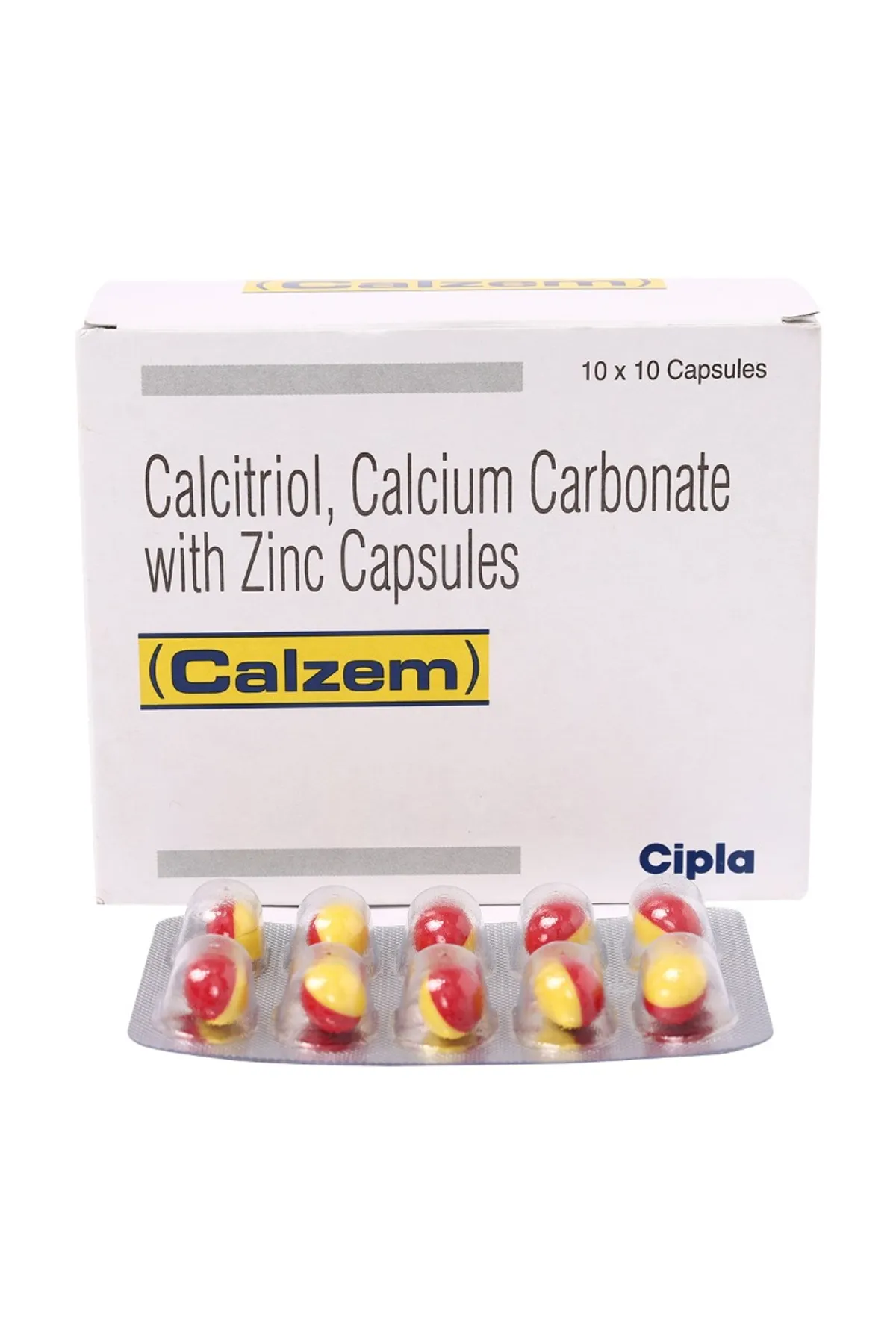
About Calzem Capsule

Calzem Capsule is a nutritional supplement used to prevent and treat bone-related conditions, such as weak bones (osteoporosis) and low calcium levels. It provides essential nutrients that work together to maintain skeletal strength and support healthy joint function. This medication is commonly suggested to individuals who do not get enough key minerals from their daily diet.

To achieve the best results, you must take Calzem Capsule consistently and exactly as directed by your healthcare provider. It is highly recommended to take this medication with food, as this helps your body absorb the active ingredients more effectively. Incorporating regular physical activity, such as walking, along with a balanced diet will further enhance your bone health.

While taking Calzem Capsule , some people may experience mild side effects, including an upset stomach or constipation. If you develop serious symptoms, such as severe nausea, extreme weakness, or kidney pain, contact your doctor immediately. These symptoms can indicate that your calcium levels have become too high.

Talk to your doctor or pharmacist before taking this medicine if you have a history of kidney stones, kidney disease, or heart problems. Do not take this if you have high calcium levels in your blood or urine. Your doctor can help determine if this supplement is appropriate for your current health status.

Calzem Capsule can interact with other medications, such as certain antibiotics and thyroid drugs, by preventing them from absorbing properly into your body. You should space these medications out as advised by your pharmacist. If you are pregnant, breastfeeding, or an older adult, consult your healthcare provider to discuss a safe regimen.

Uses of Calzem Capsule

Calzem Capsule is primarily used to support bone health by providing essential minerals needed for healthy bones and maintaining normal calcium levels. Its main uses include:

  • Osteoporosis: Calzem Capsule helps by strengthening weak and porous bones, reducing the risk of painful fractures in older adults and postmenopausal women.
  • Hypocalcaemia (Low Blood Calcium): This supplement restores healthy calcium levels in the blood for individuals who cannot absorb enough calcium from food.
  • Osteomalacia: It supports the healthy mineralisation of bones, preventing them from becoming soft, weak, or easily deformed.
  • Nutritional Deficiencies: Calzem Capsule provides vital minerals to support overall bone density during periods of poor dietary intake or increased physical demand.

Key Benefits

Calzem Capsule helps support bone health by providing essential minerals needed for strong bones and normal calcium balance. The primary benefits include:

  • Strengthens bones: Helps maintain and improve bone density, making bones stronger and more resilient.
  • Reduces fracture risk: Supports bone strength, helping lower the risk of fractures associated with weak or brittle bones.
  • Supports healthy bone mineralisation: Provides essential nutrients required for the formation and maintenance of healthy bones.
  • Corrects calcium deficiency: Helps restore and maintain normal calcium levels, supporting healthy muscle, nerve, and bone function.
  • Promotes mobility and bone health: Helps maintain strong bones, allowing you to stay active and perform daily activities with greater confidence.
Side effects of Calzem Capsule
  • Stay hydrated by drinking plenty of water.
  • Avoid dairy product such as cheese, milk, yogurt and ice cream.
  • Maintain healthy weight and exercise daily.
  • Following a low-calcium diet can help reduce hypercalcemia symptoms.
  • Reduce sodium intake to minimize calcium excretion in urine.
  • Limit animal protein consumption to decrease urinary calcium levels.
  • Increase fluid intake by drinking plenty of water to dilute urine.
  • Moderate calcium intake based on individual needs, avoiding drastic restriction.
  • Limit oxalate-rich foods like spinach and chocolate to minimize kidney stone formation.
  • Stay hydrated by drinking plenty of water.
  • Consider reducing vitamin D supplementation if excessive intake is contributing to hypercalciuria.
  • Regularly monitor urine calcium levels through 24-hour urine tests.
  • Always seek guidance from a healthcare expert prior to implementing substantial changes to your diet or lifestyle routine.
Managing Medication-Triggered UTIs: A Comprehensive Approach:
  • Inform your doctor about the medication you're taking and the UTI symptoms you're experiencing.
  • Your doctor may adjust your medication regimen or consider alternative medications or dosages that may reduce the risk of UTIs.
  • Drink plenty of water (at least 8-10 glasses a day) to help flush out bacteria. Avoid sugary drinks and caffeine, which can exacerbate UTI symptoms.
  • Urinate when you feel the need rather than holding it in. This can help prevent bacterial growth and reduce the risk of UTIs.
  • Consider cranberry supplements: Cranberry supplements may help prevent UTIs by preventing bacterial adhesion.
  • Monitor UTI symptoms and report any changes to your doctor.
  • If antibiotics are prescribed, take them as directed and complete the full course.
Dealing with Medication-Induced Headache:
  • Hydrate your body: Drink enough water to prevent dehydration and headaches.
  • Calm Your Mind: Deep breathing and meditation can help you relax and relieve stress.
  • Rest and Recharge: Sleep for 7-8 hours to reduce headache triggers.
  • Take rest: lie down in a quiet, dark environment.
  • Cold or warm compresses can help reduce tension.
  • Stay Upright: Maintain good posture to keep symptoms from getting worse.
  • To treat headaches naturally, try acupuncture or massage therapy.
  • Over-the-counter pain relievers include acetaminophen and ibuprofen.
  • Prescription Assistance: Speak with your doctor about more substantial drug alternatives.
  • Severe Headaches: Seek emergency medical assistance for sudden, severe headaches.
  • Frequent Headaches: If you get reoccurring headaches, consult your doctor.
  • Headaches with Symptoms: Seek medical attention if your headaches include fever, disorientation, or weakness.
Overcome Medication-Induced Nausea: A 9-Step Plan
  • Inform your doctor about the nausea and discuss possible alternatives to the medication or adjustments to the dosage.
  • Divide your daily food intake into smaller, more frequent meals to reduce nausea.
  • Opt for bland, easily digestible foods like crackers, toast, plain rice, bananas, and applesauce.
  • Avoid certain foods that can trigger nausea, such as fatty, greasy, spicy, and smelly foods.
  • Drink plenty of fluids, such as water, clear broth, or electrolyte-rich beverages like coconut water or sports drinks.
  • Use ginger (tea, ale, or candies) to help relieve nausea.
  • Get adequate rest and also avoid strenuous activities that can worsen nausea.
  • Talk to your doctor about taking anti-nausea medication if your nausea is severe.
  • Record when your nausea occurs, what triggers it, and what provides relief to help you identify patterns and manage your symptoms more effectively.
  • Skin rash caused by allergies is due to irritants or allergens. Therefore, avoid contact with such irritants.
  • Consult your doctor for proper medication and apply an anti-itch medication. Follow the schedule and use the medication whenever needed.
  • Protect your skin from extreme heat and try to apply wet compresses.
  • Soak in the cool bath, which gives a soothing impact to the affected area.
  • Drink water or other clear fluids.
  • To prevent worsening of pain, limit intake of tea, coffee, or alcohol.
  • Include bland foods like rice, toast, crackers, and rice in your diet.
  • Avoid lying down immediately after eating as it may cause indigestion or heartburn.
  • Avoid acidic and spicy food as it may cause indigestion.

Directions for Use

  • Calzem Capsule can be taken either before or after food, as advised by your doctor.
  • Follow your doctor's instructions on the dosage and timing of this medication to ensure safety.
  • Swallow it as a whole with a glass of water.
  • Do not chew, crush or break it.

How Calzem Capsule Works

Calzem Capsule contains calcium, calcitriol and zinc, which work together to support and maintain healthy bones. Calcium is the primary mineral that forms the structural building block of bones and teeth, helping maintain their strength. Calcitriol, the active form of vitamin D, increases the absorption of calcium from the intestines and helps maintain normal calcium levels in the body, ensuring that calcium is available for healthy bone mineralisation. Zinc supports normal bone metabolism by contributing to collagen formation and the activity of bone-forming cells, helping maintain bone strength and structure. Together, these ingredients promote healthy bone mineralisation, improve bone health, and help maintain normal calcium balance.
bannner image

Alcohol

Caution

Drinking alcohol can affect calcium absorption; hence it is advised to limit the alcohol intake while using Calzem Capsule .

bannner image

Pregnancy

Caution

During pregnancy, use higher doses of Calzem Capsule than the daily dietary allowance only when the doctor advises. Calcitriol in higher doses may harm the fetus. Your doctor will weigh the potential risks and benefits before advising Calzem Capsule .

bannner image

Breast Feeding

Caution

Consult your doctor before taking Calzem Capsule if you are breastfeeding. Calzem Capsule can pass into the breast milk. If Calzem Capsule is used during breastfeeding, please monitor the mother and the infant's serum calcium levels.

bannner image

Driving

Caution

It does not impact your ability to drive or operate machinery.

bannner image

Liver

Caution

Let your doctor know if you have any history of liver diseases before taking Calzem Capsule . Hepatic impairment/liver disease can alter certain Vitamin D forms' metabolic and therapeutic activity.

bannner image

Kidney

Caution

It is advised to seek a doctor's advice before starting Calzem Capsule if you have kidney diseases like kidney stones or undergoing dialysis. Calcitriol in Calzem Capsule increases inorganic phosphate levels in serum; hence caution should be taken in patients undergoing dialysis to maintain adequate phosphorus levels and avoid ectopic calcification (calcium deposition).

bannner image

Children

Caution

Caution should be excercised, and it should be used only if the doctor recommends it.

bannner image

Heart

Consult your doctor

Talk to your doctor if you have a history of heart disease. Your doctor will recommend only if the benefits outweigh the risks.

bannner image

Geriatrics

Caution

Calzem Capsule should be given with caution in elderly patients due to an increased risk of side effects. If you have any concerns, please consult your doctor.

What if I have taken an overdose of Calzem Capsule

If you accidentally take too much Calzem Capsule , seek emergency medical care immediately. Signs of an overdose may include severe nausea, confusion, extreme thirst, and muscle weakness.

Diet & Lifestyle Advise

  • Stay hydrated: Drink plenty of water throughout the day to help your kidneys process the calcium and reduce the risk of developing kidney stones.
  • Perform weight-bearing exercises: Activities like walking, jogging, or light resistance training stimulate your bones to grow stronger.
  • Limit caffeine and sodas: High intake of caffeine and carbonated soft drinks can interfere with how your body absorbs and retains calcium.
  • Eat a balanced diet: Complement your supplement with natural sources of calcium and minerals, such as leafy greens, dairy products, and nuts.
health query

Have a query?

How Soon It Starts Working

The time required for Calzem Capsule to start to work: Calzem Capsule ideally shows its action within 1 to 2 hours after administration. The time for which the effects of Calzem Capsule last: The duration of action for Calzem Capsule is clinically unknown.

What if you forget to take Calzem Capsule

If you miss a dose, take it as soon as you remember. However, if it is almost time for your next scheduled dose, skip the missed one and continue with your regular schedule. Do not take a double dose to make up for a missed one.

Storage

•Store Calzem Capsule in its original packaging at room temperature between 15°C and 30°C (59°F to 86°F). • Keep the medicine in a cool, dry place away from direct light, heat, and moisture.

Drug Warnings

  • Avoid extra supplements: Do not take additional calcium or vitamin D supplements unless directed by your healthcare provider.
  • Space other medicines: Take certain antibiotics (such as tetracyclines or quinolones) and thyroid hormones at least 2–4 hours apart from Calzem Capsule .
  • Attend regular monitoring: Keep scheduled blood and urine test appointments so your doctor can monitor your calcium levels and kidney function.
  • Limit calcium-containing antacids: Avoid taking large amounts of antacids that contain calcium while using Calzem Capsule .

Drug-Drug Interactions

verifiedApollotooltip

Inform your doctor if you are taking any of the following medicines, as they may interact with Calzem Capsule :

  • Antibiotics (Tetracyclines and Quinolones): Calcium can bind to these medications in your digestive tract, significantly reducing how much antibiotic your body absorbs.
  • Thyroid Medications (Levothyroxine): Taking these at the same time as calcium can lower the effectiveness of your thyroid therapy.
  • Thiazide Diuretics: These water pills reduce the amount of calcium your kidneys excrete, which may increase the risk of high calcium levels in your blood.
  • Cardiac Glycosides (Digoxin): High levels of calcium in the blood can increase your sensitivity to digoxin, raising the risk of irregular heart rhythms.

Drug-Drug Interactions

Login/Sign Up

How does the drug interact with Calzem Capsule:
Co-administration of Calcitriol with Dihydrotachysterol can increase the risk of adverse effects.

How to manage the interaction:
Co-administration of Dihydrotachysterol with Calcitriol can possibly result in an interaction, but it can be taken if your doctor has advised it. If you notice any of these symptoms - irregular heartbeat, seizures, weakness, tiredness, headache, dizziness, ringing in the ears, loss of appetite, feeling sick, throwing up, constipation, dry mouth, strange taste in your mouth, muscle or bone pain, trouble coordinating movements, weak muscles, peeing a lot, feeling very thirsty, losing weight, eye infection, sensitivity to light, itching, or a higher body temperature - make sure to call a doctor right away. Do not discontinue any medications without consulting a doctor.
How does the drug interact with Calzem Capsule:
Taking Calcitriol with Fosphenytoin can reduce the levels and efficacy of Calcitriol.

How to manage the interaction:
Taking Calcitriol with Fosphenytoin together can possibly result in an interaction, but it can be taken if a doctor has advised it. If you notice any symptoms of sudden dizziness, weakness, chest pain or pressure, abnormal body movements, uncontrollable eye movements, itching, burning, or tingling sensation, it's important to contact a doctor right away. Do not stop using any medications without a doctor's advice. Do not discontinue the medication without consulting a doctor.
How does the drug interact with Calzem Capsule:
Coadministration of dolutegravir with zinc sulfate+Calcium carbonate can reduce the efficacy of dolutegravir.

How to manage the interaction:
Although taking dolutegravir and zinc sulfate+Calcium carbonate together can possibly result in an interaction, they can be taken together if prescribed by your doctor. It is advised to take dolutegravir either two hours before or six hours after taking a dose of zinc sulfate+Calcium carbonate. Do not discontinue using any medications without consulting a doctor.
How does the drug interact with Calzem Capsule:
Co-administration of Calcium carbonate may interfere with the absorption of Gefitinib and reduce its effectiveness.

How to manage the interaction:
Although there is an interaction, Calcium carbonate can be taken with Gefitinib if prescribed by the doctor. However, Gefitinib and Calcium carbonate should not be taken orally at the same time. Maintain a gap of 2-6 hours between both medicines. Do not discontinue using any medications without consulting a doctor.
How does the drug interact with Calzem Capsule:
Co-administration of calcium carbonate +Zinc sulfate may interfere with the absorption of Raltegravir and reduce its effectiveness.

How to manage the interaction:
Taking calcium carbonate +Zinc sulfate with Raltegravir should be avoided. Consult the doctor if you have any concerns; the doctor may recommend alternatives that do not interact with raltegravir. Do not discontinue the medication without consulting a doctor.
How does the drug interact with Calzem Capsule:
Co-administration of metolazone with calcitriol +Calcium carbonate can cause blood calcium levels to become too high.

How to manage the interaction:
Although there is an interaction, calcitriol+Calcium carbonate can be taken with metolazone if prescribed by the doctor. Consult the doctor if you experience symptoms such as dizziness, drowsiness, weakness, lethargy, headache, nausea, vomiting, or seizures. Do not discontinue the medication without consulting a doctor.
How does the drug interact with Calzem Capsule:
Co-administration of Calcitriol with Carbamazepine may decrease the effects of Calcitriol.

How to manage the interaction:
Although there is an interaction, Calcitriol can be taken with Carbamazepine if prescribed by the doctor. However, if you experience any unusual symptoms contact your doctor immediately. Do not stop using any medications without first talking to your doctor.
How does the drug interact with Calzem Capsule:
Co-administration of Amobarbital and Calcitriol may decrease the effects of Calcitriol.

How to manage the interaction:
Co-administration of Calcitriol with Amobarbital can possibly result in an interaction, but it can be taken if a doctor has advised it. If you notice any of these symptoms, it's important to contact a doctor right away. Do not stop using any medications without talking to a doctor.
How does the drug interact with Calzem Capsule:
Co-administration of cholecalciferol and calcitriol can increase the risk or severity of adverse effects.

How to manage the interaction:
Although there is a possible interaction between colecalciferol and calcitriol, you can take these medicines together if prescribed by your doctor. If you notice any of these symptoms - irregular heartbeat, seizures, weakness, tiredness, headache, dizziness, ringing in the ears, loss of appetite, feeling sick, dry mouth, strange taste in your mouth, muscle or bone pain, thirst, losing weight, eye infection, sensitivity to light, runny nose or itching - contact a doctor right away. Do not discontinue any medications without consulting a doctor.
How does the drug interact with Calzem Capsule:
Co-administration of calcitriol + calcium carbonate with digitoxin may increase the risk or severity of digitoxin toxicity and irregular heart rhythm.

How to manage the interaction:
Although there is an interaction, calcitriol + calcium carbonate can be taken with Digitoxin if prescribed by the doctor. Consult the prescriber if you experience symptoms that could indicate high blood calcium, such as weakness, fatigue, headache, dizziness, drowsiness, ringing in the ears, loss of appetite, nausea, vomiting, constipation, dry mouth, a metallic taste in the mouth, bone or muscle pain, incoordination, frequent urination, and weight loss. Also, seek medical attention if you experience symptoms of digitoxin toxicity, such as blurred vision, a slow pulse, or irregular heartbeats. Do not discontinue the medication without consulting a doctor.

Drug-Food Interactions

verifiedApollotooltip
  • Foods high in oxalic or phytic acid: Foods like spinach, rhubarb, and whole grains can temporarily reduce how much calcium your body absorbs from this supplement.
CALCITRIOL-0.25MCG+CALCIUM CARBONATE-200MG+ZINC SULFATE-7.5MGFiber rich foods, Potassium rich foods
Moderate

Drug-Food Interactions

Login/Sign Up

CALCITRIOL-0.25MCG+CALCIUM CARBONATE-200MG+ZINC SULFATE-7.5MGFiber rich foods, Potassium rich foods
Moderate
Common Foods to Avoid:
Spinach

How to manage the interaction:
foods high in oxalic acid (spinach) may decrease calcium absorption. Consider taking calcium at least 2 hours before or after eating meals high in oxalic acid or phytic acid.

Habit Forming

No

Therapeutic Class

[MULTIMINERALS]

Customer Reviews

4.2

star icon
star icon
star icon
star icon
star icon

5 Ratings,

5 Reviews

5 star icon

40%

4 star icon

40%

3 star icon

20%

2 star icon

0%

1 star icon

0%

C

Chintu

Posted on Dec 15, 2025

5star icon

Pack: 10 Capsule

Regular use ka brand.

FAQs

Calzem Capsule is primarily used to treat low blood calcium levels (hypocalcaemia) in patients undergoing dialysis for chronic renal failure. Calzem Capsule effectively treats various conditions caused by low calcium levels in the body, such as osteoporosis (weak and brittle bones), osteomalacia/rickets (weak bones), and hypoparathyroidism (low levels of parathyroid hormone). Calzem Capsule is also indicated in the treatment of psoriasis (a skin disease that causes itchy scaly patches), hypocalcaemia (low calcium levels in the blood) and hypomagnesaemia (low levels of magnesium in the blood) after small bowel resection.
Calzem Capsule is a combination of three medicines: Calcitriol, Calcium, and Zinc sulfate. Calcitriol helps your body absorb Calcium Carbonate and supports the muscles needed to avoid falls. Calcium and Zinc sulfate help build and maintain bones. Collectively, Calzem Capsule used to treat osteoporosis (weak and brittle bones), osteomalacia/rickets (weak bones), hypoparathyroidism (low levels of parathyroid hormone), and tetany (a muscle disease with low blood calcium levels).
Calzem Capsule is used to increase low calcium levels in the body. Hence, it is not advised to use Calzem Capsule during hypercalcemia since it causes an overdose of calcium, leading to kidney stones and other effects.
Calzem Capsule can cause kidney stones due to excess calcium deposition when used for a prolonged period. Please consult your doctor before taking Calzem Capsule as a daily supplement if you have kidney problems or a history of kidney stones.
Common side effects of Calzem Capsule include constipation, stomach pain, loss of appetite, fast or pounding heartbeat, and bone or muscle pain.
Do not take it if you are allergic to Calzem Capsule or other ingredients present in Calzem Capsule . Calzem Capsule is not recommended in hypercalcemia (high calcium levels), metastatic calcification (extra deposits of calcium in the body), hypervitaminosis D (high vitamin D levels), and malabsorption syndrome (difficulty absorbing nutrition from food), and renal failure.
Leafy greens like collard greens and kale, oranges, figs, milk, yoghurt and cheese are rich in calcium and vitamin D3. Seeds, nuts, beans, seafood and meat are rich in zinc.
Calzem Capsule helps maintain bone and teeth health. It aids the normal growth and development of the skeletal system.
Please consult the doctor if you are pregnant or think you are pregnant. Calzem Capsule should be used during pregnancy if advised by the doctor.
Yes, Calzem Capsule is a supplement that helps maintain bone health. It provides essential nutrients that support bone development.
Avoid exceeding the recommended dose as it could lead to an overdose. Symptoms of overdose may include high calcium in blood/urine, nausea, vomiting, dehydration, and restlessness. If you experience these symptoms or suspect you have taken an overdose, seek immediate medical attention.
Store Calzem Capsule at room temperature, in a dry place. Keep it out of sight and reach of children.
It is highly recommended to take Calzem Capsule with a meal. Food helps your body absorb the calcium and vitamin D analogue more efficiently and reduces the chance of experiencing an upset stomach. Talk to your doctor or pharmacist for more advice.
No, calcium can block the absorption of iron if taken together. It is best to separate the two supplements by at least 2 hours. Talk to your doctor or pharmacist to set up a safe daily schedule.
In some cases, taking high amounts of calcium supplements over a long period can increase the risk of kidney stones. Staying well-hydrated helps lower this risk. Talk to your doctor if you have a history of kidney stones.
Chronic or heavy alcohol use can interfere with your body's ability to absorb calcium and maintain healthy bones. It is best to limit alcohol while taking this supplement. Talk to your doctor about your lifestyle habits.

Disclaimer

While we strive to provide complete, accurate, and expert-reviewed content on our 'Platform', we make no warranties or representations and disclaim all responsibility and liability for the completeness, accuracy, or reliability of the aforementioned content. The content on our platform is for informative purposes only, and may not cover all clinical/non-clinical aspects. Reliance on any information and subsequent action or inaction is solely at the user's risk, and we do not assume any responsibility for the same. The content on the Platform should not be considered or used as a substitute for professional and qualified medical advice. Please consult your doctor for any query pertaining to medicines, tests and/or diseases, as we support, and do not replace the doctor-patient relationship.

Country of origin

India

Manufacturer/Marketer address

Cipla House, Peninsula Business Park, Ganpatrao Kadam Marg, Lower Parel, Mumbai-400013.
Other Info - CAL0098
whatsapp Floating Button
Buy Now
Add to Cart