Apollo
logo
Select Delivery Location
prescription
Prescription Medicine
info
Best Price

₹554 with coupons & bank offers*

View

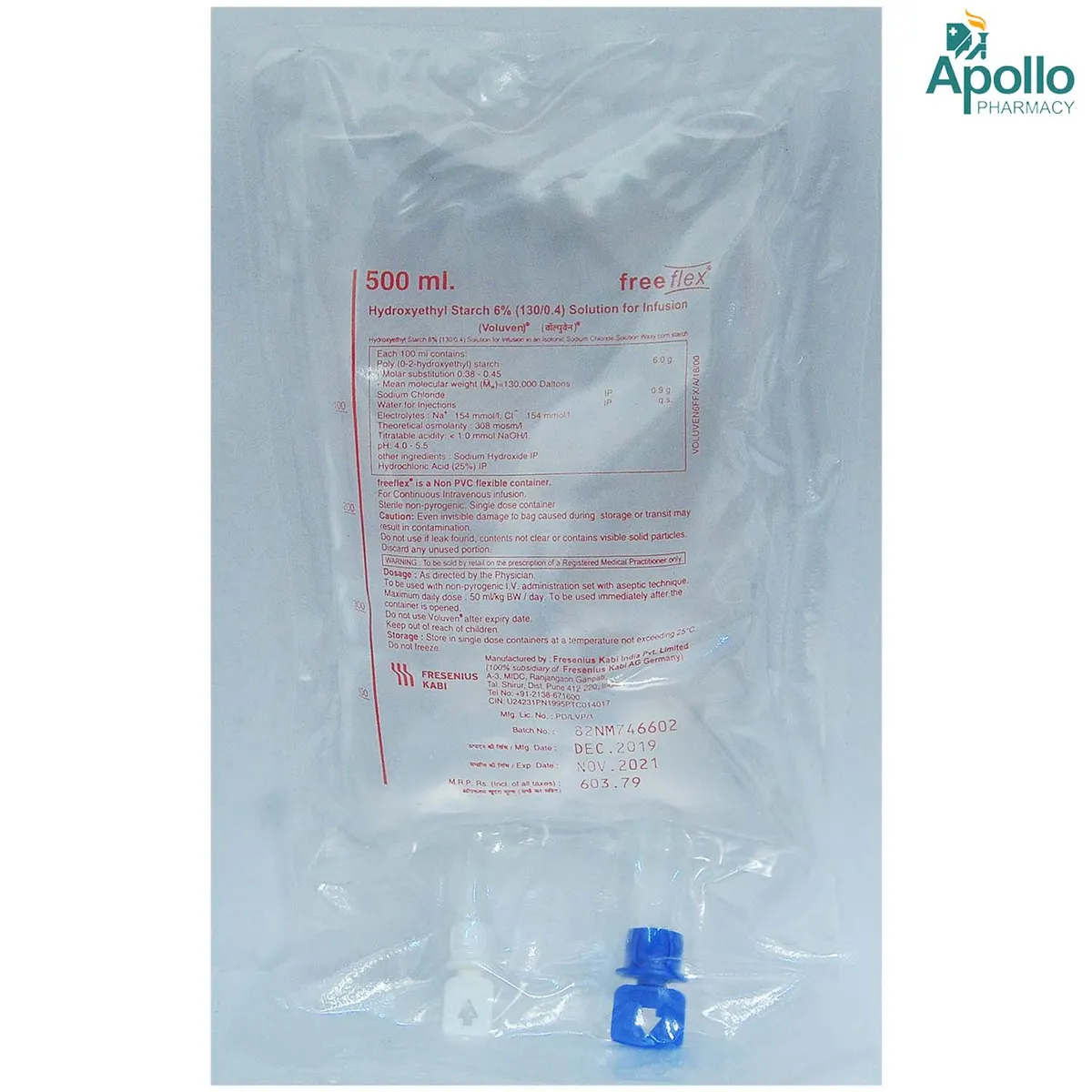
Voluven Solution is used for the treatment of hypovolemia in both adults and children. It contains hydroxyethyl starch and sodium chloride, which work as a plasma volume substitute used to replace lost blood plasma. Sometimes, Voluven Solution may cause pruritus (itching), elevated serum amylase, and hemodilution. Inform your doctor if you are pregnant or breastfeeding, about your health condition, and about medications used before taking Voluven Solution .

Read more
Written By Thota sri Harshini ,
Reviewed By Santoshini Reddy G , M Pharmacy
OffersOffers & Discounts

Get Free delivery (₹99) with circle icon

Join Circle
coupon
Get Extra 18% Off with Coupons
coupon
Extra 10% Off with Bank Offers
bank offer
bank offer
bank offer

More about the Product

Manufacturer/Marketer :

Fresenius Kabi India Pvt Ltd

Consume Type :

Parenteral

Expires on or after :

Jan-27

Return Policy :

Not Returnable

About Voluven Solution

Voluven Solution is a sterile fluid solution containing hydroxyethyl starch and sodium chloride. It is given directly into a vein as an intravenous infusion to help restore blood volume in certain patients with acute hypovolaemia (low blood volume), particularly when crystalloid fluids alone are not considered sufficient. HES is a type of colloid fluid, and its use is restricted because of important safety concerns, including kidney injury, bleeding, and an increased risk of death in certain high-risk patients.

Because this medicine is used during sudden, urgent loss of blood volume, it is given as a short-term infusion under close medical supervision rather than on a regular schedule. Since it is given directly into a vein, food intake does not affect how it works. Your medical team will decide whether HES is appropriate and will monitor you during treatment.

Receiving an emergency intravenous infusion can be stressful, but your healthcare team will monitor you closely throughout treatment. While receiving this fluid, you may experience mild side effects such as itching or temporary changes in blood clotting tests. Tell your medical team promptly if you develop severe breathing difficulty, swelling, unusual bleeding, or a sudden decrease in urine.

Talk to your doctor if you have a history of kidney disease, heart failure, or bleeding problems before receiving this infusion. HES should not be used in patients with sepsis (a serious response to infection), septic shock, severe kidney impairment, or other high-risk conditions specified in the product information. It should also not be used in critically ill patients or for routine fluid maintenance.

HES products have been subject to major regulatory safety restrictions because of risks including kidney injury, excess bleeding, and death. The FDA requires boxed-warning information for HES products, while the European Union suspended their marketing authorisations in 2022 after concluding that existing restrictions had not sufficiently protected patients. If you are pregnant, breastfeeding, or an older adult, tell your healthcare provider before receiving this infusion so they can assess whether it is appropriate for you. Older adults may be more vulnerable to kidney and fluid-related complications.

Uses of Voluven Solution

Your doctor may use Voluven Solution in carefully selected patients to help manage the following condition:

  • Acute hypovolaemia (low blood volume): Voluven Solution may be used to restore blood volume after sudden blood loss when crystalloid fluids alone are not considered sufficient. HES is not intended for routine fluid maintenance, and its use is restricted because of important safety concerns.

Key Benefits

When used only in appropriate patients under close medical supervision, Voluven Solution may provide the following benefits:

  • Helps restore blood volume: Hydroxyethyl starch helps expand the volume of fluid within the bloodstream, which can support circulation when blood volume has fallen.
  • Provides volume support when crystalloids alone may not be sufficient: HES is a colloid fluid that may be considered in specific situations where the treating team determines that crystalloid fluids alone are insufficient. Its use requires careful assessment because evidence about its benefits compared with other volume-replacement options is debated.
  • Supports circulation during acute hypovolaemia: By increasing the volume within the circulation, the infusion can help support blood pressure and blood flow to vital organs while the underlying cause of the low blood volume is treated.

Directions for Use

  • Follow your doctor's instructions on the dosage and timing of this medication.
  • Voluven Solution is administered by the doctor or healthcare professional.
  • Do not self-administer.

How Voluven Solution Works

Voluven Solution contains two active components, hydroxyethyl starch and sodium chloride. They have different roles in restoring fluid balance and supporting circulation. Hydroxyethyl starch is a colloid volume expander. Its relatively large starch molecules remain within the bloodstream for longer than the small molecules in crystalloid fluids, helping increase the volume of fluid within the blood vessels. However, HES has important safety risks, and evidence regarding its outcomes compared with other colloids and alternative fluids remains debated. Sodium chloride provides sodium and chloride, which are electrolytes naturally present in body fluids. These electrolytes help maintain fluid balance and support normal cellular function. Together, the components help provide intravascular volume and electrolyte support during carefully selected cases of acute hypovolaemia. The underlying cause of the blood-volume loss must also be treated.
bannner image

Alcohol

Consult your doctor

It is unknown if alcohol interacts with Voluven Solution . Please consult your doctor if you have any concerns.

bannner image

Pregnancy

Caution

If you are pregnant or planning pregnancy, inform your doctor before receiving Voluven Solution . There are no adequate and well-controlled studies in pregnant women. Your doctor may prescribe this medicine if the benefits outweigh the risks.

bannner image

Breast Feeding

Caution

If you are breastfeeding, inform your doctor before receiving Voluven Solution . It is not known whether this drug is excreted in human milk. Your doctor may prescribe this medicine if the benefits outweigh the risks.

bannner image

Driving

Safe

Voluven Solution is unlikely to affect your ability to drive.

bannner image

Liver

Caution

If you have a history of liver disease, inform your doctor before receiving Voluven Solution . Your doctor will examine your liver disease status and determine if it's safe for you to receive this medication, as it is not administered to patients with severe liver disease.

bannner image

Kidney

Caution

If you have a history of kidney disease, inform your doctor before receiving Voluven Solution . Voluven Solution should be used with caution in patients with renal insufficiency.

bannner image

Children

Safe

Voluven Solution is safe for children below 12 years, but the dose varies for individuals based on their age, body weight, and disease condition.

bannner image

Heart

Caution

Please inform your doctor if you have heart problems before receiving Voluven Solution , as there is limited information available on its safety in such cases.

bannner image

Geriatrics

Caution

If you're geriatric (typically age 65 or older), receiving Voluven Solution can be considered, but it requires careful medical supervision due to age-related risks and sensitivities.

What if I have taken an overdose of Voluven Solution

Your medical team will closely monitor the amount of fluid you receive to reduce the risk of excessive fluid administration. Too much fluid can cause fluid overload and may affect the heart, lungs, or kidneys. If you develop severe shortness of breath, rapid swelling, or other signs of excessive fluid during or after treatment, tell your healthcare provider immediately.

Diet & Lifestyle Advise

  • Follow your fluid instructions: Follow the fluid-intake advice given by your healthcare team, particularly if you have heart or kidney problems.
  • Stay hydrated as advised: Do not deliberately increase or restrict your fluid intake unless your healthcare team recommends it for your condition.
  • Monitor urine output: If you are recovering outside the hospital, report a sudden decrease in urine production to your healthcare team.
  • Avoid medicines that can affect the kidneys unless advised: Do not take over-the-counter medicines such as ibuprofen or naproxen without discussing them with your doctor, particularly after receiving HES.
health query

Have a query?

How Soon It Starts Working

The time required for Voluven Solution to start to work: The time required for Voluven Solution to show its action is unknown. The time for which the effects of Voluven Solution last: The duration of action for Voluven Solution is unknown.

What if you forget to take Voluven Solution

Since this medicine is administered by a healthcare professional during an acute medical situation, you are unlikely to miss a dose. Do not attempt to arrange an additional dose yourself.

Storage

• Store Voluven Solution according to the specific manufacturer's storage instructions on the product label.

Drug Warnings

  • Know why it is being used: Voluven Solution is not a routine fluid for everyday hydration or fluid maintenance. It is used only in carefully selected patients with low blood volume when the treating team considers it appropriate.
  • Know about sepsis: Do not receive HES if you have sepsis or septic shock (a severe infection-related condition that causes dangerously low blood pressure and organ problems). HES has been associated with increased risks of kidney injury and death in patients with sepsis.
  • Tell your doctor about kidney problems: HES can cause or worsen kidney injury. Tell your healthcare team if you have kidney disease or reduced kidney function. HES is contraindicated in patients with kidney impairment under relevant restrictions.
  • Understand the ICU warning: HES is not prohibited simply because a patient is in an intensive care unit. However, it should not be used in critically ill patients because of the increased risk of serious kidney injury and death.
  • Know the regulatory restrictions: HES use has been significantly restricted because of safety concerns. Regulatory agencies have issued strong warnings and restrictions because of risks including kidney injury, excess bleeding, and death.
  • Expect close monitoring: Your healthcare team may check your blood pressure, urine output, kidney function, blood counts, and blood clotting tests. These checks help identify kidney problems, changes in blood volume, or problems with bleeding and clotting.
  • Tell your healthcare team about other medicines: Some medicines can increase the risk of kidney problems when combined with HES. Give your doctor or pharmacist a complete list of your medicines before treatment.
  • Report concerning symptoms: Tell your healthcare team promptly if you develop difficulty breathing, severe dizziness, swelling, very little urine, unusual bleeding, or other sudden changes during or after the infusion.

Drug-Drug Interactions

verifiedApollotooltip
  • Aminoglycoside antibiotics (e.g., gentamicin, amikacin): These medicines can affect kidney function. Using them with HES may increase concern about kidney injury, particularly in patients who are already seriously ill or have reduced kidney function.
  • Non-steroidal anti-inflammatory drugs (NSAIDs) (e.g., ibuprofen, naproxen): These medicines can affect kidney blood flow and may increase kidney-related risks when used in a patient receiving HES.
  • ACE inhibitors (e.g., enalapril, lisinopril): These medicines can affect kidney function and blood pressure. Your doctor may need to monitor you more closely when they are used in a patient receiving HES.
  • Other medicines that can affect kidney function (e.g., ciclosporin, tacrolimus): Combining several medicines that can affect the kidneys may increase the need for close kidney-function monitoring.
No Drug - Drug interactions found in our data. We may lack specific data on this medicine and are actively working to update our database. Consult your doctor for personalized advice

Drug-Drug Interactions

Login/Sign Up

Drug-Food Interactions

verifiedApollotooltip
  • Food: No clinically important food interaction is expected because Voluven Solution is administered directly into a vein rather than taken by mouth.
  • Alcohol: Alcohol does not directly interact with HES in the same way as an oral medicine, but drinking alcohol can contribute to dehydration and may complicate recovery from the condition causing low blood volume. Follow your healthcare team's advice.
No Drug - Food interactions found in our database. Some may be unknown. Consult your doctor for what to avoid during medication.

Drug-Food Interactions

Login/Sign Up

Habit Forming

No

Therapeutic Class

[BLOOD SUBSTITUTES AND PLASMA EXPANDERS, ELECTROLYTES]

FAQs

Voluven Solution contains hydroxyethyl starch, which is a colloid that increases the volume of fluid within the bloodstream and can help restore circulating blood volume and blood pressure in patients with hypovolaemia. Sodium chloride provides sodium and chloride and contributes to the solution's fluid and electrolyte composition. The infusion should be used only when considered appropriate by a healthcare professional.
The common side effects of Voluven Solution that occurred in some individuals are pruritus (itching), elevated serum amylase, and hemodilution. You should talk to your doctor if the side effects persist or worsen.
There were no drug interactions found while using the Voluven Solution . However, it is essential to discuss this with your doctor before taking any other medications while using Voluven Solution to ensure safety.
Voluven Solution is a hydroxyethyl starch (HES) infusion used to treat hypovolaemia (low blood volume) in carefully selected patients. It is generally considered only when fluid replacement with crystalloid solutions alone is not sufficient. HES is not intended for routine hydration or maintenance of body fluids. Because HES can cause serious risks, including kidney injury, bleeding, and death in certain patients, its use is subject to important restrictions.
Crystalloid fluids are commonly considered first when fluid replacement is needed. HES may be considered only in selected situations because it has been associated with serious risks, including kidney injury, excess bleeding, and death in certain patient groups. The benefits and risks must be assessed carefully before it is used.
Yes. Kidney injury is an important recognised risk with HES. The risk is particularly concerning in critically ill patients and people with sepsis or kidney problems. Your healthcare team will monitor your kidney function and urine output closely when appropriate.
HES should not be used in patients with sepsis or septic shock, critically ill patients, or patients with kidney impairment under relevant restrictions. Other contraindications may include certain forms of severe liver disease, fluid overload, active bleeding inside the brain, and other conditions specified in the product information. Your doctor will assess whether this treatment is appropriate for you.
HES can affect kidney function, so your healthcare team may check blood tests that show how well your kidneys are working and monitor how much urine you produce. These checks help identify kidney problems early.
Depending on your condition, your healthcare team may monitor your blood pressure, heart rate, fluid balance, blood count, and blood clotting tests. Kidney function tests are particularly important because HES has been associated with kidney injury.
Yes. Crystalloid fluids are commonly used for volume replacement, and other options such as albumin may be considered in particular clinical situations. Your doctor will choose the most appropriate fluid based on the cause of your low blood volume, your medical condition, and current clinical guidance.
It should be used during pregnancy only when your doctor considers it medically necessary and the potential benefits outweigh the risks. Your doctor will assess your individual condition before giving the infusion.
Some pain relievers, particularly NSAIDs such as ibuprofen and naproxen, can affect kidney function. Ask your doctor or pharmacist before taking these medicines, especially if you have kidney problems or have recently received HES.
HES medicines have been associated with serious risks including kidney injury, excess bleeding, and death in certain patients. Regulatory agencies have therefore placed significant restrictions and warnings on their use.
It is understandable to feel concerned when you need emergency or hospital-based IV treatment. Your healthcare team will monitor your circulation, kidney function, fluid balance, and other important signs throughout treatment. If anything worries you during the infusion, tell your nurse or doctor so they can support you.

Disclaimer

While we strive to provide complete, accurate, and expert-reviewed content on our 'Platform', we make no warranties or representations and disclaim all responsibility and liability for the completeness, accuracy, or reliability of the aforementioned content. The content on our platform is for informative purposes only, and may not cover all clinical/non-clinical aspects. Reliance on any information and subsequent action or inaction is solely at the user's risk, and we do not assume any responsibility for the same. The content on the Platform should not be considered or used as a substitute for professional and qualified medical advice. Please consult your doctor for any query pertaining to medicines, tests and/or diseases, as we support, and do not replace the doctor-patient relationship.

Author Details

Doctor image
We provide you with authentic, trustworthy and relevant information.

Country of origin

INDIA

Manufacturer/Marketer address

Fresenius Kabi AG? , Else-Kröner-Straße 1 ? , 61352 Bad Homburg , Germany
Other Info - VOL0017
whatsapp Floating Button
Buy Now
Add to Cart