Apollo
logo
Select Delivery Location
compositionComposition:BASILIXIMAB-20MG
prescription
Prescription Medicine
info

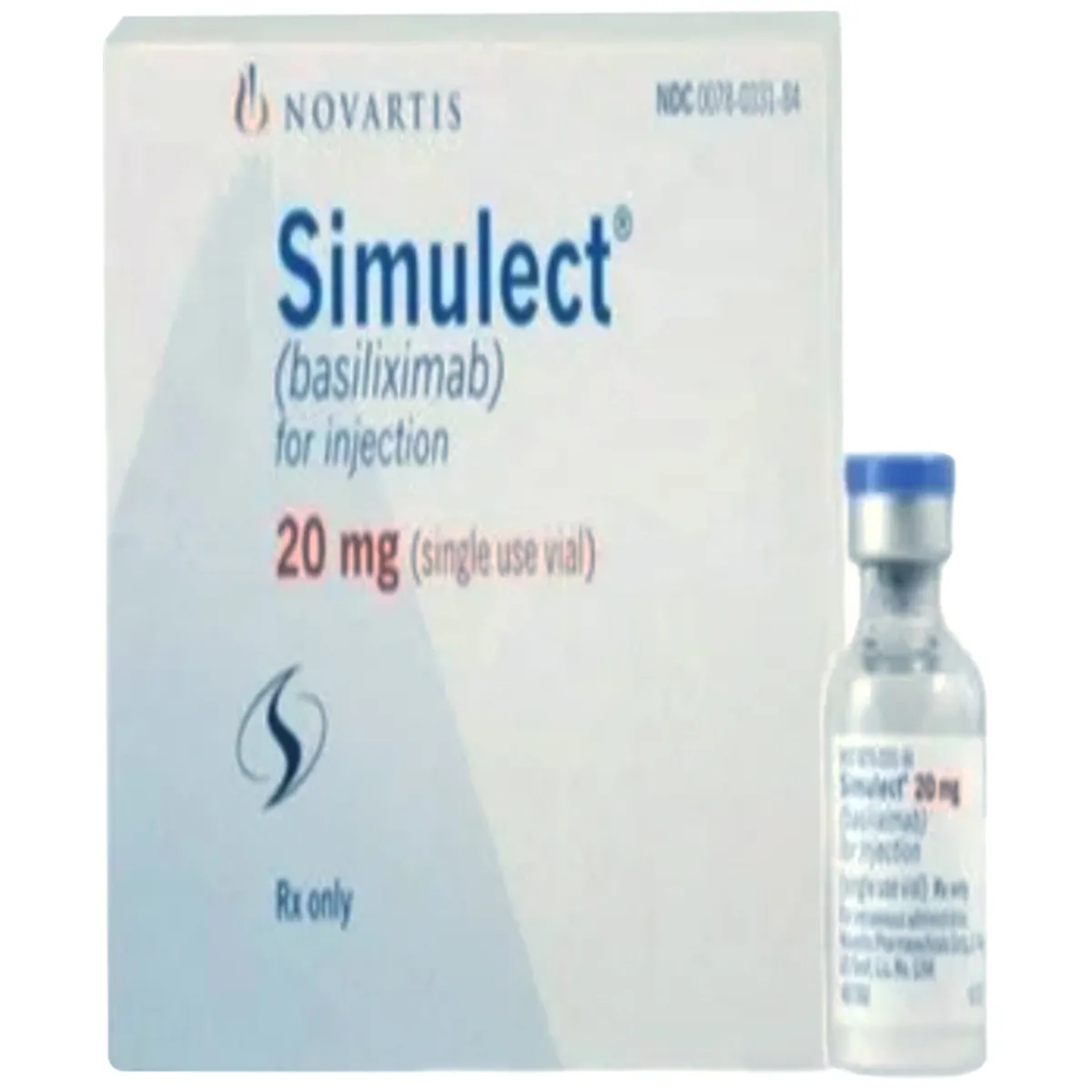
Simulect 20 mg Injection 1's is used to prevent rejection of a kidney transplant. It contains Basiliximab, which decreases the production of white blood cells in the body that normally attack foreign invaders and defends the body against foreign cells and infection. As a result, it helps the body accept the new organ and prevents organ rejection in transplant patients. Simulect 20 mg Injection 1's may cause common side effects such as diarrhoea, constipation, nausea, weight gain, headache, high blood pressure, pain, and swelling of hands, ankles or feet.

Read more
Written By Veda Maddala , M Pharmacy
Reviewed By Dr Aneela Siddabathuni , MPharma., PhD
OffersOffers & Discounts

Get Free delivery (₹99) with circle icon

Join Circle
coupon
Extra 10% Off with Bank Offers
bank offer
bank offer
bank offer

More about the Product

Composition :

BASILIXIMAB-20MG

Manufacturer/Marketer :

NOVARTIS HEALTHCARE PVT LTD

Consume Type :

Parenteral

Expires on or after :

Jan-27

Return Policy :

Not Returnable

About Simulect 20 mg Injection 1's

Simulect 20 mg Injection 1's is a prescription injection used to prevent your body from rejecting a newly transplanted kidney. It belongs to a group of medicines known as immunosuppressants, which help your body accept the new organ. It is always used alongside other medications to help ensure your transplant is successful.

Because this medicine is given as an injection into a vein, it is injected by a healthcare professional in a hospital setting around the time of your transplant surgery. You do not need to worry about taking it with or without food, as it goes directly into your bloodstream. Following a clean, food-safe diet and staying hydrated are important lifestyle steps to support your kidney health during this period.

While using you may experience mild side effects like constipation, nausea, or mild pain around the injection site. However, because it lowers your immune system, you must contact your doctor immediately if you experience signs of infection, such as fever, sore throat, or unusual tiredness.

Do not take this if you have had a severe allergic reaction to this medicine or any of its ingredients in the past. Before receiving it, tell your doctor if you have active infections, a history of tuberculosis, or a weakened immune system from other medical conditions. This medication can interact with live vaccines, potentially causing a severe infection because your immune system is temporarily suppressed.

If you are pregnant, planning to become pregnant, breastfeeding, or are an elderly individual, talk to your doctor or pharmacist to discuss the risks and benefits before receiving this treatment. It may be used in children receiving a kidney transplant. The dose is based on the child's body weight, and children weighing less than 35 kg receive a lower dose. The transplant team will determine the correct dose.


Uses of Simulect 20 mg Injection 1's

Your doctor may recommend this injection to help manage the following conditions:

  • Kidney transplant rejection: It helps prevent your body's immune system from attacking and rejecting a newly transplanted kidney, helping the new organ function properly.
     

Key Benefits

When taken consistently as directed, this injection may provide the following physiological benefits:

  • Helps protect your transplanted kidney: This medicine helps prevent your immune system from attacking your new kidney, reducing the risk of organ rejection during the early period after transplant surgery.
  • Supports transplant success: By selectively targeting specific immune cells involved in organ rejection, this medicine helps protect the transplanted kidney while allowing your healthcare team to carefully manage your recovery and overall health after surgery.
Side effects of Simulect 20mg 1vial
Here are the steps to cope with constipation as a side effect of medication:
  • Inform your doctor about your constipation symptoms. They may adjust your medication or advise alternative treatments.
  • Stay hydrated by drinking sufficient of water (at least 8-10 glasses a day) to help soften stool and promote bowel movements.
  • Increase fibre intake by eating foods high in fibre, such as fruits, whole grains, vegetables and legumes, to help bulk up the stool.
  • Establish a bowel routine by trying to go to the bathroom at the same time each day to train your bowels.
  • Engaging in regular exercise, like walking or yoga, can support in bowel movement stimulation.
  • Consult your doctor if constipation persists, and discuss alternative treatments or adjustments to your medication.
Overcome Medication-Induced Nausea: A 9-Step Plan
  • Inform your doctor about the nausea and discuss possible alternatives to the medication or adjustments to the dosage.
  • Divide your daily food intake into smaller, more frequent meals to reduce nausea.
  • Opt for bland, easily digestible foods like crackers, toast, plain rice, bananas, and applesauce.
  • Avoid certain foods that can trigger nausea, such as fatty, greasy, spicy, and smelly foods.
  • Drink plenty of fluids, such as water, clear broth, or electrolyte-rich beverages like coconut water or sports drinks.
  • Use ginger (tea, ale, or candies) to help relieve nausea.
  • Get adequate rest and also avoid strenuous activities that can worsen nausea.
  • Talk to your doctor about taking anti-nausea medication if your nausea is severe.
  • Record when your nausea occurs, what triggers it, and what provides relief to help you identify patterns and manage your symptoms more effectively.
  • Drink water or other clear fluids.
  • To prevent worsening of pain, limit intake of tea, coffee, or alcohol.
  • Include bland foods like rice, toast, crackers, and rice in your diet.
  • Avoid lying down immediately after eating as it may cause indigestion or heartburn.
  • Avoid acidic and spicy food as it may cause indigestion.
To prevent, manage, and treat Constipation caused by medication usage, follow these steps:
  • Preventing Vomiting (Before it Happens)
  • Take medication exactly as prescribed by your doctor. This can help minimize side effects, including vomiting.
  • Having a small meal before taking your medication can help reduce nausea and vomiting.
  • Talk to your doctor about taking anti-nausea medication along with your prescribed medication.
  • Managing Vomiting (If it Happens)
  • Try taking ginger in the form of tea, ale, or candy to help alleviate nausea and vomiting.
  • What to Do if Vomiting Persists
  • Consult your doctor if vomiting continues or worsens, consult the doctor for guidance on adjusting your medication or additional treatment.
Here are the precise steps to cope with diarrhoea caused by medication usage:
  • Inform Your Doctor: Notify your doctor immediately about your diarrhoea symptoms. This allows them to adjust your medication or provide guidance on managing side effects.
  • Stay Hydrated: Drink plenty of fluids to replace lost water and electrolytes. Choose water, clear broth, and electrolyte-rich drinks. Avoid carbonated or caffeinated beverages to effectively rehydrate your body.
  • Follow a Bland Diet: Eat easy-to-digest foods to help firm up your stool and settle your stomach. Try incorporating bananas, rice, applesauce, toast, plain crackers, and boiled vegetables into your diet.
  • Avoid Trigger Foods: Steer clear of foods that can worsen diarrhoea, such as spicy, fatty, or greasy foods, high-fibre foods, and dairy products (especially if you're lactose intolerant).
  • Practice Good Hygiene: Maintain good hygiene to prevent the spread of infection. To stay healthy, wash your hands frequently, clean and disinfect surfaces regularly, and avoid exchanging personal belongings with others.
  • Take Anti-Diarrheal Medications: If your doctor advises, anti-diarrheal medications such as loperamide might help manage diarrhoea symptoms. Always follow your doctor's directions.
  • Keep track of your diarrhoea symptoms. If they don't get better or worse or are accompanied by severe stomach pain, blood, or dehydration signs (like extreme thirst or dark urine), seek medical help.
Here are the step-by-step strategies to manage the side effects of "indigestion" caused by medication usage:
  • Take medications with food (if recommended): It can help prevent stomach distress and indigestion.
  • Eat smaller, more frequent meals: Divide daily food intake into smaller, more frequent meals to ease digestion.
  • Avoid trigger foods: Identify and avoid foods that trigger indigestion, such as spicy, fatty, or acidic foods.
  • Stay upright after eating: Sit or stand upright for at least 1-2 hours after eating to prevent stomach acid from flowing into the oesophagus.
  • Avoid carbonated drinks: Avoid drinking carbonated beverages, such as soda or beer, which can worsen indigestion.
  • Manage stress: To alleviate indigestion, engage in stress-reducing activities like deep breathing exercises or meditation.
  • Consult a doctor if needed: If indigestion worsens or persists, consult a healthcare professional to adjust the medication regimen or explore alternative treatments.
  • Wear compression garments like stockings, sleeves, or gloves to apply pressure and help stop fluid from building up, especially after the swelling goes down.
  • Move around and do exercises to help the fluid circulate, especially in swollen limbs. Ask your doctor for specific exercises.
  • Raise the swollen area above your heart level several times a day, even while sleeping, to help reduce swelling.
  • Gently massage the swollen area with firm but not painful pressure.
  • Keep the swollen area clean and moisturized to prevent injury and infection.
  • Reduce salt intake to help prevent fluid from building up and worsening the swelling, as advised by a doctor.
  • If the swelling does not get better after a few days of home treatment or worsens, consult your doctor right away.

Directions for Use

  • Typically, it is given in two doses: one 2 hours before transplant surgery and the second 4 days after; however, your doctor will determine the dosage and duration based on your condition.
  • Simulect 20 mg Injection 1's will be administered by a doctor or nurse in a healthcare facility.
  • Do not self-administer.

How Simulect 20 mg Injection 1's Works

Simulect 20 mg Injection 1's works as an immunosuppressant by targeting and blocking specific proteins on the surface of your white blood cells, specifically T-cells. T-cells are the primary immune cells responsible for recognising and attacking foreign tissues, such as a transplanted kidney. By binding to these proteins, it temporarily prevents the T-cells from multiplying and launching an attack against your new kidney. This selective action gives your body time to adjust to the new organ, significantly reducing the likelihood of acute rejection during the highly sensitive post-transplant phase.
bannner image

Alcohol

Consult your doctor

The interaction of alcohol with Simulect 20 mg Injection 1's is unknown. If you have any concerns regarding this, please discuss with your doctor.

bannner image

Pregnancy

Consult your doctor

Simulect 20 mg Injection 1's should be used in pregnant women only when the potential benefit outweighs the potential risk to the fetus. You are recommended to use effective contraception before beginning treatment with Simulect 20 mg Injection 1's, during therapy, and for 4 months after completion of therapy.

bannner image

Breast Feeding

Consult your doctor

It is unknown whether Basiliximab is excreted in human milk. Based on the importance of drug to the mother, a decision should be made whether to discontinue nursing or to discontinue Simulect 20 mg Injection 1's.

bannner image

Driving

Safe

Simulect 20 mg Injection 1's does not affect the ability to drive or operate machinery.

bannner image

Liver

Caution

If you have any concerns regarding the use of Simulect 20 mg Injection 1's in patients with liver problems, discuss with your doctor.

bannner image

Kidney

Safe if prescribed

Simulect 20 mg Injection 1's may be safe to use in patients with kidney problems if prescribed by a doctor.

bannner image

Children

Safe if prescribed

Simulect 20 mg Injection 1's may be safe for children if prescribed by a doctor.

bannner image

Heart

Consult your doctor

Please inform your doctor if you have any pre-existing heart problems before using Simulect 20 mg Injection 1's. Your doctor will prescribe Simulect 20 mg Injection 1's if the benefits outweigh the risk.

bannner image

Geriatrics

Safe if prescribed

Simulect 20 mg Injection 1's is generally considered safe when used under medical supervision in geriatric patients; however, significant precautions should be taken due to age-related sensitivities.

What if I have taken an overdose of Simulect 20 mg Injection 1's

Because this medicine is given under direct medical supervision, an overdose is highly unlikely. If you suspect an error or experience severe, unusual symptoms, seek immediate medical attention or inform your hospital staff right away.

Diet & Lifestyle Advise

  • Practice strict food safety: Since your immune system is suppressed, avoid raw or undercooked meats, seafood, raw eggs, and unpasteurised dairy products to help prevent foodborne infections.
  • Stay hydrated: Drink plenty of clean, filtered water as advised by your doctor to support your new kidney's function.
  • Limit exposure to infections: Avoid close contact with people who have colds, flu, or other infections, and wash your hands frequently.
health query

Have a query?

How Soon It Starts Working

The time required for Simulect 20 mg Injection 1's to start to work: Simulect 20 mg Injection 1's ideally shows its action within few hours after administration. The time for which the effects of Simulect 20 mg Injection 1's last: The effect of Simulect 20 mg Injection 1's lasts for 36 days.

What if you forget to take Simulect 20 mg Injection 1's

Since this medication is given by a healthcare professional in a hospital, missing a dose is highly unlikely. However, if an appointment or dose is delayed, contact your transplant team immediately to reschedule. Talk to your doctor or pharmacist for specific guidance.

Storage

•It must be stored in a refrigerator at temperatures between 2°C and 8°C.
icon image

Keep Refrigerated. Do not freeze.

Drug Warnings

  • Check the medicine: The healthcare team will inspect the solution before use to ensure it is clear and free of visible particles.
  • Report injection site discomfort: Tell your doctor or nurse immediately if you feel burning, pain, or swelling during the injection.
  • Attend all follow-up appointments: Your transplant team will perform regular blood tests to monitor your kidney function, blood counts, response to treament, dermatology check-ups and self-skin checks.
  • Protect your skin: Wear sunscreen and protective clothing when outdoors, as immunosuppressive medicines may increase your skin's sensitivity to sunlight.
  • Contraindication: Do not receive this medicine if you have ever had a severe allergic reaction to this medicine or any of its ingredients, and tell your doctor before treatment if you have an active infection, a history of tuberculosis, or a weakened immune system.
     

Drug-Drug Interactions

verifiedApollotooltip
  • Live vaccines: Do not receive live vaccines (such as the shingles or yellow fever vaccine) while taking this medicine, as they may increase the risk of infection.
  • Other immunosuppressants: This medicine is often used together with other immunosuppressant medicines after transplantation. Your doctor will monitor your treatment closely to help reduce the risk of excessive immune suppression and infections.
     
BasiliximabInfliximab
Severe
BasiliximabBaricitinib
Severe

Drug-Drug Interactions

Login/Sign Up

BasiliximabInfliximab
Severe
How does the drug interact with Simulect 20mg 1vial:
Combining Infliximab with Simulect 20mg 1vial can increase the risk or severity of developing infections.

How to manage the interaction:
Taking Simulect 20mg 1vial with Infliximab together can result in an interaction, but it can be taken if your doctor has advised it. If you have any of these symptoms like fever, chills, diarrhea, sore throat, muscle pain, difficulty breathing, weight loss, and pain or burning when you pee, contact a doctor right away. Do not stop using any medications without talking to a doctor.
BasiliximabBaricitinib
Severe
How does the drug interact with Simulect 20mg 1vial:
Combining baricitinib and Simulect 20mg 1vial can raise your risk of developing certain types of cancer as well as serious, sometimes harmful infections.

How to manage the interaction:
Although there is an interaction, baricitinib can be taken with Simulect 20mg 1vial if prescribed by the doctor. However, if you experience fever, chills, diarrhea, sore throat, muscular aches, shortness of breath, blood in your coughing fluid, weight loss, red or irritated skin, body sores, and discomfort or burning when you urinate, consult a doctor. Do not discontinue any medication without consulting a doctor.
BasiliximabEtanercept
Severe
How does the drug interact with Simulect 20mg 1vial:
When Etanercept is used with Simulect 20mg 1vial, the likelihood or severity of infection may increase.

How to manage the interaction:
Co-administration of Etanercept with Simulect 20mg 1vial can result in an interaction, but it can be taken if a doctor has advised it. However, if you develop fever, chills, diarrhea, sore throat, muscular pains, shortness of breath, blood in phlegm, weight loss, red or irritated skin, body sores, or discomfort or burning during urination, consult a doctor immediately. Do not discontinue any medications without a doctor's advice.
BasiliximabTofacitinib
Severe
How does the drug interact with Simulect 20mg 1vial:
Simulect 20mg 1vial can enhance the immune-suppressing effects of Tofacitinib which increases risk of infections.

How to manage the interaction:
There may be a possibility of interaction between Tofacitinib and Simulect 20mg 1vial, but it can be taken if prescribed by a doctor. However, consult the doctor immediately if you experience symptoms such as fever, chills, diarrhea, sore throat, muscle aches, shortness of breath, blood in phlegm, weight loss, red or inflamed skin, body sores, and pain or burning during urination. Do not discontinue any medications without first consulting your doctor.
BasiliximabCladribine
Severe
How does the drug interact with Simulect 20mg 1vial:
Combining Simulect 20mg 1vial with Cladribine can increase the risk of serious infections.

How to manage the interaction:
Co-administration of Simulect 20mg 1vial with Cladribine can possibly result in an interaction, but it can be taken if your doctor has advised it. However, if you experience fever, chills, diarrhea, sore throat, muscle pains, breathing difficulty, blood in your coughing fluid, weight loss, red or irritated skin, body sores, and discomfort or burning sensation when you urinate, consult a doctor. Do not stop using any medications without a doctor's advice.
BasiliximabLeflunomide
Severe
How does the drug interact with Simulect 20mg 1vial:
Combining Simulect 20mg 1vial with Leflunomide can increase the risk of serious infections.

How to manage the interaction:
Co-administration of Simulect 20mg 1vial with Leflunomide can result in an interaction, but it can be taken if your doctor has advised it. If you have any of these symptoms like fever, chills, diarrhea, sore throat, muscle aches, shortness of breath, weight loss, pain, or burning during urination, contact your doctor right away. Do not discontinue any medications without consulting your doctor.

Drug-Food Interactions

verifiedApollotooltip
  • Avoid grapefruit and grapefruit juice: Grapefruit and grapefruit juice do not interact directly with this medicine, but they may interact with other transplant medicines such as ciclosporin or tacrolimus. Follow your transplant team's dietary advice. 
     
No Drug - Food interactions found in our database. Some may be unknown. Consult your doctor for what to avoid during medication.

Drug-Food Interactions

Login/Sign Up

Habit Forming

No

Therapeutic Class

[IMMUNOSUPPRESSANTS]

FAQs

It is used to prevent acute organ rejection in patients who are receiving a kidney transplant. It is always used in combination with other medications that help your body accept the new organ. Talk to your doctor for more details about your specific transplant plan.
Simulect 20 mg Injection 1's contains Basiliximab, which works by inhibiting the body's production of white blood cells, which normally attack foreign invaders and protect the body from foreign cells and infection. As a result, it prevents organ rejection in transplanted patients and aids the body's acceptance of the new organ.
Simulect 20 mg Injection 1's may increase the risk of infections as it may weaken the immune system. Therefore, consult a doctor immediately if you have any signs of infection, such as sore throat or fever.
If you are about to receive any vaccinations, especially live vaccines, inform your doctor that you are on treatment with Simulect 20 mg Injection 1's because it may decrease the effect of the vaccine and increase the risk of infection.
It is given by a trained healthcare professional as an injection or a slow infusion into a vein (intravenously) in a hospital. It is usually given as two doses: the first before your kidney transplant surgery and the second 4 days after the transplant, if your doctor considers it appropriate. Talk to your doctor if you have any questions about the treatment process.
No, you should avoid live vaccines while taking it because your immune system is suppressed, which increases the risk of contracting the illness from the vaccine. Talk to your doctor to see which vaccines are safe for you.
Hair loss is not a commonly reported side effect of this medicine itself, though other transplant medications you take at the same time might cause it. Talk to your doctor if you notice unusual hair thinning or loss.
It is generally not recommended during pregnancy unless necessary, as its effects on an unborn baby are not fully known. Talk to your doctor to evaluate the risks and benefits if you are pregnant or planning to become pregnant.
Yes, because it calms your immune system to prevent organ rejection, it also temporarily reduces your ability to fight off infections. Talk to your doctor immediately if you develop a fever, sore throat, or other signs of illness.
Since this medication is given in a hospital setting, your healthcare team will schedule and inject both doses. If you suspect a dose was missed or delayed, contact your transplant team immediately. Talk to your doctor for specific guidance.
It is used only during the early period after your kidney transplant to help prevent organ rejection. After the two-dose treatment is complete, you will continue taking other immunosuppressant medicines as prescribed by your transplant team to provide long-term protection for your transplanted kidney.

Disclaimer

While we strive to provide complete, accurate, and expert-reviewed content on our 'Platform', we make no warranties or representations and disclaim all responsibility and liability for the completeness, accuracy, or reliability of the aforementioned content. The content on our platform is for informative purposes only, and may not cover all clinical/non-clinical aspects. Reliance on any information and subsequent action or inaction is solely at the user's risk, and we do not assume any responsibility for the same. The content on the Platform should not be considered or used as a substitute for professional and qualified medical advice. Please consult your doctor for any query pertaining to medicines, tests and/or diseases, as we support, and do not replace the doctor-patient relationship.

Country of origin

India

Manufacturer/Marketer address

Gala no 1-A & 2-A, Building no 28, Arihant Compound Kopar, Purna-BH-Taluka-Bhiwandi-14, Thane Z5- 421302
Other Info - SIM0052
whatsapp Floating Button
Buy Now
Add to Cart