Apollo
logo
Select Delivery Location
Best Price

₹178 with coupons & bank offers*

View

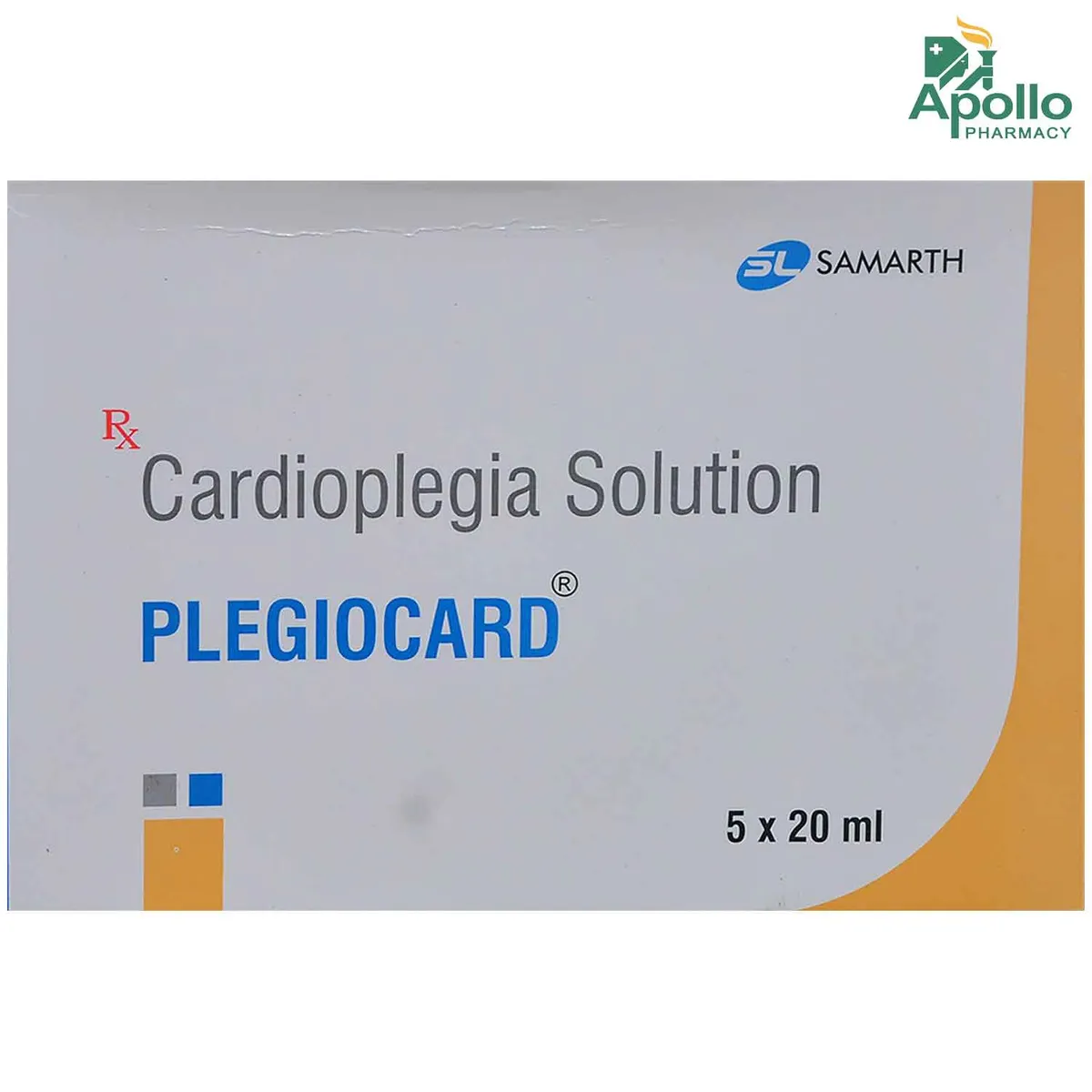
PLEGIOCARD INJECTION is a cardioprotective medication used to induce cardioplegia (temporarily stop the heart) during heart surgeries such as heart valve replacement or a heart transplant. This medicine contains Magnesium chloride, Potassium chloride, and Procaine, which work by temporarily stopping the heart from beating and decreasing the sensation of pain by blocking nerve impulses. Let your doctor know if you are taking any medications or have any pre-existing medical conditions before receiving PLEGIOCARD INJECTION.

Read more
Written By ,
Reviewed By Santoshini Reddy G , M Pharmacy
OffersOffers & Discounts

Get Free delivery (₹99) with circle icon

Join Circle
coupon
Get Extra 12% Off with Coupons
coupon
Extra 10% Off with Bank Offers
bank offer
bank offer
bank offer

More about the Product

Manufacturer/Marketer :

Samarth Life Sciences Pvt Ltd

Consume Type :

Parenteral

Expires on or after :

Jan-27

Return Policy :

Not Returnable

About PLEGIOCARD INJECTION

PLEGIOCARD INJECTION is a sterile injection used in specialised clinical settings, primarily during open-heart surgeries to protect the heart muscle or for specific therapeutic nerve blocks. It helps stabilise cell membranes and manage electrical activity in localised areas. This medicine is strictly given by healthcare professionals in a hospital or clinic.

Because this medicine is given as a single-procedure injection or infusion, the frequency depends entirely on your specific medical procedure or treatment plan. It is injected directly into your body, so you do not need to worry about taking it with or without food. Following any post-procedure dietary guidelines recommended by your medical team will help support your recovery.

While using PLEGIOCARD INJECTION, some people may experience mild, temporary reactions at the injection site, such as redness, warmth, or slight swelling. However, if you notice any unusual symptoms like chest discomfort, irregular heartbeats, or severe dizziness, you must inform your healthcare provider immediately.

Talk to your doctor before receiving this injection if you have a history of kidney disease, severe heart block, or nerve disorders. Do not receive this medicine if you have a known allergy to local anaesthetics or have extremely high levels of potassium or magnesium in your blood.

This medication can interact with certain blood pressure drugs and muscle relaxants, which may affect your heart rate or muscle control. It is also important to talk to your doctor if you are pregnant, breastfeeding, or are an older adult, as your body may clear this medicine differently.

Uses of PLEGIOCARD INJECTION

PLEGIOCARD INJECTION is used during open-heart surgeries to protect the heart muscle or for specific therapeutic nerve blocks. The detailed uses of PLEGIOCARD INJECTION are as follows:

  • Cardioplegia (Heart Protection during Surgery): It helps temporarily stop the heart during open-heart surgery, protecting the heart muscle from damage while the surgeon operates.
  • Local Anaesthesia and Pain Management: It helps block nerve pain signals in specific areas of the body, providing localised relief during clinical procedures.
  • Electrolyte Stabilisation: It helps maintain the proper balance of essential minerals in localised tissues, supporting normal cellular function.

Key Benefits

PLEGIOCARD INJECTION provides targeted support during and after surgical procedures by helping protect the heart, relieve localized pain, and support normal muscle and nerve function. Its combined actions contribute to a safer and more comfortable recovery.

  • Supports Heart Protection During Surgery: By helping protect the heart muscle from stress and oxygen deprivation, this medicine supports cardiovascular stability during complex surgical procedures and promotes a smoother recovery.
  • Provides Localized Pain Relief: By blocking nerve signals in a specific area, this medicine helps reduce pain and discomfort without causing widespread effects throughout the body.
  • Supports Muscle and Nerve Function: The mineral components help maintain normal muscle and nerve activity, supporting recovery of normal function after a surgical procedure.

Directions for Use

  • Follow your doctor’s instructions on the dosage and timing of this medication.
  • PLEGIOCARD INJECTION will be administered by a healthcare professional in a medical setting.
  • Do not self-administer.

How PLEGIOCARD INJECTION Works

PLEGIOCARD INJECTION works through the combined actions of its three active components to stabilise cells and manage electrical signals in your body. Potassium plays a key role in controlling electrical impulses. By temporarily modifying the electrical state of muscle cells, it can safely slow down or pause muscle contraction, which is vital during delicate surgeries. Magnesium acts as a natural shield for cells. It controls how calcium enters your cells, preventing calcium overload and helping muscles relax properly. Procaine is a local anaesthetic that acts on the membranes of peripheral nerves. It blocks voltage-gated sodium channels, temporarily preventing the generation and transmission of nerve impulses in the treated area. This interrupts local nerve transmission and reduces the sensation of pain during the procedure. The exact formulation and the components used may vary according to the clinical protocol and the specific procedure. Your treating medical team will select and administer the formulation appropriate for your individual needs.
bannner image

Alcohol

Consult your doctor

It is not known if alcohol interacts with PLEGIOCARD INJECTION. Please consult your doctor before consuming alcohol.

bannner image

Pregnancy

Consult your doctor

There is no information available about the use of PLEGIOCARD INJECTION during pregnancy. Please consult your doctor if you have any concerns regarding the use of PLEGIOCARD INJECTION during pregnancy.

bannner image

Breast Feeding

Consult your doctor

It is not known if PLEGIOCARD INJECTION passes into breastmilk. Please consult your doctor if you have any concerns regarding the use of PLEGIOCARD INJECTION during breastfeeding.

bannner image

Driving

Caution

Avoid driving and operating machinery until your doctor confirms that it is safe to do so.

bannner image

Liver

Consult your doctor

Please consult your doctor before receiving PLEGIOCARD INJECTION if you have liver problems.

bannner image

Kidney

Consult your doctor

Please consult your doctor before receiving PLEGIOCARD INJECTION if you have kidney problems.

bannner image

Children

Consult your doctor

Limited information is available. Please consult your doctor if you have any concerns regarding the usage of PLEGIOCARD INJECTION in children.

bannner image

Heart

Consult your doctor

Inform your doctor if you have heart problems before using PLEGIOCARD INJECTION.

bannner image

Geriatrics

Consult your doctor

PLEGIOCARD INJECTION can be given to geriatrics. If you have any concerns regarding the use of PLEGIOCARD INJECTION, please consult a doctor.

What if I have taken an overdose of PLEGIOCARD INJECTION

Because PLEGIOCARD INJECTION is given by a medical professional in a controlled setting, an overdose is extremely rare. However, if you suspect an overdose or experience severe symptoms like extreme muscle weakness or breathing difficulties, seek immediate medical attention or call emergency services.

Diet & Lifestyle Advise

  • Stay Hydrated: Drink plenty of water as advised by your healthcare team to help your kidneys filter and clear the medication from your system.
  • Monitor Mineral Intake: Avoid taking over-the-counter potassium or magnesium supplements unless specifically directed by your doctor, as this injection already affects these mineral levels.
  • Rest and Recover: Give your body ample time to rest after your procedure to allow your heart, muscles, and nerves to heal fully.
  • Follow a Heart-Healthy Diet: If you received this during a cardiac procedure, focus on a diet rich in whole grains, lean proteins, and fresh vegetables while limiting sodium.
health query

Have a query?

How Soon It Starts Working

The time required for PLEGIOCARD INJECTION to start to work: The peak effect of PLEGIOCARD INJECTION can be observed within a few minutes to hours of administration. The time for which the effects of PLEGIOCARD INJECTION last: PLEGIOCARD INJECTION effect usually lasts for approximately a few hours.

What if you forget to take PLEGIOCARD INJECTION

Since this medication is usually given by a healthcare provider during a scheduled clinical procedure, missing a dose is highly unlikely. If you miss an appointment for your scheduled injection, contact your clinic immediately to reschedule.

Storage

• Store the injection at controlled room temperature between 20°C and 25°C (68°F to 77°F).

Drug Warnings

  • Hospital Administration Only: This injection is prepared and administered only by trained clinical staff. Never attempt to administer it yourself.
  • Clinical Preparation: The healthcare team will verify the formulation, strength, and suitability of the injection according to the specific procedure and clinical protocol.
  • Follow Clinical Instructions: Follow all instructions provided by your treating team before and after the procedure.
  • Monitor Your Heart Rate: Let your healthcare provider know immediately if you experience a racing, unusually slow, or irregular heartbeat, or any other concerning symptoms.

Drug-Drug Interactions

verifiedApollotooltip
  • Heart medications (like digitalis or beta-blockers): May increase the risk of irregular heart rhythms or an abnormally slow heart rate.
  • Neuromuscular blockers (muscle relaxants): This injection may increase the effects of these medicines, leading to prolonged muscle weakness.
  • Potassium-sparing diuretics: May cause potassium levels in your blood to rise too high, which can affect heart function.
Magnesium chloride + Potassium chloride + ProcaineOrphenadrine (chloride)
Critical
Magnesium chloride + Potassium chloride + ProcaineTrospium
Critical

Drug-Drug Interactions

Login/Sign Up

Magnesium chloride + Potassium chloride + ProcaineOrphenadrine (chloride)
Critical
How does the drug interact with Plegiocard Inj:
Taking Plegiocard Inj with Orphenadrine(chloride) can increase the risk of stomach ulcers and bleeding.

How to manage the interaction:
Taking Plegiocard Inj with Orphenadrine (chloride)is not recommended, as it can lead to an interaction, it can be taken if a doctor has prescribed it. However, if you experience severe stomach pain, bloating, sudden lightheadedness or dizziness, nausea, vomiting (especially with blood), decreased hunger, dark, tarry stools, consult a doctor immediately. Do not discontinue any medications without a doctor's advice.
Magnesium chloride + Potassium chloride + ProcaineTrospium
Critical
How does the drug interact with Plegiocard Inj:
Taking Plegiocard Inj with Trospium can increase the risk of stomach ulcers an bleeding.

How to manage the interaction:
Taking Plegiocard Inj with Trospium is not recommended as it may lead to an interaction, it can be taken if prescribed by a doctor. However, if you experience severe stomach pain, bloating, sudden lightheadedness or dizziness, nausea, vomiting (especially with blood), decreased hunger, or dark, tarry stools, consult a doctor immediately. Do not discontinue any medications without a doctor's advice.
Magnesium chloride + Potassium chloride + ProcaineDarifenacin
Critical
How does the drug interact with Plegiocard Inj:
Taking Plegiocard Inj with Darifenacin can increase the risk of stomach ulcers and bleeding.

How to manage the interaction:
Taking Plegiocard Inj with Darifenacin is not recommended, as it can lead to an interaction, it can be taken if a doctor has prescribed it. However, if you experience severe stomach pain, bloating, sudden lightheadedness or dizziness, nausea, vomiting (especially with blood), decreased hunger, dark, tarry stools, consult a doctor immediately. Do not stop taking any medications without doctor's advise.
Magnesium chloride + Potassium chloride + ProcaineDicyclomine
Critical
How does the drug interact with Plegiocard Inj:
Co-administration of Plegiocard Inj with Dicyclomine can increase the risk of stomach ulcers and bleeding.

How to manage the interaction:
Taking Plegiocard Inj with Dicyclomine is not recommended, as it can lead to an interaction, it can be taken if a doctor has prescribed it. However, if you experience severe stomach pain, bloating, sudden lightheadedness or dizziness, nausea, vomiting (especially with blood), decreased hunger, dark, tarry stools, consult a doctor immediately. Do not discontinue the medication without consulting a doctor.
Magnesium chloride + Potassium chloride + ProcaineDifenoxin
Critical
How does the drug interact with Plegiocard Inj:
Taking Difenoxin with Magnesium chloride and Potassium chloride and Procaine together can increase the risk of stomach ulcers, bleeding, and other gastrointestinal injury.

How to manage the interaction:
Taking Difenoxin with Magnesium chloride and Potassium chloride and Procaine is not recommended, as it can lead to an interaction, it can be taken if a doctor has prescribed it. However, if you experience severe stomach pain, bloating, sudden lightheadedness or dizziness, nausea, vomiting (especially with blood), decreased hunger, dark, tarry stools, consult the doctor immediately.
Magnesium chloride + Potassium chloride + ProcaineTrihexyphenidyl
Critical
How does the drug interact with Plegiocard Inj:
Co-administration of Plegiocard Inj with trihexyphenidyl can increase the risk of stomach ulcers and bleeding.

How to manage the interaction:
Taking Plegiocard Inj with trihexyphenidyl is not recommended as it can possibly result in an interaction, it can be taken if prescribed by a doctor. However, if you experience abdominal pain, bloating, sudden dizziness or lightheadedness, nausea, vomiting (especially with blood), loss of appetite, black stools contact a doctor immediately. Do not discontinue any medications without consulting to a doctor.
Magnesium chloride + Potassium chloride + ProcaineDoxepin
Critical
How does the drug interact with Plegiocard Inj:
Taking Plegiocard Inj with Doxepin can increase the risk of stomach ulcers and bleeding.

How to manage the interaction:
Taking Plegiocard Inj with Doxepin is not recommended, as it can lead to an interaction, but it can be taken if a doctor has prescribed it. However, if you experience severe stomach pain, bloating, sudden lightheadedness or dizziness, nausea, vomiting (especially with blood), loss of appetite, or dark, tarry stools, consult a doctor immediately. Do not discontinue any medications without a doctor's advice.
Magnesium chloride + Potassium chloride + ProcaineCyproheptadine
Critical
How does the drug interact with Plegiocard Inj:
Taking Plegiocard Inj with Cyproheptadine can increase the risk of stomach ulcers and bleeding.

How to manage the interaction:
Taking Plegiocard Inj with Cyproheptadine is not recommended, as it can lead to an interaction, can be taken if a doctor has prescribed it. However, if you experience severe stomach pain, bloating, sudden lightheadedness or dizziness, nausea, vomiting (especially with blood), decreased hunger, dark, tarry stools, consult a doctor immediately. Do not stop any medication without consulting a doctor.
Magnesium chloride + Potassium chloride + ProcaineOxybutynin
Critical
How does the drug interact with Plegiocard Inj:
Co-administration of Plegiocard Inj with Oxybutynin can increase the risk of developing stomach ulcers and bleeding.

How to manage the interaction:
Taking Plegiocard Inj with Oxybutynin is not recommended, as it can lead to an interaction, it can be taken when a doctor has prescribed it. Consult a doctor immediately if you experience severe stomach pain, bloating, lightheadedness, dizziness, vomiting (especially with blood), decreased hunger, or dark stools. Do not discontinue any medication without contacting a doctor.
Magnesium chloride + Potassium chloride + ProcaineTolterodine
Critical
How does the drug interact with Plegiocard Inj:
Taking Plegiocard Inj together with Tolterodine can increase the risk of stomach ulcers and bleeding.

How to manage the interaction:
Taking Plegiocard Inj together with Tolterodine is not recommended, as it can lead to an interaction, they can be taken if prescribed by a doctor. However, contact a doctor immediately if you develop severe abdominal pain, bloating, sudden dizziness or lightheadedness, nausea, vomiting (especially with blood), or loss of appetite. Do not discontinue medications without consulting a doctor.

Drug-Food Interactions

verifiedApollotooltip

No clinically significant food interactions are known with PLEGIOCARD INJECTION when used as directed.

No Drug - Food interactions found in our database. Some may be unknown. Consult your doctor for what to avoid during medication.

Drug-Food Interactions

Login/Sign Up

Habit Forming

No

Therapeutic Class

[MISCELLANEOUS]

FAQs

PLEGIOCARD INJECTION is a cardioprotective medication used to induce cardioplegia, temporarily stopping the heart and reducing its energy requirements during heart surgery involving cardiopulmonary bypass. It also helps reduce the risk of heart-rhythm disturbances after surgery.
The safety of this medicine during pregnancy is not fully established. It should only be used if the benefits clearly outweigh the risks. Talk to your doctor if you are pregnant or planning to become pregnant.
Yes, because it contains a local numbing agent, some people may feel slightly lightheaded, dizzy, or sleepy after receiving the injection. Talk to your doctor if these symptoms persist.
It is highly recommended that you do not drive or operate machinery immediately after receiving this injection, as it can cause temporary dizziness or muscle relaxation. Talk to your doctor about when it is safe to drive.
You should avoid taking over-the-counter mineral supplements (especially potassium or magnesium) unless specifically told to do so by your clinical team. Talk to your doctor about any specific restrictions.
If you have kidney disease, your body may struggle to clear the minerals in this injection, which could lead to complications. Talk to your doctor about your kidney health before receiving this medicine.

Disclaimer

While we strive to provide complete, accurate, and expert-reviewed content on our 'Platform', we make no warranties or representations and disclaim all responsibility and liability for the completeness, accuracy, or reliability of the aforementioned content. The content on our platform is for informative purposes only, and may not cover all clinical/non-clinical aspects. Reliance on any information and subsequent action or inaction is solely at the user's risk, and we do not assume any responsibility for the same. The content on the Platform should not be considered or used as a substitute for professional and qualified medical advice. Please consult your doctor for any query pertaining to medicines, tests and/or diseases, as we support, and do not replace the doctor-patient relationship.

Country of origin

India

Manufacturer/Marketer address

Samarth House, 168, Bangur Nagar, Off Link Road, Near Ayappa Temple & Kallol Kali Temple, Goregaon (W), Mumbai - 400 090.
Other Info - PLE0011
whatsapp Floating Button
Buy Now
Add to Cart