Apollo
logo
Select Delivery Location
prescription
Prescription Medicine
info
Best Price

₹110 with coupons & bank offers*

View

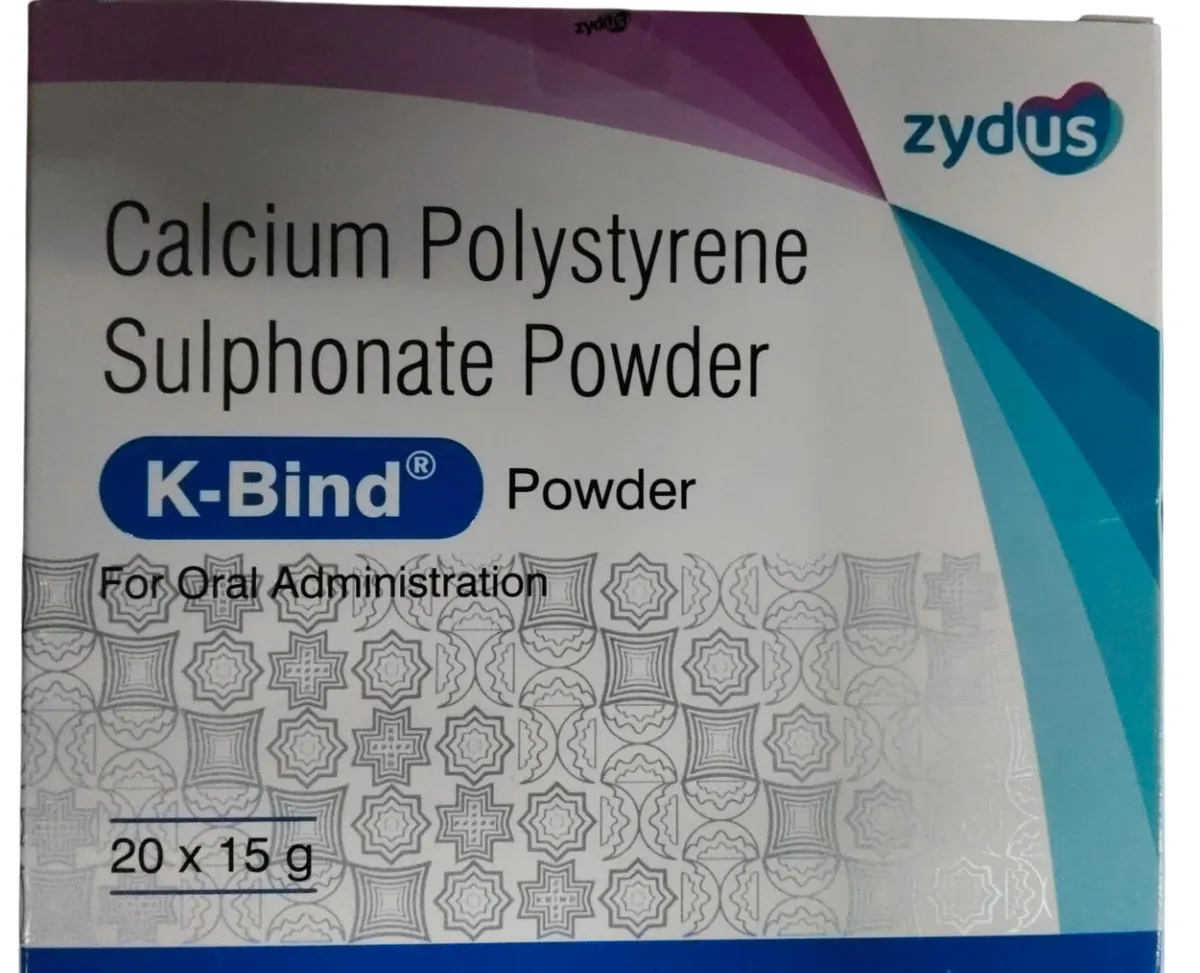
K Bind Powder Sachets, 15 gm is used in patients with kidney problems and on dialysis to treat and manage hyperkalaemia. This medicine works by eliminating excess potassium from the system to restore normal levels. Common side effects include hypokalaemia, hypocalcaemia, muscle cramps, tiredness, and muscle weakness.

Read more
Written By Bayyarapu Mahesh Kumar , M Pharmacy
Reviewed By Veda Maddala , M Pharmacy
OffersOffers & Discounts

Get Free delivery (₹99) with circle icon

Join Circle
coupon
Get Extra 18% Off with Coupons
coupon
Extra 10% Off with Bank Offers
bank offer
bank offer
bank offer

More about the Product

Manufacturer/Marketer :

Zydus Cadila

Consume Type :

Oral

Expires on or after :

Jan-27

Return Policy :

Not Returnable

About K Bind Powder Sachets, 15 gm

K Bind Powder Sachets, 15 gm is a prescription medication used to treat high levels of potassium in your blood. This condition can affect how your heart beats if left untreated, making it very important to manage. This medicine helps your body safely remove excess potassium through your digestive tract.

Your doctor will determine how often you need to take K Bind Powder Sachets, 15 gm based on your regular blood test results. It is typically taken consistently every day, and can be taken with or without food. To get the best results, your doctor will likely recommend dietary changes, such as eating fewer foods that are high in potassium.

While taking K Bind Powder Sachets, 15 gm, you may experience mild digestive issues like constipation or nausea. However, you should consult your doctor immediately if you experience severe stomach pain, persistent vomiting, or dark, bloody stools, as these can be signs of a serious problem.

Talk to your doctor before starting this medicine if you have kidney disease, high blood pressure, heart failure, or a history of bowel blockage. Do not take this if you have a bowel obstruction, abnormally high calcium levels, or already low levels of potassium in your blood.

This medicine can interact with oral antacids and certain laxatives, which can make it less effective or cause serious chemical imbalances. Talk to your doctor or pharmacist if you are pregnant, breastfeeding, or caring for an elderly patient, as special monitoring may be required.

Uses of K Bind Powder Sachets, 15 gm

K Bind Powder Sachets, 15 gm may be used to help manage the following condition:

  • High potassium levels in the blood (Hyperkalemia): K Bind Powder Sachets, 15 gm helps lower dangerously high levels of potassium, which is a common issue for people with kidney disease or those taking certain blood pressure medications.

Key Benefits

K Bind Powder Sachets, 15 gm is used to treat high potassium levels (hyperkalaemia). It works by removing excess potassium from the body, helping restore a healthy electrolyte balance and reducing the risk of serious complications.

  • Lowers High Potassium Levels: Helps remove excess potassium from the body, restoring potassium levels to a safer range.
  • Protects Heart Function: Maintaining normal potassium levels helps reduce the risk of irregular heart rhythms caused by hyperkalaemia.
  • Supports Electrolyte Balance: Helps maintain a healthy balance of electrolytes, which is essential for normal muscle and nerve function.
  • Helps Manage Hyperkalaemia: Provides an effective treatment option for controlling high potassium levels, particularly in people with kidney disease or other conditions that affect potassium balance.
  • Supports Ongoing Care: When used as prescribed, it helps reduce the risk of complications associated with persistently elevated potassium levels.
Side effects of K Bind Powder Sachets 15 gm
  • Get help from a health care professional.
  • Manage your feelings and things that trigger them.
  • Fuel your body with good food like fruits, veggies, and whole grains.
  • Find calm through activities like meditation or yoga.
  • Work on changing negative patterns and thoughts.
  • Focus on being healthy overall, not just how you look.
Overcome Medication-Induced Nausea: A 9-Step Plan
  • Inform your doctor about the nausea and discuss possible alternatives to the medication or adjustments to the dosage.
  • Divide your daily food intake into smaller, more frequent meals to reduce nausea.
  • Opt for bland, easily digestible foods like crackers, toast, plain rice, bananas, and applesauce.
  • Avoid certain foods that can trigger nausea, such as fatty, greasy, spicy, and smelly foods.
  • Drink plenty of fluids, such as water, clear broth, or electrolyte-rich beverages like coconut water or sports drinks.
  • Use ginger (tea, ale, or candies) to help relieve nausea.
  • Get adequate rest and also avoid strenuous activities that can worsen nausea.
  • Talk to your doctor about taking anti-nausea medication if your nausea is severe.
  • Record when your nausea occurs, what triggers it, and what provides relief to help you identify patterns and manage your symptoms more effectively.
To prevent, manage, and treat Constipation caused by medication usage, follow these steps:
  • Preventing Vomiting (Before it Happens)
  • Take medication exactly as prescribed by your doctor. This can help minimize side effects, including vomiting.
  • Having a small meal before taking your medication can help reduce nausea and vomiting.
  • Talk to your doctor about taking anti-nausea medication along with your prescribed medication.
  • Managing Vomiting (If it Happens)
  • Try taking ginger in the form of tea, ale, or candy to help alleviate nausea and vomiting.
  • What to Do if Vomiting Persists
  • Consult your doctor if vomiting continues or worsens, consult the doctor for guidance on adjusting your medication or additional treatment.
Here are the steps to cope with constipation as a side effect of medication:
  • Inform your doctor about your constipation symptoms. They may adjust your medication or advise alternative treatments.
  • Stay hydrated by drinking sufficient of water (at least 8-10 glasses a day) to help soften stool and promote bowel movements.
  • Increase fibre intake by eating foods high in fibre, such as fruits, whole grains, vegetables and legumes, to help bulk up the stool.
  • Establish a bowel routine by trying to go to the bathroom at the same time each day to train your bowels.
  • Engaging in regular exercise, like walking or yoga, can support in bowel movement stimulation.
  • Consult your doctor if constipation persists, and discuss alternative treatments or adjustments to your medication.

Directions for Use

  • K Bind Powder Sachets, 15 gm can be taken with or without food as advised by your doctor.
  • Follow your doctor’s instructions on the dosage and timing of this medication.
  • Pour the sachet contents into a glass of water, stir, and drink immediately.
  • Do not store the mixture for later use.

How K Bind Powder Sachets, 15 gm Works

K Bind Powder Sachets, 15 gm contains calcium polystyrene sulphonate. After you take it, the medicine travels through your stomach and into your digestive tract. It is not absorbed into your bloodstream; instead, it works locally inside your intestines like a magnet. As it passes through your bowels, K Bind Powder Sachets, 15 gm releases calcium and binds to the excess potassium present in your digestive fluids. The trapped potassium is then carried out of your body when you have a bowel movement, safely lowering the amount of potassium that can enter your blood.
bannner image

Alcohol

Unsafe

You are recommended not to consume alcohol along with K Bind Powder Sachets, 15 gm to avoid unpleasant side effects.

bannner image

Pregnancy

Consult your doctor

There is limited information available on using K Bind Powder Sachets, 15 gm in patients with pregnant women. Please consult your doctor.

bannner image

Breast Feeding

Consult your doctor

There is limited information available on using K Bind Powder Sachets, 15 gm in breastfeeding mother's. Please consult your doctor.

bannner image

Driving

Safe if prescribed

K Bind Powder Sachets, 15 gm has no or negligible impact on the ability to drive or use machines.

bannner image

Liver

Caution

If you have a history or evidence of any liver-related diseases, please inform the doctor before taking medicine.

bannner image

Kidney

Consult your doctor

If you have a history or evidence of any kidney-related diseases, please inform the doctor before taking medicine.

bannner image

Children

Safe if prescribed

K Bind Powder Sachets, 15 gm can be given safely to children under the supervision of a child specialist. The dose is worked out according to how much the child weighs.

bannner image

Heart

Caution

K Bind Powder Sachets, 15 gm should be taken with caution in patients with heart problems. Please inform your doctor if you have any pre-existing heart problems before using K Bind Powder Sachets, 15 gm.

bannner image

Geriatrics

Consult your doctor

K Bind Powder Sachets, 15 gm should be given to elderly patients only if prescribed by a doctor. If you have any concerns about using K Bind Powder Sachets, 15 gm in geriatrics, please consult your doctor.

What if I have taken an overdose of K Bind Powder Sachets, 15 gm

Taking too much of this medicine can cause your potassium levels to drop too low, which can lead to severe muscle weakness or heart rhythm complications. If you suspect an overdose, seek immediate medical attention.

Diet & Lifestyle Advise

  • Follow a Low-Potassium Diet: Limit high-potassium foods such as bananas, oranges, potatoes, tomatoes, spinach, and dried fruits, as advised by your healthcare provider.
  • Check Food Labels Carefully: Avoid processed foods containing potassium additives or potassium chloride.
  • Avoid Salt Substitutes: Do not use potassium-containing salt substitutes unless recommended by your doctor.
  • Attend Regular Blood Tests: Keep all scheduled appointments so your doctor can monitor your potassium and other electrolyte levels.
  • Stay Hydrated as Advised: Drink adequate fluids unless your doctor has recommended fluid restriction because of kidney or heart disease.
health query

Have a query?

How Soon It Starts Working

  • The time required for K Bind Powder Sachets, 15 gm to start to work: K Bind Powder Sachets, 15 gm ideally shows its action within 2 to 24 hours after administration.
  • The time for which the effects of K Bind Powder Sachets, 15 gm last: The effect of K Bind Powder Sachets, 15 gm lasts for 4 to 6 hours.

What if you forget to take K Bind Powder Sachets, 15 gm

If you miss a dose, take it as soon as you remember. If it is almost time for your next scheduled dose, skip the missed one and return to your regular schedule. Do not take a double dose to make up for a missed one.

Storage

•Store K Bind Powder Sachets, 15 gm at room temperature, ideally between 15°C and 30°C (59°F to 86°F).

Drug Warnings

  • Do Not Mix with Sorbitol: Avoid using K Bind Powder Sachets, 15 gm with sorbitol unless specifically directed by your doctor, as this combination may cause serious bowel complications.
  • Separate from Other Medicines: Take this medicine at least 3 hours before or after other oral medicines, as it may reduce their absorption.
  • Avoid Inhaling the Powder: When preparing the medicine, mix it carefully to minimise inhalation of the powder, which may irritate the airways.
  • Monitor Your Bowel Movements: Contact your doctor promptly if you develop severe constipation, abdominal pain, or difficulty passing stools while taking this medicine.

Drug-Drug Interactions

verifiedApollotooltip

K Bind Powder Sachets, 15 gm may interact with certain medicines, affecting its effectiveness or increasing the risk of side effects.

  • Antacids and laxatives: Taking oral antacids or laxatives containing calcium or magnesium (such as calcium carbonate or magnesium hydroxide) can block K Bind Powder Sachets, 15 gm from working and may cause a dangerous chemical imbalance.
  • Digoxin: If your potassium levels drop too low while taking K Bind Powder Sachets, 15 gm, the risk of serious, life-threatening side effects from your heart medicine (digoxin) increases significantly.
  • Thyroid medications (like levothyroxine): This medicine can bind to thyroid hormones in your gut, reducing their absorption. Space these medicines at least 4 hours apart.
No Drug - Drug interactions found in our data. We may lack specific data on this medicine and are actively working to update our database. Consult your doctor for personalized advice

Drug-Drug Interactions

Login/Sign Up

Drug-Food Interactions

verifiedApollotooltip

Certain foods and beverages may influence the effectiveness of K Bind Powder Sachets, 15 gm during treatment.

  • High-potassium foods and juices: Foods and beverages that are high in potassium, such as bananas, oranges, orange juice, tomatoes, potatoes, spinach, dried fruits, and coconut water, may reduce the effectiveness of K Bind Powder Sachets, 15 gm. Follow the dietary advice provided by your doctor or dietitian.
No Drug - Food interactions found in our database. Some may be unknown. Consult your doctor for what to avoid during medication.

Drug-Food Interactions

Login/Sign Up

All Substitutes & Brand Comparisons

Habit Forming

No

Therapeutic Class

[MISCELLANEOUS]

FAQs

K Bind Powder Sachets, 15 gm is used to treat something called hyperkalaemia. It is used in patients with kidney problems and on dialysis. Hyperkalaemia (high potassium) is a medical problem where you have too much potassium in your blood.
K Bind Powder Sachets, 15 gm contains calcium polystyrene sulphonate, which belongs to a group of medicines called ion exchange resins. It is used to treat a medical condition known as hyperkalaemia. This occurs when your blood has excessive potassium. It works by eliminating excess potassium from your system in order to restore your levels to normal.
The most common cause of genuinely high potassium (hyperkalemia) is a kidney problem, such as acute kidney failure. Kidney disease is chronic.
Potassium is an essential electrolyte required for various vital functions in our body. However, high potassium levels may lead to complications such as muscle cramps, pain, difficulty breathing, nausea, tiredness, chest pain, and even death.
No, it is a prescribed medication for preventing specific medical conditions such as treating hyperkalaemia. Taking this medication on your own can cause unwanted side effects.
K Bind Powder Sachets, 15 gm may interact with medicines used to treat Gastroesophageal Reflux Disease (e.g. pantoprazole, esomeprazole). So, it is recommended not to take K Bind Powder Sachets, 15 gm and antacids medications same time. If necessary, a time gap of 2hours in between two medicines is advisable.
Depending upon the severity of your medical condition, your doctor may prescribe K Bind Powder Sachets, 15 gm to you daily for a specific duration. However, do not take it endlessly on your own without a doctor's advice.
Unfortunately, it's often difficult to know if you have hyperkalemia (high potassium level) based on symptoms alone. Many people with high potassium levels experience no noticeable symptoms. However, if you experience muscle weakness or numbness, heart palpitations or irregular heartbeat, or feeling unwell, remember that your healthcare provider is there to support you. It's essential to consult with them for guidance and reassurance.
The most reliable way to determine if you have a high potassium level is through a blood test, a trusted and accurate diagnostic tool that can provide you with the information you need for effective management.
K Bind Powder Sachets, 15 gm may interact with various medications. However, it’s essential to consult with your healthcare provider or pharmacist before taking any new medications while on calcium polystyrene sulfonate. They can help you determine if your current medications could interact with the drug.
Calcium polystyrene sulfonate may cause gastrointestinal side effects, but it doesn't typically cause long-term damage to the gut. If you experience any side effects, it's essential to consult with your healthcare provider. They can assess the severity of the symptoms and recommend appropriate management strategies.
No, you should not mix K Bind Powder Sachets, 15 gm with orange juice or any other fruit juices, as they contain high levels of potassium which will stop the medicine from working effectively. Stick to water or other low-potassium liquids recommended by your pharmacist.
Mixing K Bind Powder Sachets, 15 gm with sorbitol (a sweetener or laxative) is highly dangerous and can cause severe damage or death to your bowel tissue. Always check that any liquids or laxatives you use do not contain sorbitol. Talk to your doctor or pharmacist if you are unsure.
You will need regular blood tests, especially in the first few weeks of starting K Bind Powder Sachets, 15 gm, to monitor your potassium and calcium levels. This helps your doctor adjust your dose safely. Talk to your doctor to set up your testing schedule.

Disclaimer

While we strive to provide complete, accurate, and expert-reviewed content on our 'Platform', we make no warranties or representations and disclaim all responsibility and liability for the completeness, accuracy, or reliability of the aforementioned content. The content on our platform is for informative purposes only, and may not cover all clinical/non-clinical aspects. Reliance on any information and subsequent action or inaction is solely at the user's risk, and we do not assume any responsibility for the same. The content on the Platform should not be considered or used as a substitute for professional and qualified medical advice. Please consult your doctor for any query pertaining to medicines, tests and/or diseases, as we support, and do not replace the doctor-patient relationship.

Country of origin

India

Manufacturer/Marketer address

Zydus Tower, Satellite Cross Roads,Ahmedabad – 380015 Gujarat, India.
Other Info - KBI0001
whatsapp Floating Button

Recommended for a 30-day course: 2 Packets

Buy Now
Add 2 Packets