
Welcome User
Login/Sign Up

Login/Sign Up
₹435
(Inclusive of all Taxes)
₹321 with coupons & bank offers*
Get Free delivery (₹99) with
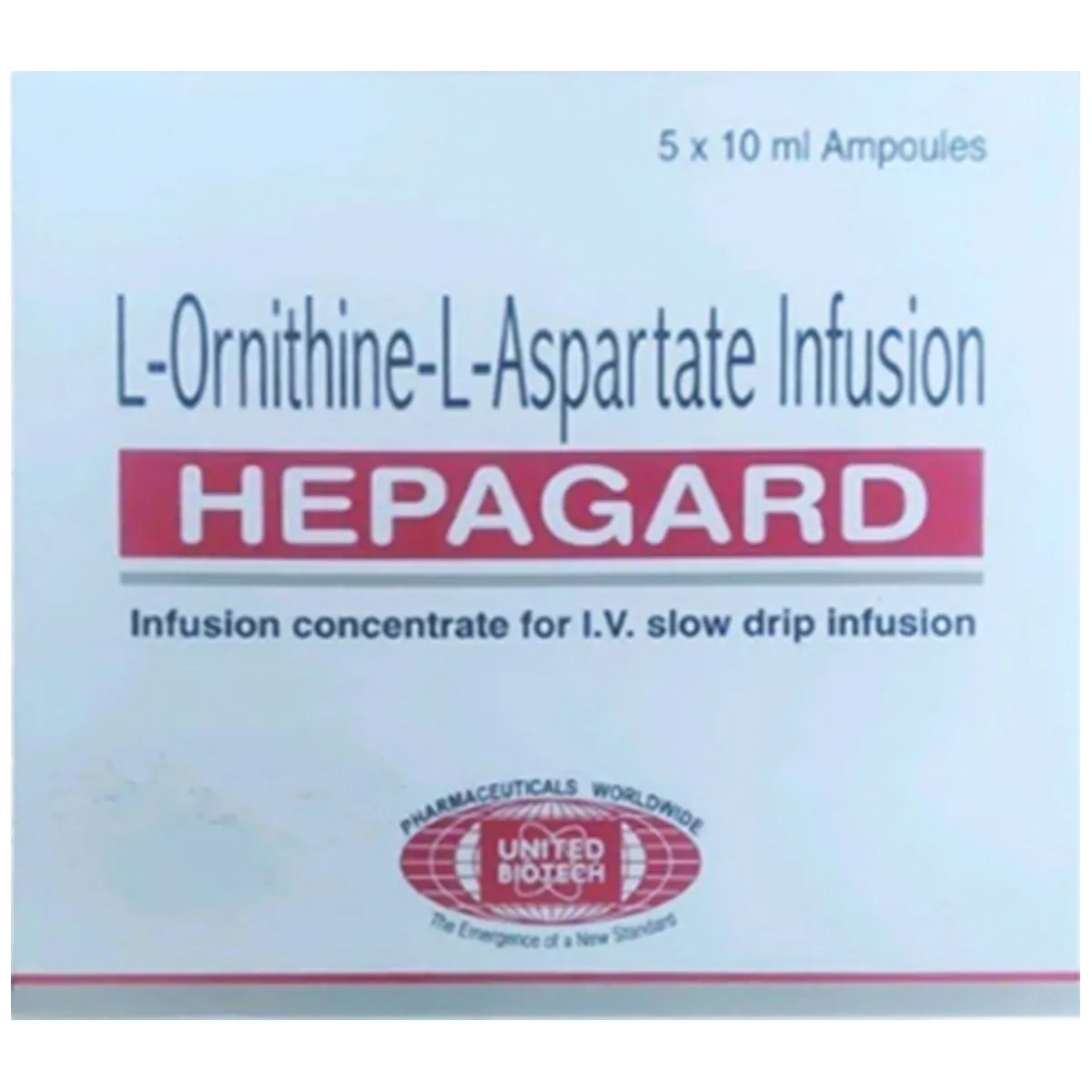
Hepagard Injection is a prescription medicine used to treat severe liver disease and hepatic encephalopathy, a condition in which high ammonia levels affect brain function. It helps remove excess ammonia from the blood, improves mental alertness, and supports the liver's natural detoxification process.
This medicine is given as an injection or slow intravenous (IV) infusion in a hospital or clinic. Your doctor will decide the dose, infusion rate, and duration of treatment based on your condition.
For the best results, continue following your doctor's advice regarding protein intake, hydration, and alcohol avoidance. These lifestyle measures help support liver function and reduce ammonia buildup.
Most people tolerate this medicine well. Mild nausea, vomiting, or temporary discomfort at the injection site may occur and usually improve on their own. Seek medical attention immediately if you develop symptoms of a severe allergic reaction, severe pain or swelling around the injection site, or unusual dizziness. Tell your doctor if you have kidney disease, are pregnant, planning pregnancy, breastfeeding, or taking any other medicines before starting treatment.
Hepagard Injection is used in the treatment of liver diseases. The detailed uses of Hepagard Injection are as follows:
Hepagard Injection provides critical, fast-acting support for patients dealing with severe liver complications. By addressing the root cause of metabolic toxic buildup, it offers real-world relief from distressing symptoms.
Consult your doctor
It is not known if alcohol affects Hepagard Injection. Please consult your doctor.
Caution
There are no controlled studies on the use of Hepagard Injection during pregnancy. Consult your doctor if you are pregnant or have any concerns; your doctor will prescribe this medicine during pregnancy only if the benefits outweigh the risks.
Caution
The presence of this medicine in human milk is unknown. When deciding whether to stop treatment with either drug, your doctor may consider the advantages of breastfeeding for the infant and Hepagard Injection treatment for the breastfeeding mother.
Safe if prescribed
Hepagard Injection is unlikely to interfere with your ability to drive. However, drive or operate machinery only if you are alert.
Caution
Your doctor will adjust the infusion rate of Hepagard Injection if your liver function is seriously compromised.
Caution
Please consult your doctor if you have any concerns regarding the use of Hepagard Injection in patients with kidney impairment. Hepagard Injection should not be used in case of severe renal impairment.
Consult your doctor
Limited information is available regarding the usage of Hepagard Injection in children. Please consult your doctor.
Caution
Please consult your doctor if you have any concerns regarding the use of Hepagard Injection in patients with heart problems.
Caution
Hepagard Injection should be used with caution in elderly patients. Please consult your doctor before use.
Have a query?
The time required for Hepagard Injection to start to work: The exact onset time of Hepagard Injection has not been clinically established.
The time for which the effects of Hepagard Injection last: The duration of action for Hepagard Injection is unknown.
Login/Sign Up
No clinically significant food interactions are known with Hepagard Injection when used as directed.
Login/Sign Up
₹221
MRP ₹260
15% off
Disclaimer


