Apollo
logo
Select Delivery Location
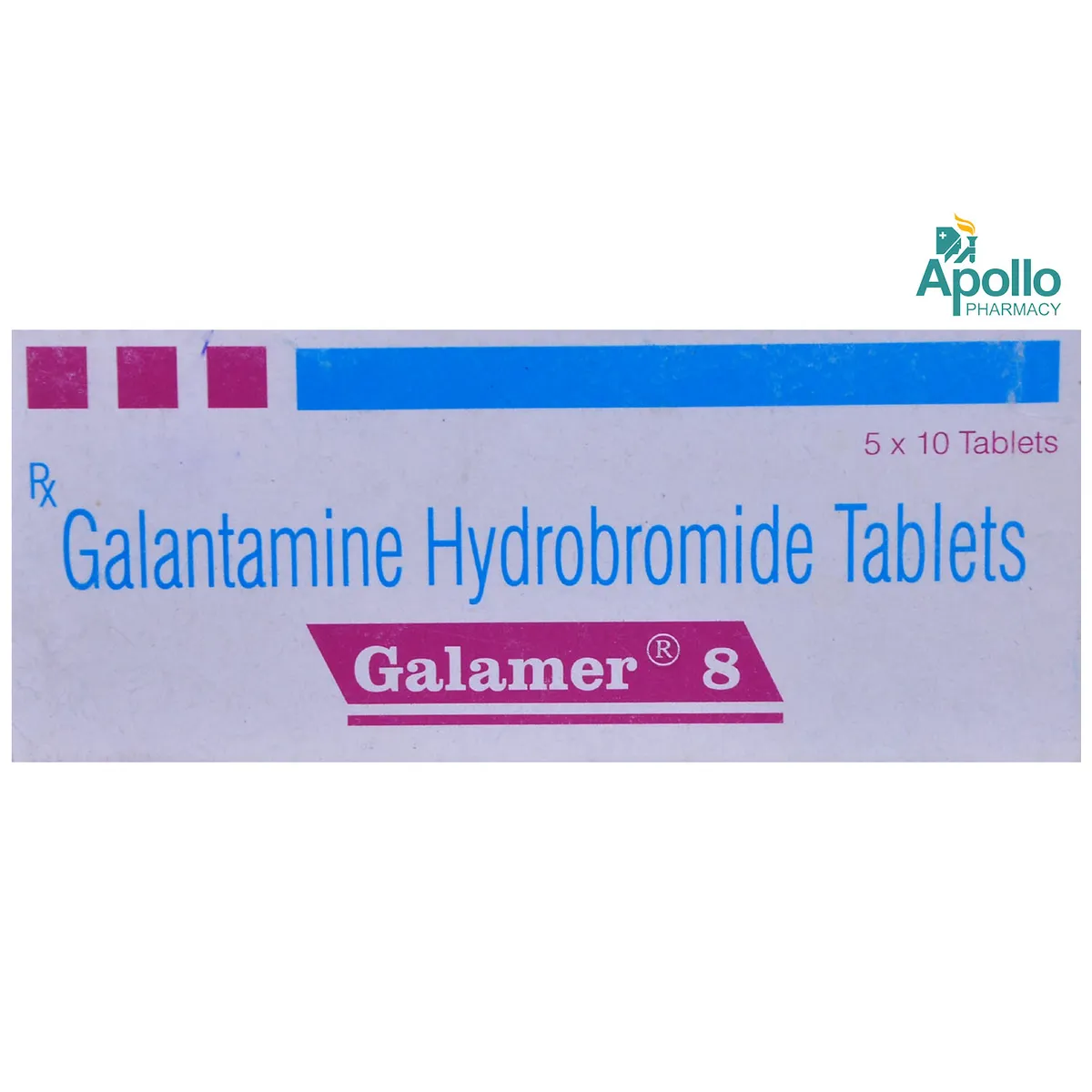
compositionComposition:GALANTAMINE-8MG
prescription
Prescription Medicine
info
Best Price

₹372 with coupons & bank offers*

View

Galamer 8 Tablet is used to treat mild to moderate dementia caused by Alzheimer's disease. It contains Galantamine, which improves mental function, such as memory and thinking. It may cause common side effects such as nausea, vomiting, diarrhoea, headache, dizziness, drowsiness, shakiness (tremor), weakness, depression, and loss of appetite.

Read more
Written By Bayyarapu Mahesh Kumar , M Pharmacy
Reviewed By Dr Aneela Siddabathuni , MPharma., PhD
OffersOffers & Discounts

Get Free delivery (₹99) with circle icon

Join Circle
coupon
Get Extra 18% Off with Coupons
coupon
Extra 10% Off with Bank Offers
bank offer
bank offer
bank offer

More about the Product

Composition :

GALANTAMINE-8MG

Manufacturer/Marketer :

Sun Pharmaceutical Industries Ltd

Consume Type :

Oral

Expires on or after :

Jan-27

Return Policy :

Not Returnable

About Galamer 8 Tablet

Galamer 8 Tablet is an oral medicine prescribed to manage symptoms of mild to moderate dementia associated with Alzheimer's disease. It helps improve memory, awareness, and the ability to perform daily functions by supporting chemical balances in the brain. This medication does not cure Alzheimer's, but it can help manage the progressive decline in mental function.

For the best results, you must take Galamer 8 Tablet consistently every day, exactly as your doctor prescribes. It is typically taken with meals (usually breakfast and dinner) to help reduce stomach upset. Staying hydrated and eating a balanced diet rich in antioxidants can also support brain health and overall well-being.

While taking Galamer 8 Tablet , you might experience some mild side effects such as nausea, vomiting, or a temporary loss of appetite. These symptoms are common when first starting or when gradually increasing the dose, but if you experience serious issues like a very slow heart rate, fainting, or severe stomach pain, you should contact your doctor immediately.

Do not take this if you have had a severe allergic reaction to this medication in the past. Talk to your doctor before starting Galamer 8 Tablet if you have a history of heart rhythm issues, asthma, chronic lung disease, stomach ulcers, or severe liver or kidney damage.

Taking this medicine with alcohol can increase drowsiness, so it is best to avoid drinking while on this treatment. If you are pregnant, planning to become pregnant, breastfeeding, or are an older adult, consult your doctor to discuss the risks and benefits before using this medicine.

Uses of Galamer 8 Tablet

Galamer 8 Tablet is used to manage symptoms of mild to moderate dementia associated with Alzheimer's disease. The detailed uses of Galamer 8 Tablet are as follows:

  • Alzheimer's disease dementia: Galamer 8 Tablet helps manage mild to moderate confusion, memory loss, and cognitive decline, allowing individuals to maintain daily functioning and mental clarity for longer.

Key Benefits

Galamer 8 Tablet offers meaningful support for individuals experiencing cognitive decline. By helping to preserve mental function, this medication provides several real-world benefits:

  • Sustained Daily Independence: It helps patients perform routine activities, such as grooming, eating, and managing personal tasks, with less assistance.
  • Improved Cognitive Function: Patients often experience clearer thinking, better concentration, and improved memory recall, making conversations and daily interactions easier.
  • Support for Caregivers: By slowing down the progression of behavioural and mental symptoms, Galamer 8 Tablet can ease the daily caregiving burden and improve the quality of life for the entire family.
Side effects of Galamer 8 Tablet
Overcome Medication-Induced Nausea: A 9-Step Plan
  • Inform your doctor about the nausea and discuss possible alternatives to the medication or adjustments to the dosage.
  • Divide your daily food intake into smaller, more frequent meals to reduce nausea.
  • Opt for bland, easily digestible foods like crackers, toast, plain rice, bananas, and applesauce.
  • Avoid certain foods that can trigger nausea, such as fatty, greasy, spicy, and smelly foods.
  • Drink plenty of fluids, such as water, clear broth, or electrolyte-rich beverages like coconut water or sports drinks.
  • Use ginger (tea, ale, or candies) to help relieve nausea.
  • Get adequate rest and also avoid strenuous activities that can worsen nausea.
  • Talk to your doctor about taking anti-nausea medication if your nausea is severe.
  • Record when your nausea occurs, what triggers it, and what provides relief to help you identify patterns and manage your symptoms more effectively.
To prevent, manage, and treat Constipation caused by medication usage, follow these steps:
  • Preventing Vomiting (Before it Happens)
  • Take medication exactly as prescribed by your doctor. This can help minimize side effects, including vomiting.
  • Having a small meal before taking your medication can help reduce nausea and vomiting.
  • Talk to your doctor about taking anti-nausea medication along with your prescribed medication.
  • Managing Vomiting (If it Happens)
  • Try taking ginger in the form of tea, ale, or candy to help alleviate nausea and vomiting.
  • What to Do if Vomiting Persists
  • Consult your doctor if vomiting continues or worsens, consult the doctor for guidance on adjusting your medication or additional treatment.
Here are the precise steps to cope with diarrhoea caused by medication usage:
  • Inform Your Doctor: Notify your doctor immediately about your diarrhoea symptoms. This allows them to adjust your medication or provide guidance on managing side effects.
  • Stay Hydrated: Drink plenty of fluids to replace lost water and electrolytes. Choose water, clear broth, and electrolyte-rich drinks. Avoid carbonated or caffeinated beverages to effectively rehydrate your body.
  • Follow a Bland Diet: Eat easy-to-digest foods to help firm up your stool and settle your stomach. Try incorporating bananas, rice, applesauce, toast, plain crackers, and boiled vegetables into your diet.
  • Avoid Trigger Foods: Steer clear of foods that can worsen diarrhoea, such as spicy, fatty, or greasy foods, high-fibre foods, and dairy products (especially if you're lactose intolerant).
  • Practice Good Hygiene: Maintain good hygiene to prevent the spread of infection. To stay healthy, wash your hands frequently, clean and disinfect surfaces regularly, and avoid exchanging personal belongings with others.
  • Take Anti-Diarrheal Medications: If your doctor advises, anti-diarrheal medications such as loperamide might help manage diarrhoea symptoms. Always follow your doctor's directions.
  • Keep track of your diarrhoea symptoms. If they don't get better or worse or are accompanied by severe stomach pain, blood, or dehydration signs (like extreme thirst or dark urine), seek medical help.
  • Weight loss without physical activity needs immediate medical attention.
  • Get a physical examination and blood tests done to identify factors causing weight loss that could be related to metabolism and thyroid function.
  • Avoid smoking and alcohol intake as it can alter your liver condition and increase your weight loss.
  • Practice meditation and yoga to avoid anxiety, which can be one of the leading causes of weight loss.
  • Talk to your dietician and consume food which can maintain ideal weight.
Dealing with Medication-Induced Headache:
  • Hydrate your body: Drink enough water to prevent dehydration and headaches.
  • Calm Your Mind: Deep breathing and meditation can help you relax and relieve stress.
  • Rest and Recharge: Sleep for 7-8 hours to reduce headache triggers.
  • Take rest: lie down in a quiet, dark environment.
  • Cold or warm compresses can help reduce tension.
  • Stay Upright: Maintain good posture to keep symptoms from getting worse.
  • To treat headaches naturally, try acupuncture or massage therapy.
  • Over-the-counter pain relievers include acetaminophen and ibuprofen.
  • Prescription Assistance: Speak with your doctor about more substantial drug alternatives.
  • Severe Headaches: Seek emergency medical assistance for sudden, severe headaches.
  • Frequent Headaches: If you get reoccurring headaches, consult your doctor.
  • Headaches with Symptoms: Seek medical attention if your headaches include fever, disorientation, or weakness.
Here are the 7 steps to manage Dizziness caused by medication:
  • Inform your doctor about dizziness symptoms. They may adjust your medication regimen or prescribe additional medications to manage symptoms.
  • Follow your doctor's instructions for taking medication, and take it at the same time every day to minimize dizziness.
  • When standing up, do so slowly and carefully to avoid sudden dizziness.
  • Avoid making sudden movements, such as turning or bending quickly, which can exacerbate dizziness.
  • Drink plenty of water throughout the day to stay hydrated and help alleviate dizziness symptoms.
  • If you're feeling dizzy, sit or lie down and rest until the dizziness passes.
  • Track when dizziness occurs and any factors that may trigger it, and share this information with your doctor to help manage symptoms.
  • Consume more protein-rich foods and healthy fats like beans, avocados, cheese, nuts and lean meats to minimize appetite.
  • Prefer foods high in fiber to help feel full for a long time.
  • If you have decreased appetite, eat only when you are hungry.
  • Eat several small meals or snacks all day.
  • Try to take only small sips of fluids while eating.

Directions for Use

  • Galamer 8 Tablet can be taken preferably with food or as advised by your doctor.
  • Follow your doctor's instructions on the dosage and timing of this medication to ensure safe and effective use.
  • Swallow it as a whole with a glass of water.
  • Do not break, crush or chew it.

How Galamer 8 Tablet Works

In a brain affected by Alzheimer's disease, there is a lower level of a natural chemical messenger called acetylcholine, which is essential for memory, learning, and thinking. Galamer 8 Tablet contains galantamine, which works by blocking a specific enzyme that breaks down this chemical, allowing more of it to remain active and available in the brain. Additionally, Galamer 8 Tablet stimulates certain receptors in the brain to make them more sensitive to this messenger. Together, these actions enhance communication between nerve cells, helping to temporarily stabilise or improve cognitive function.
bannner image

Alcohol

Caution

It is advised to limit alcohol consumption while taking Galamer 8 Tablet . Alcohol intake, along with Galamer 8 Tablet , may cause increased dizziness and drowsiness.

bannner image

Pregnancy

Caution

Galamer 8 Tablet should be used during pregnancy only if the benefit outweighs the risks. Please consult your doctor before taking Galamer 8 Tablet if you are pregnant or planning to conceive.

bannner image

Breast Feeding

Caution

It is not known if Galamer 8 Tablet is excreted into breast milk. Please consult your doctor before taking Galamer 8 Tablet if you are a breastfeeding mother.

bannner image

Driving

Caution

Galamer 8 Tablet may cause dizziness or drowsiness. Do not drive if you are not mentally alert or experience any symptoms that affect your ability to drive or operate machinery.

bannner image

Liver

Caution

Galamer 8 Tablet should be used with caution if you have liver impairment/liver disease. Please consult your doctor before using Galamer 8 Tablet .

bannner image

Kidney

Caution

Galamer 8 Tablet should be used with caution if you have kidney impairment/ kidney disease. Please consult your doctor before using Galamer 8 Tablet .

bannner image

Children

Unsafe

Galamer 8 Tablet is not recommended in people below 18 years of age. Please consult the doctor if you have any concerns.

bannner image

Heart

Caution

Galamer 8 Tablet should be taken with caution in patients with heart problems. Please inform your doctor about any existing heart problems before using Galamer 8 Tablet .

bannner image

Geriatrics

Safe if prescribed

Galamer 8 Tablet is safe for use in elderly patients if prescribed by the physician.

What if I have taken an overdose of Galamer 8 Tablet

If you suspect an overdose, seek immediate medical attention or call emergency services right away. Signs of an overdose can include severe muscle weakness, cramping, vomiting, watering eyes, sweating, low blood pressure, or a very slow heart rate.

Diet & Lifestyle Advise

  • Stay Hydrated: Drink at least 6 to 8 glasses of water daily. Galamer 8 Tablet can cause mild nausea or sweating, making hydration crucial to prevent dizziness and dehydration.
  • Eat Regular, Balanced Meals: Since weight loss and reduced appetite are common, eat small, nutrient-rich meals throughout the day. Taking your medicine with food helps protect your stomach.
  • Engage in Mental Exercises: Keep your brain active by practising puzzles, reading, or engaging in light social activities to support the positive effects of the medication on memory.
  • Create a Consistent Routine: Maintain a structured daily schedule for meals, sleep, and medication times to reduce confusion and help manage memory-related challenges.
health query

Have a query?

How Soon It Starts Working

The time required for Galamer 8 Tablet to start to work: The time required for Galamer 8 Tablet to show its action is not clinically established. The time for which the effects of Galamer 8 Tablet last: The duration of action for Galamer 8 Tablet is not clinically established.

What if you forget to take Galamer 8 Tablet

If you miss a dose of Galamer 8 Tablet , take it as soon as you remember, with food. However, if it is almost time for your next scheduled dose, skip the missed dose and return to your regular schedule. Do not take two doses at the same time to make up for a missed one. If you miss taking the medicine for several days in a row, talk to your doctor or pharmacist before restarting, as you may need to restart at a lower dose.

Storage

• Store Galamer 8 Tablet at room temperature, between 20°C and 25°C (68°F to 77°F). • Keep the medication in its original container, tightly closed, to protect it from light and moisture.

Drug Warnings

  • Monitor your heart rate: Galamer 8 Tablet can slow down your heart rate. Check your pulse regularly and report any unusually slow heart rates or dizzy spells to your doctor.
  • Watch for signs of stomach bleeding: If you have a history of ulcers or take pain relievers (like ibuprofen), watch closely for severe stomach pain or dark, tarry stools.
  • Be careful when standing up: This medicine can cause dizziness or lightheadedness when you stand up quickly from a sitting or lying position. Rise slowly to prevent falls.
  • Avoid abrupt stops: Do not stop taking Galamer 8 Tablet suddenly without consulting your doctor, as your cognitive symptoms could worsen rapidly.
  • Do not use expired medicine: Always check the expiration date on the package before taking your dose.

Drug-Drug Interactions

verifiedApollotooltip
  • Anticholinergic medications (like certain allergy or bladder drugs): May reduce the effectiveness of Galamer 8 Tablet because they block the same brain chemicals this medicine tries to boost.
  • NSAIDs (like ibuprofen or naproxen): May increase the risk of stomach ulcers and bleeding when taken together with Galamer 8 Tablet .
  • Beta-blockers (heart medications): Can cause an excessively slow heart rate or fainting when combined with this medicine.

Drug-Drug Interactions

Login/Sign Up

How does the drug interact with Galamer 8 Tablet:
Taking bupropion with Galamer 8 Tablet may raise the chance of seizures (fits).

How to manage the interaction:
Co-administration of bupropion along with Galamer 8 Tablet can lead to an interaction, it can be taken if recommended by a doctor. However, if you experience confusion, jerky movements, loss of consciousness, dizziness, muscle stiffness, palpitations, or shortness of breath, contact a doctor immediately. Do not discontinue any medications without consulting a doctor.
How does the drug interact with Galamer 8 Tablet:
Combining Mefloquine with Galamer 8 Tablet can increase the risk or severity of irregular heart rhythms. The risk increases in patients with a history of heart illness or electrolyte imbalance.

How to manage the interaction:
Taking Galamer 8 Tablet with Mefloquine together can result in an interaction, but it can be taken if your doctor has advised it. If you experience symptoms like a very slow heart rate, low blood pressure, dizziness, fainting, or an irregular heartbeat, call your doctor right away. Do not stop using any medications without talking to a doctor.
GalantamineAclidinium bromide
Severe
How does the drug interact with Galamer 8 Tablet:
Taking Galamer 8 Tablet with Aclidinium bromide can increase the levels and the efficacy of Aclidinium bromide. This increases the risk or severity of side effects like skeletal muscle relaxation.

How to manage the interaction:
There may be a possibility of interaction between Galamer 8 Tablet and Aclidinium bromide, but it can be taken if prescribed by a doctor. However, if you experience sudden dizziness, lightheadedness, fainting, shortness of breath, chest pain or tightness, rapid heartbeat, rash, or flushing, contact a doctor immediately. Do not discontinue any medications without consulting a doctor.
How does the drug interact with Galamer 8 Tablet:
The combined use of tramadol with Galamer 8 Tablet can make tramadol less effective as a treatment.

How to manage the interaction:
Taking Galamer 8 Tablet with tramadol together can result in an interaction, it can be taken if your doctor has advised it. However, if you experience any symptoms such as confusion, hallucination, seizure, increased heart rate, blurred vision, tremors, incoordination, stomach cramps, nausea, vomiting, and diarrhea, contact a doctor immediately. Do not discontinue any medications without consulting a doctor.
GalantamineIomeprol
Severe
How does the drug interact with Galamer 8 Tablet:
Coadministration of Galamer 8 Tablet with Iomeprol may cause seizures (sudden, violent, uncontrollable contraction of a group of muscles).

How to manage the interaction:
There may be a possibility of interaction between Galamer 8 Tablet and Iomeprol, but it can be taken if prescribed by a doctor. If you have seizures or a head injury, it's important to contact a doctor right away. Don't hesitate to reach out if you're experiencing any of these symptoms. Do not stop using any medications without a doctor's advice.
GalantamineMetrizamide
Severe
How does the drug interact with Galamer 8 Tablet:
Coadministration of Galamer 8 Tablet with Metrizamide may cause seizures (sudden, violent, uncontrollable contraction of a group of muscles).

How to manage the interaction:
Taking Galamer 8 Tablet with Metrizamide together can result in an interaction, but it can be taken if your doctor has advised it. If you have seizures or a head injury, it's important to contact a doctor right away. Do not stop using any medications without talking to a doctor.
How does the drug interact with Galamer 8 Tablet:
When Amoxapine and Galamer 8 Tablet are taken together, the body's ability to break down Amoxapine may be reduced. This increases Amoxapine levels and risk or severity of side effects.

How to manage the interaction:
Taking Galamer 8 Tablet with Amoxapine together can result in an interaction, but it can be taken if your doctor has advised it. If you notice any of these signs - memory problems, trouble with your nerves, feeling sleepy, feeling confused, or having difficulty thinking clearly, it's important to contact a doctor right away. Do not stop using any medications without a doctor's advice.
Severe
How does the drug interact with Galamer 8 Tablet:
Coadministration of Galamer 8 Tablet with Iohexol may cause seizures (sudden, violent, uncontrollable contraction of a group of muscles).

How to manage the interaction:
Taking Galamer 8 Tablet with Iohexol together can result in an interaction, but it can be taken if your doctor has advised it. If you have seizures or a head injury, it's important to contact your doctor right away. Don't hesitate to reach out if you're experiencing any of these symptoms. Do not discontinue any medications without consulting a doctor.
GalantamineIopamidol
Severe
How does the drug interact with Galamer 8 Tablet:
Coadministration of Galamer 8 Tablet with iopamidol may cause seizures (sudden, violent, uncontrollable contraction of a group of muscles).

How to manage the interaction:
Although there is a possible interaction between Galamer 8 Tablet and ipamidol, you can take these medicines together if prescribed by your doctor. If you have seizures or a head injury, it's important to contact your doctor right away. Don't hesitate to reach out if you're experiencing any of these symptoms. Do not stop using any medications without talking to a doctor.

Drug-Food Interactions

verifiedApollotooltip
  • Alcohol: May increase drowsiness, dizziness, and the risk of stomach irritation. It should be avoided or limited while taking Galamer 8 Tablet .
No Drug - Food interactions found in our database. Some may be unknown. Consult your doctor for what to avoid during medication.

Drug-Food Interactions

Login/Sign Up

Habit Forming

No

Therapeutic Class

[ANTI- ALZHEIMER'S AGENTS]

FAQs

Galamer 8 Tablet is used to manage symptoms of mild to moderate dementia associated with Alzheimer's disease, helping improve cognitive function and daily life activities.
Galamer 8 Tablet contains Galantamine, an acetylcholinesterase inhibitor. It treats dementia in Alzheimer's disease by increasing acetylcholine levels in the central nervous system and enhancing the neurotransmission process. Thus, Galamer 8 Tablet improves memory, thinking, and awareness.
Galamer 8 Tablet should be used with caution in the medical history of liver or kidney diseases, heart problems (chest discomfort, heart attack, heart failure, and slow or uneven heartbeat), electrolyte imbalance (potassium), stomach ulcer, fits, Parkinson's disease, breathing problems (asthma, chronic obstructive pulmonary disease (COPD)), and urination problems. Please inform your doctor of any other medical conditions you may have before starting Galamer 8 Tablet .
Store Galamer 8 Tablet in a dry place at a temperature of 20°C to 25°C. Do not store in the freezer.
No, Galamer 8 Tablet is not an anti-psychotic. Galamer 8 Tablet contains Galantamine, which belongs to the class of drugs called acetylcholinesterase inhibitors.
An overdose of Galamer 8 Tablet may cause muscle weakness, severe nausea, vomiting, shakiness (tremors), slow heartbeat, fits and loss of consciousness. If you think you have taken an overdose of Galamer 8 Tablet or experience these symptoms, please consult a doctor immediately.
Galamer 8 Tablet may cause side effects such as vomiting, nausea, weight loss, diarrhoea, weakness and headache. To reduce the impact of these side effects, you are advised to drink more fluids while on treatment with Galamer 8 Tablet .
Yes, Galamer 8 Tablet affect the weight of patient with Alzheimer’s disease. It can cause weight-loss in the patients. So, in patients taking Galamer 8 Tablet , weight should be monitored. However, consult a doctor if the condition worsens.
Yes, Galamer 8 Tablet can affect the heart, causing decrease in the heart rate. Other uncommon side effects include irregular heartbeat, and other types of cardiac arrhythmias.
Galamer 8 Tablet can increase the blood pressure as a common side effect. It can also decrease the blood pressure which is uncommon. Therefore, blood pressure should be monitored regularly for a hypertensive (high blood pressure) patient.
If you have to undergo surgery inform your doctor in beforehand about Galamer 8 Tablet . So, the doctor will guide you whether you should continue taking Galamer 8 Tablet or stop the intake of the medication if needed.
Dementia is the loss of functioning such as memory, thinking, remembering, and reasoning. The cause of the dementia is abnormal functioning of brain cells, which cause a disturbance in the communication between them.
No, paroxetine cannot be taken with Galamer 8 Tablet . It may interfere with the way Galamer 8 Tablet works and increases its levels in the body. This interaction can cause nausea and vomiting. However, please consult your doctor before taking other medicines with Galamer 8 Tablet .
The common side effects of Galamer 8 Tablet include nausea, vomiting, diarrhoea, headache, dizziness, drowsiness, shakiness (tremor), weakness, depression, and loss of appetite. These side effects are not familiar to everyone and vary from person to person. If you notice any side effects that are not manageable, please consult your doctor.
No, Galamer 8 Tablet does not cure Alzheimer's disease or stop its underlying progression. Instead, it temporarily helps manage and improve symptoms like memory loss and confusion. Talk to your doctor for more information.
Nausea is common, especially when first starting. Taking the medicine with meals and drinking plenty of fluids can help ease this symptom. If the nausea is severe or causes vomiting, talk to your doctor.
It is best to avoid or limit alcohol, as it can worsen side effects like dizziness, drowsiness, and stomach irritation. Talk to your doctor about your alcohol intake.
If you miss several days of your medication, do not just start taking your regular dose again. Your body may have lost its tolerance, and restarting at the usual dose could cause severe nausea. Talk to your doctor or pharmacist about how to restart safely.
Yes, it can cause a temporary drop in blood pressure, leading to dizziness or lightheadedness when standing. To prevent falls, try rising slowly from sitting or lying positions. Talk to your doctor if this problem continues.
No, you should swallow extended-release capsules whole. Crushing, chewing, or opening them can release the medicine too quickly, increasing the risk of side effects. Talk to your doctor or pharmacist if you have trouble swallowing.
Yes, taking this medicine with nonsteroidal anti-inflammatory drugs (NSAIDs) like ibuprofen can increase your risk of developing stomach ulcers or bleeding. Talk to your doctor before taking any new pain relievers.
No. Continue taking Galamer 8 Tablet only for the duration prescribed by your doctor. Do not stop taking it on your own, even if you feel better, as your symptoms may worsen or return. If you develop serious side effects such as seizures (fits), irregular heartbeat, severe abdominal pain, bloody stools, or severe depression, stop taking the medicine and seek medical advice immediately. Your doctor will regularly review your treatment and decide whether it should be continued.

Disclaimer

While we strive to provide complete, accurate, and expert-reviewed content on our 'Platform', we make no warranties or representations and disclaim all responsibility and liability for the completeness, accuracy, or reliability of the aforementioned content. The content on our platform is for informative purposes only, and may not cover all clinical/non-clinical aspects. Reliance on any information and subsequent action or inaction is solely at the user's risk, and we do not assume any responsibility for the same. The content on the Platform should not be considered or used as a substitute for professional and qualified medical advice. Please consult your doctor for any query pertaining to medicines, tests and/or diseases, as we support, and do not replace the doctor-patient relationship.

Country of origin

India

Manufacturer/Marketer address

Sun Pharmaceutical Industries Ltd., SUN HOUSE, CTS No. 201 B/1, Western Express Highway, Goregaon (E), Mumbai 400063
Other Info - GAL0003
whatsapp Floating Button
Buy Now
Add to Cart