
Welcome User
Login/Sign Up

Login/Sign Up
₹72
(Inclusive of all Taxes)
Get Free delivery (₹99) with
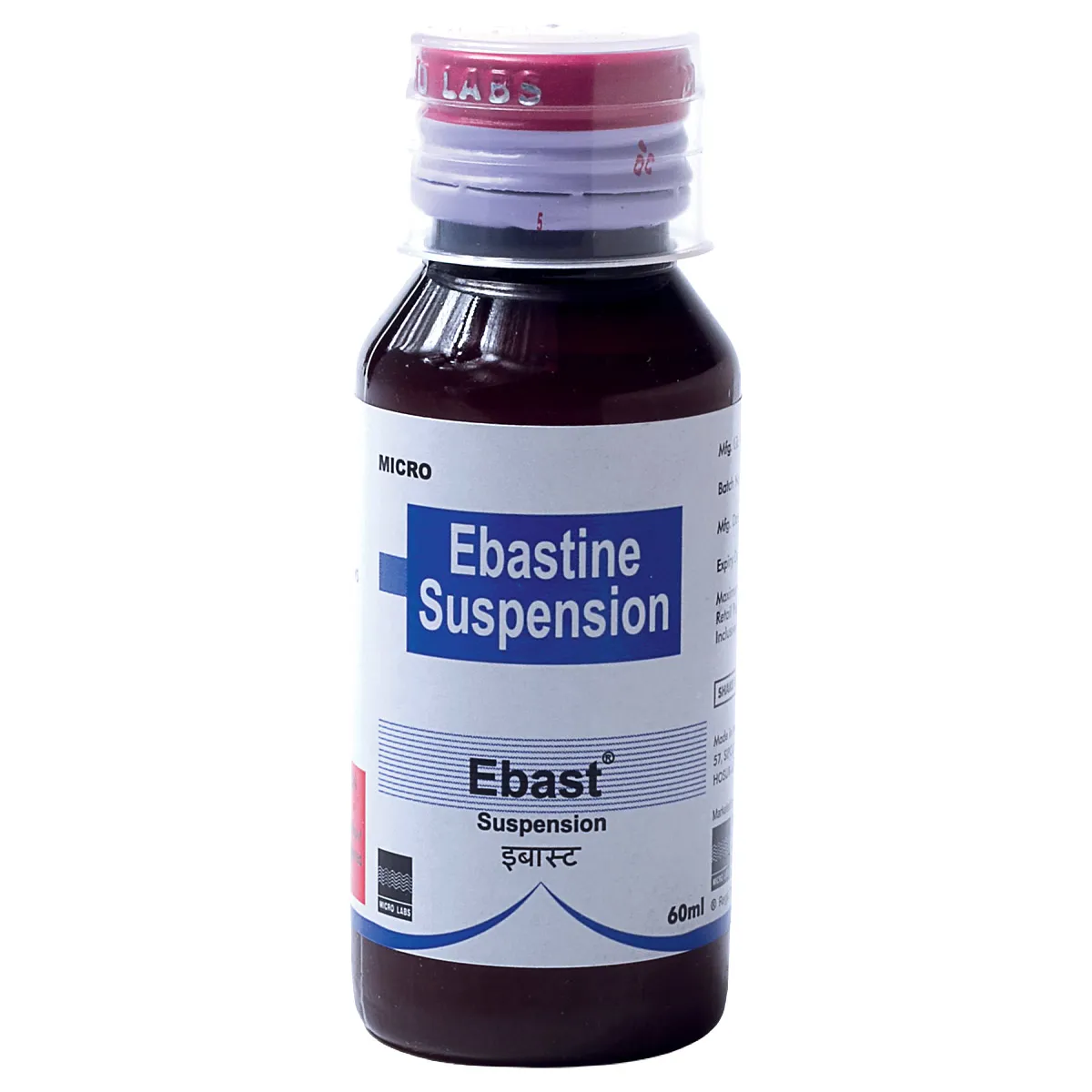
Ebast Syrup is a syrup used to relieve allergy symptoms in children. It helps treat conditions like seasonal allergies (allergic rhinitis) and itchy skin rashes (hives). This medicine works by blocking natural allergy-causing substances in your child's body to provide comfort and relief.
For the best results, give this medicine to your child at the same time every day as directed by your doctor. It can be taken with or without food. Alongside this medicine, keeping your child away from known allergy triggers like dust, pollen, and pet dander can significantly help improve their symptoms.
Most children tolerate this medicine well, but some may experience mild side effects like drowsiness or a dry mouth. If your child develops rare but serious side effects, such as swelling of the face or difficulty breathing, stop giving the medicine and seek emergency medical help immediately.
Talk to your doctor before starting this medicine if your child has a history of liver damage or kidney issues. Do not give this medicine if your child has had an allergic reaction to any of its ingredients in the past.
This medicine may interact with other treatments, including certain antibiotics or antifungal medicines. Always tell your doctor or pharmacist about all other medicines your child is taking to ensure their safety.
Ebast Syrup is used to relieve allergy symptoms in children. The detailed uses of Ebast Syrup are as follows:
Ebast Syrup provides targeted support for managing allergy symptoms and helping children stay comfortable throughout the day. The key benefits of Ebast Syrup include:
Not applicable
-
Not applicable
-
Not applicable
-
Not applicable
-
Consult your doctor
If your child is suffering from liver disease, please inform the doctor.
Consult your doctor
If your child is suffering from kidney disease, please inform the doctor.
Safe if prescribed
Ebast Syrup is safe to use in children aged 2 years and above if prescribed by a doctor.
Caution
Ebast Syrup should be used with caution in children with heart problems, especially those with a history of cardiac arrhythmias or long QT syndrome, and only under medical supervision.
Not applicable
Ebast Syrup is specifically for children use and is not meant for geriatric patients.
Have a query?
The time required for Ebast Syrup to start to work: Ebast Syrup ideally shows its action within 1 to 3 hours after administration. The time for which the effects of Ebast Syrup last: The effect of Ebast Syrup lasts for 24 hours.
Login/Sign Up
Login/Sign Up
Disclaimer


