Apollo
logo
Select Delivery Location
prescription
Prescription Medicine
info
Best Price

₹107 with coupons & bank offers*

View

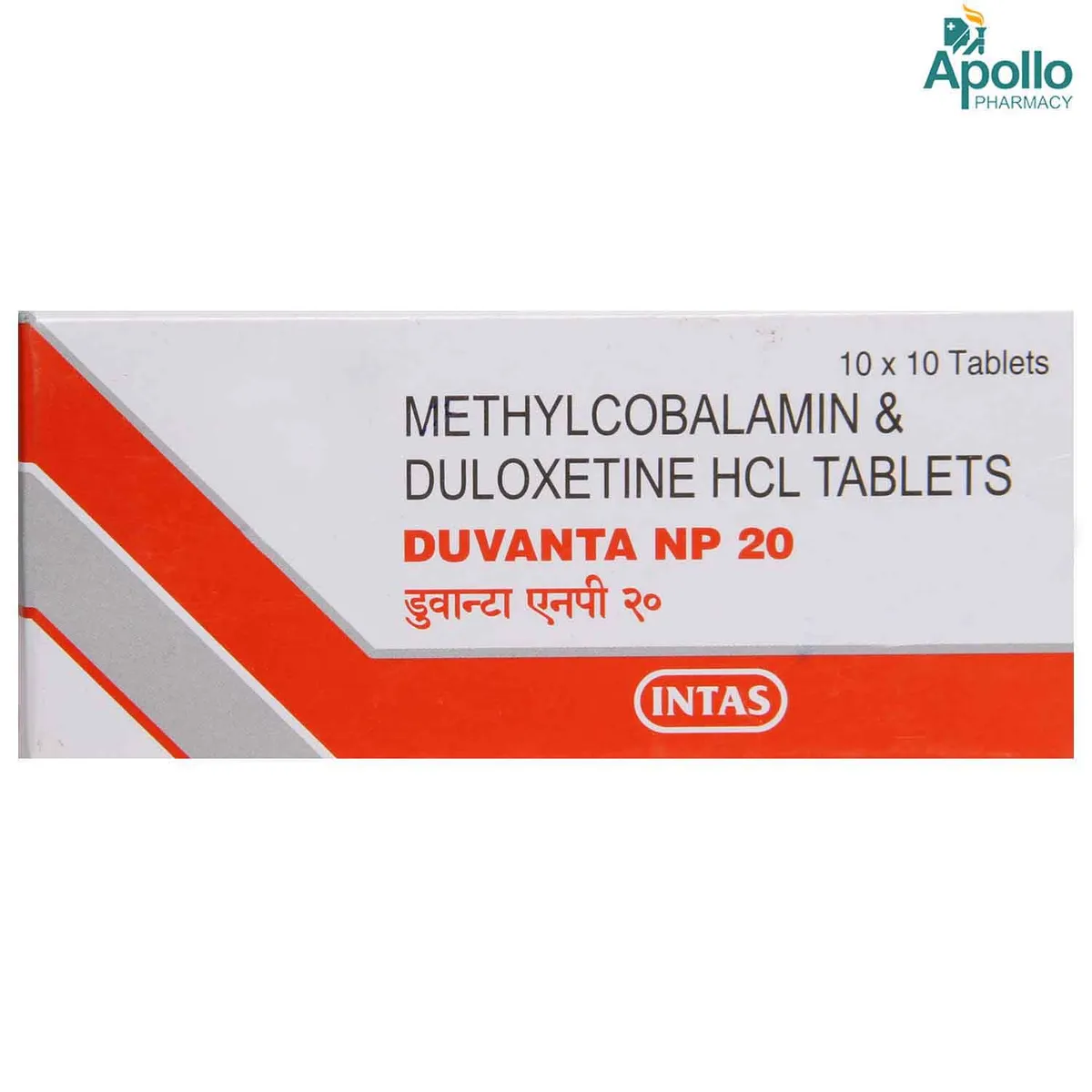
Duvanta NP 20 mg Tablet is used to treat neuropathic pain. It contains Duloxetine and Mecobalamin which help rejuvenate and protect damaged nerve cells by producing myelin. In some cases, this medicine may cause side effects such as nausea, constipation, headache, drowsiness, dry mouth, difficulty sleeping, and low sexual desire. Before taking this medicine, inform the doctor if you are pregnant or breastfeeding, taking any other medication, or have any pre-existing medical conditions.

Read more
Written By Santoshini Reddy G , M Pharmacy
Reviewed By Bayyarapu Mahesh Kumar , M Pharmacy
OffersOffers & Discounts

Get Free delivery (₹99) with circle icon

Join Circle
coupon
Get Extra 18% Off with Coupons
coupon
Extra 10% Off with Bank Offers
bank offer
bank offer
bank offer

More about the Product

Manufacturer/Marketer :

Intas Pharmaceuticals Ltd

Consume Type :

Oral

Expires on or after :

Jan-27

Return Policy :

Not Returnable

About Duvanta NP 20 mg Tablet

Duvanta NP 20 mg Tablet is a prescription medication primarily used to manage ongoing nerve pain associated with conditions like diabetes. It helps ease burning, stabbing, or tingling sensations in your hands and feet by modifying pain signals in the nervous system. By targeting both nerve discomfort and nerve health, this medication helps you regain comfort in your daily life.

To get the most benefit, you should take Duvanta NP 20 mg Tablet consistently every day at the same time as directed by your healthcare provider. You can take this tablet with or without food, though taking it with a meal can help if you experience mild stomach upset. Making simple lifestyle adjustments, such as keeping your blood sugar steady and staying physically active, can significantly improve your results.

While taking this medication, you may experience some mild, temporary side effects such as nausea, dry mouth, or drowsiness. However, you should consult your doctor immediately if you experience severe symptoms like a sudden change in mood, yellowing of your skin or eyes, or signs of an allergic reaction. Your safety is a priority, so always keep your healthcare team informed of any unusual changes.

Before starting Duvanta NP 20 mg Tablet , tell your doctor if you have a history of liver or kidney disease, high blood pressure, or glaucoma. Do not take this medicine if you have severe liver damage or are currently taking monoamine oxidase inhibitors (MAOIs). Knowing your health history allows your doctor to prescribe this medication safely.

If you are pregnant, breastfeeding, or an elderly individual, consult your doctor to ensure this treatment is safe and appropriate for your specific needs.

Uses of Duvanta NP 20 mg Tablet

Your doctor may prescribe this medicine to treat several conditions, including:

  • Diabetic Neuropathy: Relieves persistent nerve pain, burning, and tingling in the extremities caused by long-term high blood sugar levels.
  • Neuropathic Pain: Eases nerve-related discomfort resulting from spinal injuries, shingles, or other medical conditions affecting the nervous system.
  • Nutritional Support for Nerves: Helps protect and regenerate damaged nerve fibres, restoring normal sensation and reducing numbness.

Key Benefits

Duvanta NP 20 mg Tablet provides multiple benefits by relieving nerve pain, supporting nerve repair, and improving the overall quality of your life. Key benefits include:

  • Relieves Nerve Pain: This medication offers comprehensive relief by targeting the root causes of nerve discomfort. Helps reduce burning, tingling, stabbing pain, and numbness caused by damaged nerves.  
  • Supports Nerve Repair: In addition to pain relief, this medication supports the body's natural nerve repair processes.
  • Enhances Sleep Quality: Over time, this dual action leads to reduced pain and improved mobility, sleep quality, and overall quality of life.
Side effects of Duvanta NP 20 Tablet
Here are the steps to manage Joint Pain caused by medication usage:
  • Please inform your doctor about joint pain symptoms, as they may adjust your medication regimen or prescribe additional medications to manage symptoms.
  • Your doctor may prescribe common pain relievers if necessary to treat joint discomfort.
  • Maintaining a healthy lifestyle is key to relieving joint discomfort. Regular exercise, such as low-impact sports like walking, cycling, or swimming, should be combined with a well-balanced diet. Aim for 7-8 hours of sleep per night to assist your body in repairing and rebuilding tissue.
  • Applying heat or cold packs to the affected joint can help reduce pain and inflammation.
  • Please track when joint pain occurs and any factors that may trigger it, and share this information with your doctor to help manage symptoms.
  • If your joint pain is severe or prolonged, consult a doctor to rule out any underlying disorders that may require treatment.
Here are the 7 steps to manage Dizziness caused by medication:
  • Inform your doctor about dizziness symptoms. They may adjust your medication regimen or prescribe additional medications to manage symptoms.
  • Follow your doctor's instructions for taking medication, and take it at the same time every day to minimize dizziness.
  • When standing up, do so slowly and carefully to avoid sudden dizziness.
  • Avoid making sudden movements, such as turning or bending quickly, which can exacerbate dizziness.
  • Drink plenty of water throughout the day to stay hydrated and help alleviate dizziness symptoms.
  • If you're feeling dizzy, sit or lie down and rest until the dizziness passes.
  • Track when dizziness occurs and any factors that may trigger it, and share this information with your doctor to help manage symptoms.
Dealing with Medication-Induced Headache:
  • Hydrate your body: Drink enough water to prevent dehydration and headaches.
  • Calm Your Mind: Deep breathing and meditation can help you relax and relieve stress.
  • Rest and Recharge: Sleep for 7-8 hours to reduce headache triggers.
  • Take rest: lie down in a quiet, dark environment.
  • Cold or warm compresses can help reduce tension.
  • Stay Upright: Maintain good posture to keep symptoms from getting worse.
  • To treat headaches naturally, try acupuncture or massage therapy.
  • Over-the-counter pain relievers include acetaminophen and ibuprofen.
  • Prescription Assistance: Speak with your doctor about more substantial drug alternatives.
  • Severe Headaches: Seek emergency medical assistance for sudden, severe headaches.
  • Frequent Headaches: If you get reoccurring headaches, consult your doctor.
  • Headaches with Symptoms: Seek medical attention if your headaches include fever, disorientation, or weakness.
Here are the steps to manage the medication-triggered Common Cold:
  • Inform your doctor about the common cold symptoms you're experiencing due to medication.
  • Your doctor may adjust your treatment plan, which could include changing your medication, adding new medications, or offering advice on managing your symptoms.
  • Practice good hygiene, including frequent handwashing, avoiding close contact with others, and avoiding sharing utensils or personal items.
  • Drink plenty of fluids, such as warm water or soup, to help thin out mucus.
  • Get plenty of rest and engage in stress-reducing activities to help your body recover. If your symptoms don't subside or worsen, consult your doctor for further guidance.
Overcome Medication-Induced Nausea: A 9-Step Plan
  • Inform your doctor about the nausea and discuss possible alternatives to the medication or adjustments to the dosage.
  • Divide your daily food intake into smaller, more frequent meals to reduce nausea.
  • Opt for bland, easily digestible foods like crackers, toast, plain rice, bananas, and applesauce.
  • Avoid certain foods that can trigger nausea, such as fatty, greasy, spicy, and smelly foods.
  • Drink plenty of fluids, such as water, clear broth, or electrolyte-rich beverages like coconut water or sports drinks.
  • Use ginger (tea, ale, or candies) to help relieve nausea.
  • Get adequate rest and also avoid strenuous activities that can worsen nausea.
  • Talk to your doctor about taking anti-nausea medication if your nausea is severe.
  • Record when your nausea occurs, what triggers it, and what provides relief to help you identify patterns and manage your symptoms more effectively.
Here are the steps to Dry Mouth (xerostomia) caused by medication:
  • Inform your doctor about dry mouth symptoms. They may adjust your medication regimen or prescribe additional medications to manage symptoms.
  • Drink plenty of water throughout the day to help keep your mouth moist and alleviate dry mouth symptoms.
  • Chew sugar-free gum or candies to increase saliva production and keep your mouth moisturized.
  • Use saliva substitutes, such as mouthwashes or sprays, only if your doctor advises them to help moisturize your mouth and alleviate dry mouth symptoms.
  • Avoid consuming smoking, alcohol, spicy or acidic foods, and other irritants that may aggravate dry mouth symptoms.
  • Schedule regular dental check-ups to keep track of your oral health and handle any dry mouth issues as they arise.
  • Drink water or other clear fluids.
  • To prevent worsening of pain, limit intake of tea, coffee, or alcohol.
  • Include bland foods like rice, toast, crackers, and rice in your diet.
  • Avoid lying down immediately after eating as it may cause indigestion or heartburn.
  • Avoid acidic and spicy food as it may cause indigestion.

Directions for Use

  • Duvanta NP 20 mg Tablet can be taken with or without food as advised by your doctor.
  • Follow your doctor’s instructions on the dosage and timing of this medication.
  • Swallow Duvanta NP 20 mg Tablet as a whole with a glass of water.
  • Do not crush, break, or chew it.

How Duvanta NP 20 mg Tablet Works

Duvanta NP 20 mg Tablet works through a dual-action mechanism that addresses both the symptoms and the physical structure of your nerves. The first active component is duloxetine, which functions in the brain and spinal cord, where it increases the levels of natural chemical messengers that regulate pain. By boosting these chemicals, it effectively stops pain signals from travelling to the brain, which lowers the amount of pain you feel. The second active component is mecobalamin, a specialised, highly absorbable form of vitamin B12. It plays an essential role in producing myelin, the protective sheath that covers and insulates your nerves. By supporting the repair of this protective coating, it helps restore proper nerve function, prevents further nerve damage, and reduces numbness.
bannner image

Alcohol

Unsafe

Avoid consumption of alcohol while taking Duvanta NP 20 mg Tablet as it may increase dizziness and sleepiness.

bannner image

Pregnancy

Caution

Avoid taking Duvanta NP 20 mg Tablet if you are pregnant unless prescribed by a doctor. Please consult your doctor if you have any concerns regarding this, your doctor will prescribe only if the benefits outweigh the risks.

bannner image

Breast Feeding

Caution

Consult your doctor before taking Duvanta NP 20 mg Tablet ; your doctor will decide whether Duvanta NP 20 mg Tablet can be taken by breastfeeding mothers or not.

bannner image

Driving

Unsafe

Duvanta NP 20 mg Tablet causes drowsiness, sleepiness. Do not drive or operate machinery unless you are alert.

bannner image

Liver

Caution

Dose adjustment may be needed in patients with liver impairment. Please consult your doctor if you have a liver impairment or any concerns regarding this.

bannner image

Kidney

Caution

Dose adjustment may be needed in patients with kidney impairment. Please consult your doctor if you have kidney impairment or any concerns regarding this.

bannner image

Children

Unsafe

Duvanta NP 20 mg Tablet should not be given to children and adolescents aged less than 18 years of age.

bannner image

Heart

Unsafe

Duvanta NP 20 mg Tablet is contraindicated in cardiac patients due to its adverse effects. However, if prescribed extreme caution should be exercised.

bannner image

Geriatrics

Caution

Duvanta NP 20 mg Tablet can be given in elderly patients with extreme caution, due to the cause of adverse effects.

What if I have taken an overdose of Duvanta NP 20 mg Tablet

If you suspect an overdose, or if you experience severe symptoms like extreme drowsiness, vomiting, or a rapid heart rate, seek immediate emergency medical attention.

Diet & Lifestyle Advise

  • Keep Blood Sugar Stable: If you have diabetes, managing your blood glucose levels within your target range is the most effective way to prevent further nerve damage.
  • Eat a Balanced Diet: Focus on foods naturally rich in B-vitamins, such as leafy green vegetables, eggs, fish, and lean meats, to support nerve health and repair.
  • Engage in Light Exercise: Regular, low-impact activities like walking, swimming, or stretching can improve blood circulation, which helps deliver essential nutrients to damaged nerves.
  • Inspect Your Feet Daily: Nerve damage can make it harder to feel minor injuries. Check your feet daily for cuts, blisters, or redness, and wear comfortable, supportive footwear.
health query

Have a query?

How Soon It Starts Working

The time required for Duvanta NP 20 mg Tablet to start to work: The time required for Duvanta NP 20 mg Tablet to show its action is unknown. The time for which the effects of Duvanta NP 20 mg Tablet last: The duration of action for Duvanta NP 20 mg Tablet is clinically unknown.

What if you forget to take Duvanta NP 20 mg Tablet

If you miss a dose, take it as soon as you remember. However, if it is almost time for your next scheduled dose, skip the missed one and continue with your regular schedule. Do not take a double dose to make up for a missed one.

Storage

• Store Duvanta NP 20 mg Tablet at room temperature, strictly between 20°C and 25°C (68°F to 77°F).

Drug Warnings

  • Do not stop taking this medication suddenly: Stopping abruptly can cause withdrawal symptoms like dizziness, headache, nausea, and irritability. Always consult your doctor to discuss gradually decreasing the dose.
  • Monitor your mood closely: Pay attention to any sudden shifts in your behaviour, anxiety levels, or thoughts, especially when first starting this medicine.
  • Avoid activities requiring alertness: Since this medication can cause drowsiness and dizziness, do not drive or operate heavy machinery until you know how it affects you.
  • Monitor your blood pressure: This medication can sometimes cause an increase in blood pressure, so it is important to have it checked regularly by a professional.
  • Do not start new medications without consulting your doctor: Over-the-counter pain relievers, cold medicines, and herbal supplements can interact with this medication and increase your risk of side effects.
  • Not Recommended for Children: Duvanta NP 20 mg Tablet is generally not recommended for children or adolescents unless prescribed by the doctor.
  • Monitor Mental Health: Like all antidepressant medicines, this medication can, in rare cases, increase thoughts of self-harm in some people, especially those under 25. If you or a family member notice such changes, contact your doctor immediately. 

Drug-Drug Interactions

verifiedApollotooltip

Some medicines can affect how Duvanta NP 20 mg Tablet works or increase the risk of side effects. Tell your doctor about all the medicines and supplements you are taking.

  • Monoamine Oxidase Inhibitors (MAOIs): Do not take this medication within 14 days of taking an MAOI, as this can cause a life-threatening increase in serotonin levels.
  • Blood Thinners: Combining this medicine with blood thinners, aspirin, or nonsteroidal anti-inflammatory drugs (NSAIDs) can increase your risk of bleeding or bruising.
  • Other Serotonergic Medications: Taking this with other antidepressants or migraine medicines can increase the risk of a rare but serious condition called serotonin syndrome.

Drug-Drug Interactions

Login/Sign Up

How does the drug interact with Duvanta NP 20 Tablet:
Taking Tranylcypromine with Duvanta NP 20 Tablet can increase the risk of serotonin syndrome(a condition in which a chemical called serotonin increases in the body).

How to manage the interaction:
Although taking Duvanta NP 20 Tablet with tranylcypromine is not recommended, they can be taken if prescribed by a doctor. However, consult a doctor if you experience confusion, hallucinations (seeing and hearing things that do not exist), fits, blood pressure alteration, increased heart rate, fever, excessive sweating, shivering or shaking, blurred vision, pain in the muscles or stiffness, stomach cramps, nausea, vomiting, and loose stools. Do not discontinue any medications without consulting a doctor.
How does the drug interact with Duvanta NP 20 Tablet:
Taking Rasagiline with Duloxetine can increase the risk of serotonin syndrome (a condition in which a chemical called serotonin increases in the body).

How to manage the interaction:
Although taking Duvanta NP 20 Tablet with Rasagiline is not recommended, they can be taken together if prescribed by a doctor. However, consult a doctor if you experience confusion, hallucinations (seeing and hearing things that do not exist), fits, blood pressure alteration, increased heart rate, fever, excessive sweating, shivering or shaking, blurred vision, pain in the muscles or stiffness, stomach cramps, nausea, vomiting, and loose stools. Do not discontinue any medications without consulting a doctor.
Critical
How does the drug interact with Duvanta NP 20 Tablet:
Taking phenelzine with duloxetine can increase the risk of serotonin syndrome(a condition in which a chemical called serotonin increase in your body).

How to manage the interaction:
Taking Duloxetine with Phenelzine is not recommended, they can be taken together if prescribed by a doctor. However, consult a doctor if you experience confusion, hallucinations (seeing and hearing things that do not exist), fits, blood pressure alteration, increased heart rate, fever, excessive sweating, shivering or shaking, blurred vision, pain in the muscles or stiffness, stomach cramps, nausea, vomiting, and loose stools. Do not discontinue any medications without consulting a doctor.
How does the drug interact with Duvanta NP 20 Tablet:
Taking Duvanta NP 20 Tablet with Linezolid can increase the risk of serotonin syndrome(a condition in which a chemical called serotonin increases in the body).

How to manage the interaction:
Although taking Duvanta NP 20 Tablet with Linezolid is not recommended, they can be taken together if prescribed by a doctor. However, consult a doctor if you experience confusion, hallucinations (seeing and hearing things that do not exist), fits, blood pressure alteration, increased heart rate, fever, excessive sweating, shivering or shaking, blurred vision, pain in the muscles or stiffness, stomach cramps, nausea, vomiting, and loose stools. Do not discontinue any medications without consulting a doctor.
How does the drug interact with Duvanta NP 20 Tablet:
Taking Duvanta NP 20 Tablet with selegiline may increase the risk of serotonin syndrome (a condition in which a chemical called serotonin increases in the body).

How to manage the interaction:
Although taking Duvanta NP 20 Tablet with Selegiline is not recommended, they can be taken together if prescribed by a doctor. However, consult a doctor if you experience confusion, hallucinations (seeing and hearing things that do not exist), fits, blood pressure alteration, increased heart rate, fever, excessive sweating, shivering or shaking, blurred vision, pain in the muscles or stiffness, stomach cramps, nausea, vomiting, and loose stools. Do not discontinue any medications without consulting a doctor.
How does the drug interact with Duvanta NP 20 Tablet:
Co-administration of safinamide with Duvanta NP 20 Tablet can increase the risk of serotonin syndrome (a condition in which a chemical called serotonin increases in the body).

How to manage the interaction:
Although taking Duvanta NP 20 Tablet with Safinamide is not recommended, they can be taken together if prescribed by a doctor. However, consult a doctor if you experience confusion, hallucinations (seeing and hearing things that do not exist), fits, blood pressure alteration, increased heart rate, fever, excessive sweating, shivering or shaking, blurred vision, pain in the muscles or stiffness, stomach cramps, nausea, vomiting, and loose stools. Do not discontinue any medications without consulting a doctor.
Critical
How does the drug interact with Duvanta NP 20 Tablet:
Co-administration of eliglustat and Duvanta NP 20 Tablet can significantly increase the blood levels of eliglustat.

How to manage the interaction:
Taking Duvanta NP 20 Tablet with Eliglustat is not recommended, but it can be taken together if prescribed by a doctor. However, consult a doctor if you experience sudden dizziness, lightheadedness, fainting, shortness of breath, chest pain, or tiredness. Do not discontinue any medications without consulting a doctor.
How does the drug interact with Duvanta NP 20 Tablet:
Taking Duvanta NP 20 Tablet with procarbazine can increase the risk of serotonin syndrome(a condition in which a chemical called serotonin increases in the body).

How to manage the interaction:
Although taking Duvanta NP 20 Tablet with Procarbazine is not recommended, they can be taken together if prescribed by a doctor. However, consult a doctor if you experience confusion, hallucinations (seeing and hearing things that do not exist), fits, blood pressure alteration, increased heart rate, fever, excessive sweating, shivering or shaking, blurred vision, pain in the muscles or stiffness, stomach cramps, nausea, vomiting, and loose stools. Do not discontinue any medications without consulting a doctor.
How does the drug interact with Duvanta NP 20 Tablet:
Taking Duvanta NP 20 Tablet with Buspirone can increase the risk of serotonin syndrome(a condition in which a chemical called serotonin increases in the body).

How to manage the interaction:
Although taking Duvanta NP 20 Tablet with Buspirone is not recommended, they can be taken together if prescribed by a doctor. However, consult a doctor if you experience confusion, hallucinations (seeing and hearing things that do not exist), fits, blood pressure alteration, increased heart rate, fever, excessive sweating, shivering or shaking, blurred vision, pain in the muscles or stiffness, stomach cramps, nausea, vomiting, and loose stools. Do not discontinue any medications without consulting a doctor.
How does the drug interact with Duvanta NP 20 Tablet:
Taking Duvanta NP 20 Tablet with Lithium can increase the risk of serotonin syndrome(a condition in which a chemical called serotonin increases in the body).

How to manage the interaction:
Although taking Duvanta NP 20 Tablet with Lithium is not recommended, they can be taken together if prescribed by a doctor. However, consult a doctor if you experience confusion, hallucinations (seeing and hearing things that do not exist), fits, blood pressure alteration, increased heart rate, fever, excessive sweating, shivering or shaking, blurred vision, pain in the muscles or stiffness, stomach cramps, nausea, vomiting, and loose stools. Do not discontinue any medications without consulting a doctor.

Drug-Food Interactions

verifiedApollotooltip

Some foods and drinks may affect how Duvanta NP 20 mg Tablet works or increase the risk of side effects. Follow your doctor's advice on diet while using this medicine.

  • Alcohol: Consuming alcohol while taking this medicine increases the risk of liver damage and can worsen drowsiness and dizziness.
No Drug - Food interactions found in our database. Some may be unknown. Consult your doctor for what to avoid during medication.

Drug-Food Interactions

Login/Sign Up

Habit Forming

Yes

Therapeutic Class

[ANTIDEPRESSANT]

FAQs

Duvanta NP 20 mg Tablet is used for the management of neuropathic pain. It helps rejuvenate and protect damaged nerve cells by producing myelin.
Yes, some young people who have taken Duvanta NP 20 mg Tablet have experienced suicidal thoughts, so people of that age group should be monitored closely while on Duvanta NP 20 mg Tablet . Do not be reluctant to speak with your doctor immediately if you experience suicidal tendencies.
Duvanta NP 20 mg Tablet may cause changes in body weight. Some people may experience mild weight gain due to changes in appetite, while others may experience weight loss. Maintain a healthy diet and regular exercise. If you notice significant or unexplained weight changes, talk to your doctor.
Dry mouth could be a side-effect of Duvanta NP 20 mg Tablet . Limiting caffeine intake, avoiding smoking and mouthwashes containing alcohol, drinking water regularly, and chewing sugar-free gum/candy might stimulate saliva and prevent drying of the mouth.
Duvanta NP 20 mg Tablet is used to treat neuropathic pain due to diabetic neuropathy. Diabetic neuropathy is a condition in which nerve damage occurs due to high blood glucose levels. It mostly damages the nerves in legs and feet.
Duvanta NP 20 mg Tablet may cause sexual disturbances such as decreased sex drive and problems with erection. Consult your doctor if you have any concerns regarding this.
Duvanta NP 20 mg Tablet should be taken only for the duration prescribed by the doctor. As neuropathic pain is a chronic condition, it might be safe to take Duvanta NP 20 mg Tablet for a long time if prescribed by the doctor. Talk to the doctor if you have any concerns.
It might take a few weeks for you to feel better after starting Duvanta NP 20 mg Tablet . To treat your condition effectively, keep taking Duvanta NP 20 mg Tablet for as long as it has been prescribed by the doctor.
Duvanta NP 20 mg Tablet is indicated in the treatment of neuropathic pain. Consult the doctor if you have depression and/or diabetes; the doctor will prescribe the appropriate medicine based on your condition.
Duvanta NP 20 mg Tablet may cause side effects like nausea, constipation, headache, drowsiness, dry mouth, insomnia (difficulty in sleeping), erectile dysfunction, and low sexual desire. Most of these side effects of Duvanta NP 20 mg Tablet do not require medical attention and gradually resolve over time. However, if the side effects are persistent, reach out to your doctor.
Yes, you can take this medication with or without food. If you experience mild nausea or an upset stomach when taking it, taking it with a meal may help. Talk to your doctor if stomach discomfort continues.
No, you should avoid alcohol while on this medication. Alcohol significantly increases your risk of liver damage and can make side effects like drowsiness and dizziness much worse. Talk to your doctor if you have questions about alcohol use.
Do not stop taking Duvanta NP 20 mg Tablet suddenly, even if you feel well. Abrupt discontinuation may cause withdrawal symptoms such as nausea, dizziness, headache, or other symptoms. Continue taking it for as long as prescribed. If treatment needs to be stopped, your doctor will gradually reduce the dose.
Yes, this medication can sometimes cause an increase in blood pressure. Your healthcare provider will likely want to monitor your blood pressure regularly while you are taking this medicine. Talk to your doctor if you have a history of high blood pressure.
This medication should only be used during pregnancy if the potential benefit to the mother outweighs the potential risk to the developing baby. If you are pregnant or planning to become pregnant, talk to your doctor to discuss your treatment options.
Yes, drowsiness and dizziness are common side effects, especially when you first start taking the medication. Avoid driving, operating machinery, or performing tasks that require full mental alertness until you know how this medicine affects you. Talk to your doctor
If your pain doesn't improve after 4 to 8 weeks of taking Duvanta NP 20 mg Tablet as prescribed, schedule a follow-up appointment with your doctor.

Disclaimer

While we strive to provide complete, accurate, and expert-reviewed content on our 'Platform', we make no warranties or representations and disclaim all responsibility and liability for the completeness, accuracy, or reliability of the aforementioned content. The content on our platform is for informative purposes only, and may not cover all clinical/non-clinical aspects. Reliance on any information and subsequent action or inaction is solely at the user's risk, and we do not assume any responsibility for the same. The content on the Platform should not be considered or used as a substitute for professional and qualified medical advice. Please consult your doctor for any query pertaining to medicines, tests and/or diseases, as we support, and do not replace the doctor-patient relationship.

Country of origin

India

Manufacturer/Marketer address

Chinubhai Centre, Off. Nehru Bridge, Ashram Road, Ahmedabad - 380009. Gujarat. India.
Other Info - DUV0005
whatsapp Floating Button
Buy Now
Add to Cart