Apollo
logo
Select Delivery Location
prescription
Prescription Medicine
info
Best Price

₹165 with coupons & bank offers*

View

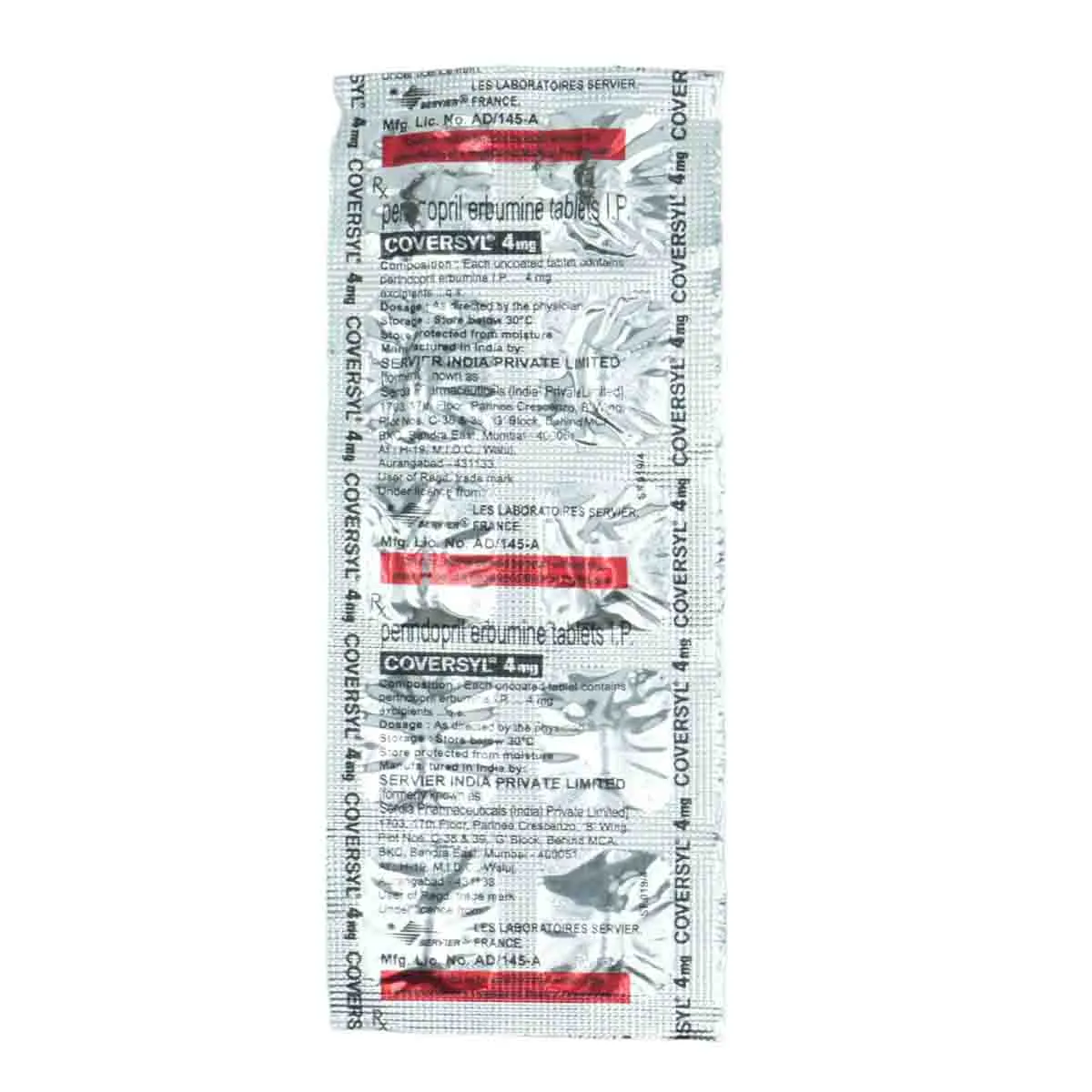
Coversyl 4 mg Tablet belongs to the class of antihypertensive medications used to treat high blood pressure. It also helps reduce the chances of heart problems such as a heart attack and stroke. This medication works by inhibiting angiotensin-converting enzyme, which lowers the body's production of angiotensin II, thereby widening blood vessels and reducing blood pressure. Common side effects include dizziness, weakness, blurred vision, nausea, and cough.

Read more
Written By Veda Maddala , M Pharmacy
Reviewed By Dr Aneela Siddabathuni , MPharma., PhD
OffersOffers & Discounts

Get Free delivery (₹99) with circle icon

Join Circle
coupon
Get Extra 18% Off with Coupons
coupon
Extra 10% Off with Bank Offers
bank offer
bank offer
bank offer

More about the Product

Consume Type :

Oral

Expires on or after :

Jan-27

Return Policy :

Not Returnable

About Coversyl 4 mg Tablet

Coversyl 4 mg Tablet is a prescription medicine used to treat high blood pressure (hypertension). It may also be prescribed to help manage heart failure and reduce the risk of heart attack and other cardiovascular events in people with stable coronary artery disease. It belongs to a group of medicines called angiotensin-converting enzyme (ACE) inhibitors.

It works by relaxing and widening blood vessels, making it easier for your heart to pump blood throughout the body. By lowering blood pressure and reducing the workload on the heart, this medicine helps protect your heart, brain, kidneys, and blood vessels from long-term damage.

For the best results, take Coversyl 4 mg Tablet exactly as prescribed, preferably at the same time each day. It is usually taken before meals, as food may reduce its absorption. Following a low-salt diet, exercising regularly, maintaining a healthy weight, and limiting alcohol intake can help improve blood pressure control.

Most people tolerate this medicine well, although some may experience a dry cough, dizziness, or light-headedness, especially when starting treatment. Your blood pressure may drop more than expected after the first dose, particularly if you are dehydrated or taking diuretics (water pills). If you feel dizzy, sit or lie down until you feel better and contact your doctor if the symptoms are severe or persistent. Seek immediate medical attention if you develop swelling of the face, lips, tongue, or throat, difficulty breathing, or other signs of a serious allergic reaction.

Do not take this medicine if you are pregnant, planning to become pregnant, or have a history of angioedema (severe allergic swelling). Before starting treatment, tell your doctor if you have kidney disease, liver disease, diabetes, heart valve disease, or are taking potassium supplements or diuretics. Older adults and people with kidney problems may require regular monitoring of blood pressure, kidney function, and potassium levels during treatment.

Uses of Coversyl 4 mg Tablet

Your doctor may prescribe Coversyl 4 mg Tablet to help manage the following conditions:

  • High blood pressure (hypertension): Coversyl 4 mg Tablet relaxes and widens your blood vessels, which lowers blood pressure and reduces the workload on your heart.
  • Stable coronary artery disease: For patients with existing heart disease, Coversyl 4 mg Tablet helps reduce the risk of experiencing a heart attack or cardiac arrest.
  • Heart failure: In appropriate patients, your doctor may prescribe this medicine to help reduce the workload on the heart, improve symptoms, and lower the risk of hospitalisation or cardiovascular complications.

Key Benefits

When used as directed as part of your treatment plan, Coversyl 4 mg Tablet may provide the following benefits: 

  • Lowers high blood pressure: Helps keep your blood pressure within a healthy range, reducing strain on your heart and blood vessels.
  • Protects your heart: Helps reduce the risk of heart attack and other cardiovascular complications in people with stable coronary artery disease.
  • Supports long-term heart health: By reducing the workload on your heart, it helps maintain healthy heart function over time.
  • Provides long-lasting blood pressure control: Its long-lasting action helps maintain stable blood pressure with once-daily dosing.
Side effects of Coversyl 4 mg Tablet
Here are the steps to manage the medication-triggered Cough:
  • Tell your doctor about the cough symptoms you're experiencing, which may be triggered by your medication.
  • Your doctor may adjust your treatment plan by changing your medication, adding new medications, or providing guidance on managing your cough symptoms.
  • Practice good hygiene, including frequent handwashing, avoiding close contact with others, and avoiding sharing utensils or personal items.
  • Stay hydrated by drinking plenty of fluids, such as water, tea, or soup, to help thin out mucus and soothe your throat.
  • Get plenty of rest and engage in stress-reducing activities to help your body recover. If your cough persists or worsens, consult your doctor for further guidance.
Managing Low Blood Pressure Triggered by Medication: Expert Advice:
  • If you experience low blood pressure symptoms like dizziness, lightheadedness, or fainting while taking medication, seek immediate medical attention.
  • Make lifestyle modifications and adjust your medication regimen under medical guidance to manage low blood pressure.
  • As your doctor advises, regularly check your blood pressure at home. Record your readings to detect any changes and share them with your doctor.
  • Fluid intake plays a vital role in managing blood pressure by maintaining blood volume, regulating blood pressure, and supporting blood vessel function. Drinking enough fluids helps prevent dehydration, maintain electrolyte balance, and regulate fluid balance.
  • Take regular breaks to sit or lie down if you need to stand for long periods.
  • When lying down, elevate your head with extra pillows to help improve blood flow.
  • Avoid heavy exercise or strenuous activities that can worsen low blood pressure.
  • Wear compression socks as your doctor advises to enhance blood flow, reduce oedema, and control blood pressure.
  • If symptoms persist or worsen, or if you have concerns about your condition, seek medical attention for personalized guidance and care.
  • Limit fruit intake to two servings a day, choose a low-potassium options like apples and strawberries.
  • Restrict starchy vegetables like potatoes and pumpkin to half a cup daily.
  • Avoid or limit foods like tomato products, high-bran cereals, and salty or sugary snacks.
  • Limit dairy products to 200g of yoghurt or 300ml of milk per day.
Dealing with Medication-Induced Headache:
  • Hydrate your body: Drink enough water to prevent dehydration and headaches.
  • Calm Your Mind: Deep breathing and meditation can help you relax and relieve stress.
  • Rest and Recharge: Sleep for 7-8 hours to reduce headache triggers.
  • Take rest: lie down in a quiet, dark environment.
  • Cold or warm compresses can help reduce tension.
  • Stay Upright: Maintain good posture to keep symptoms from getting worse.
  • To treat headaches naturally, try acupuncture or massage therapy.
  • Over-the-counter pain relievers include acetaminophen and ibuprofen.
  • Prescription Assistance: Speak with your doctor about more substantial drug alternatives.
  • Severe Headaches: Seek emergency medical assistance for sudden, severe headaches.
  • Frequent Headaches: If you get reoccurring headaches, consult your doctor.
  • Headaches with Symptoms: Seek medical attention if your headaches include fever, disorientation, or weakness.
  • Rest well; get enough sleep.
  • Eat a balanced diet and drink enough water.
  • Manage stress with yoga and meditation.
  • Limit alcohol and caffeine.
  • Physical activities like walking or jogging might help boost energy and make you feel less tired.
Here are the seven steps to manage medication-triggered Dyspnea (Difficulty Breathing or Shortness of Breath):
  • Tell your doctor immediately if you experience shortness of breath after taking medication.
  • Your doctor may adjust the medication regimen or dosage or give alternative medical procedures to minimize the symptoms of shortness of breath.
  • Monitor your oxygen levels and breathing rate regularly to track changes and potential side effects.
  • For controlling stress and anxiety, try relaxation techniques like deep breathing exercises, meditation, or yoga.
  • Make lifestyle changes, such as quitting smoking, exercising regularly, and maintaining a healthy weight.
  • Seek emergency medical attention if you experience severe shortness of breath, chest pain, or difficulty speaking.
  • Follow up regularly with your doctor to monitor progress, adjust treatment plans, and address any concerns or questions.
Overcome Medication-Induced Nausea: A 9-Step Plan
  • Inform your doctor about the nausea and discuss possible alternatives to the medication or adjustments to the dosage.
  • Divide your daily food intake into smaller, more frequent meals to reduce nausea.
  • Opt for bland, easily digestible foods like crackers, toast, plain rice, bananas, and applesauce.
  • Avoid certain foods that can trigger nausea, such as fatty, greasy, spicy, and smelly foods.
  • Drink plenty of fluids, such as water, clear broth, or electrolyte-rich beverages like coconut water or sports drinks.
  • Use ginger (tea, ale, or candies) to help relieve nausea.
  • Get adequate rest and also avoid strenuous activities that can worsen nausea.
  • Talk to your doctor about taking anti-nausea medication if your nausea is severe.
  • Record when your nausea occurs, what triggers it, and what provides relief to help you identify patterns and manage your symptoms more effectively.

Directions for Use

  • Coversyl 4 mg Tablet can be taken with or without food.
  • Generally, it is recommended to be taken once or twice a day. However, follow your doctor's instructions regarding dosage and timing for optimal results.
  • Swallow Coversyl 4 mg Tablet as a whole with a glass of water.
  • Do not crush, chew, or break it.

How Coversyl 4 mg Tablet Works

Coversyl 4 mg Tablet contains perindopril erbumine, an angiotensin-converting enzyme (ACE) inhibitor that helps lower blood pressure and reduce the workload on your heart. Perindopril erbumine blocks the action of the angiotensin-converting enzyme (ACE), which normally helps produce angiotensin II, a natural substance that causes blood vessels to narrow. By reducing the production of angiotensin II, the medicine relaxes and widens your blood vessels. As a result, blood flows more easily, your blood pressure decreases, and your heart does not have to work as hard to pump blood. Over time, this helps protect your heart and blood vessels and lowers the risk of complications such as heart attack and stroke.
bannner image

Alcohol

Unsafe

Alcohol may enhance the hypotensive (low blood pressure) effect of Coversyl 4 mg Tablet . It may also cause increased dizziness. For better advice, you should consult your doctor if you can take Coversyl 4 mg Tablet with alcohol.

bannner image

Pregnancy

Unsafe

Avoid taking Coversyl 4 mg Tablet if you are pregnant, especially if you are more than 3months pregnant, as it may cause harm to the developing fetus. Consult your doctor if you are pregnant or planning for pregnancy.

bannner image

Breast Feeding

Unsafe

Use of Coversyl 4 mg Tablet is not recommended during breastfeeding.

bannner image

Driving

Caution

Coversyl 4 mg Tablet may cause blurry vision, dizziness or weakness. Drive or operate machinery only when alert.

bannner image

Liver

Caution

Rare elevations in liver enzymes (such as bilirubin) have been observed while taking Coversyl 4 mg Tablet , so it must be taken with caution. If you have a history of liver disease or condition, your doctor may need to adjust the dose.

bannner image

Kidney

Caution

Coversyl 4 mg Tablet to be taken with caution, especially in case of severe kidney disease. The dose may have to be adjusted by your doctor. Coversyl 4 mg Tablet should be given with precaution in hemodialysis conditions.

bannner image

Children

Unsafe

The safety and effectiveness of Coversyl 4 mg Tablet in children under 18 years have not been established.

bannner image

Heart

Caution

Coversyl 4 mg Tablet should be taken with caution in patients with heart problems. Please inform your doctor if you have any pre-existing heart problems before using Coversyl 4 mg Tablet .

bannner image

Geriatrics

Caution

Coversyl 4 mg Tablet should be given with caution in elderly patients due to an increased risk of side effects. Please consult your doctor before using Coversyl 4 mg Tablet .

What if I have taken an overdose of Coversyl 4 mg Tablet

If you take too much of this medicine, you may experience severe dizziness, fainting, or a rapid heartbeat. Seek immediate emergency medical attention.

Diet & Lifestyle Advise

  • Limit your salt intake: Eat a low-sodium diet by avoiding processed foods and not adding extra salt to your meals, as sodium raises blood pressure.
  • Avoid potassium-rich salt substitutes: Do not use salt substitutes containing potassium without consulting your doctor, as this medicine can already raise your blood potassium levels.
  • Stay hydrated: Drink a healthy amount of water daily, but consult your doctor if you are on a fluid-restricted diet.
  • Exercise regularly: Engage in moderate aerobic activities like brisk walking for at least 30 minutes most days of the week, as recommended by your physician.
  • Limit alcohol consumption: Restrict your alcohol intake because alcohol can interact with this medicine to cause excessive dizziness or a sudden drop in blood pressure.
health query

Have a query?

How Soon It Starts Working

  • The time required for Coversyl 4 mg Tablet to start to work: Coversyl 4 mg Tablet starts to show its action within 1 to 2 hours of administration.
  • The time for which the effects of Coversyl 4 mg Tablet last: Coversyl 4 mg Tablet effect lasts for 24 hours.

What if you forget to take Coversyl 4 mg Tablet

If you miss a dose, take it as soon as you remember. However, if it is almost time for your next scheduled dose, skip the missed dose and continue with your normal schedule. Do not take a double dose to make up for a missed one.

Storage

•Store Coversyl 4 mg Tablet tablets at controlled room temperature, ideally between 20°C and 25°C (68°F to 77°F). •Keep the tablets in their original packaging to protect them from moisture and light.

Drug Warnings

Stand up slowly: To prevent dizziness or fainting when getting out of bed or a chair, rise slowly and sit on the edge for a few moments before standing.
Monitor your kidney function: Your doctor will likely order routine blood tests to check your kidney function and potassium levels while you are taking this medicine.
Avoid during pregnancy: Stop taking this medication immediately and contact your doctor if you discover you are pregnant, as it can cause serious injury or death to a developing fetus.
Watch for signs of infection: Contact your doctor if you develop a sore throat, fever, or other signs of infection, as this medicine can rarely lower your white blood cell count.
Inform your surgeon: If you are planning to have any surgery or dental procedure, tell your doctor or dentist that you take Coversyl 4 mg Tablet , as it can interact with anesthetics.

Drug-Drug Interactions

verifiedApollotooltip

The following medicines may interact with this medicine:

  • Potassium supplements or potassium-sparing diuretics (water pills): May increase potassium levels in your blood, which can become dangerous.
  • Pain relievers (NSAIDs), such as ibuprofen or naproxen: Regular use may reduce the blood pressure-lowering effect of this medicine and increase the risk of kidney problems.
  • Lithium: This medicine may increase lithium levels in the blood, increasing the risk of lithium toxicity.
  • Other blood pressure medicines, including aliskiren or angiotensin II receptor blockers (ARBs): Taking these medicines together may increase the risk of low blood pressure, high potassium levels, and kidney problems.
  • Sacubitril-containing medicines (such as sacubitril/valsartan): Do not take these medicines together or within 36 hours of each other, as this can greatly increase the risk of angioedema (severe swelling of the face, lips, tongue, or throat).

Drug-Drug Interactions

Login/Sign Up

How does the drug interact with Coversyl 4 mg Tablet:
Combining Aliskiren with Coversyl 4 mg Tablet can increase the risk of low blood pressure, high potassium levels, and kidney damage.

How to manage the interaction:
Taking Coversyl 4 mg Tablet with Aliskiren is not recommended, but can be taken if prescribed by a doctor. However, if you experience nausea, vomiting, weakness, confusion, tingling of the hands and feet, feelings of heaviness in the legs, a weak pulse, or a slow or irregular heartbeat contact your doctor immediately. Do not discontinue any medications without consulting a doctor.
How does the drug interact with Coversyl 4 mg Tablet:
Coadministration of Coversyl 4 mg Tablet with Valsartan may increase the risk of side effects (low blood pressure, kidney function impairment, and hyperkalemia (high blood potassium).

How to manage the interaction:
Although taking Coversyl 4 mg Tablet together with Valsartan may result in an interaction, they can be taken together if prescribed by a doctor. However, contact a doctor immediately if you experience symptoms such as nausea, vomiting, confusion, numbness, tingling in hands and feet, and irregular heartbeat, contact a doctor. Do not discontinue any medication without consulting a doctor.
PerindoprilPotassium hydrogencarbonate
Severe
How does the drug interact with Coversyl 4 mg Tablet:
Using Coversyl 4 mg Tablet together with potassium hydrogencarbonate may significantly increase potassium levels in the blood.

How to manage the interaction:
Co-administration of Coversyl 4 mg Tablet with Potassium hydrogencarbonate can possibly result in an interaction, but it can be taken if your doctor has advised it. However, if you experience nausea, vomiting, weakness, confusion, tingling of the hands and feet, feelings of heaviness in the legs, a weak pulse, or a slow or irregular heartbeat contact your doctor immediately. Do not stop using any medications without a doctor's advice. Do not discontinue any medications without first consulting your doctor.
How does the drug interact with Coversyl 4 mg Tablet:
Amiloride when taken with Coversyl 4 mg Tablet may cause a hyperkalemia (high potassium levels in blood).

How to manage the interaction:
Although taking amiloride and Coversyl 4 mg Tablet together can result in an interaction, it can be taken if a doctor has prescribed it. However, consult the doctor if you experience symptoms including fatigue, disorientation, numbness or tingling, and irregular heartbeats. Do not discontinue any medications without a doctor's advice.
PerindoprilMipomersen
Severe
How does the drug interact with Coversyl 4 mg Tablet:
Using Coversyl 4 mg Tablet together with mipomersen can increase the risk of liver problems.

How to manage the interaction:
Co-administration of Coversyl 4 mg Tablet with Mipomersen can possibly result in an interaction, but it can be taken if your doctor has advised it. However, if you experience fever, chills, joint pain or swelling, unusual bleeding or bruising, skin rash, itching, loss of appetite, fatigue, nausea, vomiting, abdominal pain, dark urine, pale stools, and/or yellowing of the skin or eyes contact your doctor immediately. Do not discontinue any medications without first consulting your doctor.
How does the drug interact with Coversyl 4 mg Tablet:
Using Coversyl 4 mg Tablet together with dalteparin may increase the risk of side effects of Coversyl 4 mg Tablet.

How to manage the interaction:
Taking Coversyl 4 mg Tablet with Dalteparin together can possibly result in an interaction, but it can be taken if your doctor has advised it. However, consult your doctor if you experience nausea, vomiting, weakness, confusion, tingling in your hands and feet, feelings of heaviness in your legs, a weak pulse, or a slow or irregular heartbeat. Do not discontinue any medications without consulting a doctor.
PerindoprilLomitapide
Severe
How does the drug interact with Coversyl 4 mg Tablet:
Taking Coversyl 4 mg Tablet with lomitapide can increase the risk of liver problems.

How to manage the interaction:
There may be a possibility of interaction between Coversyl 4 mg Tablet and Lomitapide, but it can be taken if prescribed by a doctor. However, if you experience fever, chills, joint pain or swelling, unusual bleeding or bruising, skin rash, itching, loss of appetite, fatigue, nausea, vomiting, abdominal pain, dark urine, pale stools, and/or yellowing of the skin or eyes contact your doctor immediately. Do not stop using any medications without talking to your doctor.
How does the drug interact with Coversyl 4 mg Tablet:
Using leflunomide together with Coversyl 4 mg Tablet can increase the risk of liver problems.

How to manage the interaction:
Although there is a possible interaction between Leflunomide and Coversyl 4 mg Tablet, you can take these medicines together if prescribed by your doctor. If you have any of these symptoms - fever, chills, joint pain, swelling, bruising, skin rash, itching, loss of appetite, fatigue, nausea, vomiting, abdominal pain, dark colored urine, liver damage or bleeding - make sure to contact your doctor right away. Do not stop using any medications without talking to your doctor.
PerindoprilPotassium gluconate
Severe
How does the drug interact with Coversyl 4 mg Tablet:
Combining Potassium gluconate with Coversyl 4 mg Tablet can cause hyperkalemia(high levels of potassium in blood) which increase the risk of kidney problems and abnormal heart rhythm..

How to manage the interaction:
Taking Coversyl 4 mg Tablet with Potassium gluconate together can possibly result in an interaction, but it can be taken if your doctor has advised it. However, if you experience nausea, vomiting, weakness, confusion, tingling of the hands and feet, feelings of heaviness in the legs, a weak pulse, or a slow or irregular heartbeat contact your doctor immediately. Do not stop using any medications without a doctor's advice. Do not discontinue any medications without first consulting your doctor.
PerindoprilPotassium citrate
Severe
How does the drug interact with Coversyl 4 mg Tablet:
Taking Potassium citrate with Coversyl 4 mg Tablet can cause hyperkalemia(a high level of the electrolyte potassium in the blood) which can increase the risk of kidney problems and abnormal heart rhythm.

How to manage the interaction:
Taking Coversyl 4 mg Tablet with Potassium citrate together can possibly result in an interaction, but it can be taken if your doctor has advised it. However, consult the doctor if you experience nausea, vomiting, weakness, disorientation, tingling in your hands and feet, feelings of heaviness in your legs, a weak pulse, or a slow or irregular heartbeat. It is essential to maintain proper fluid intake while taking these medications. It is advised to reduce the intake of potassium-rich foods. Do not discontinue any medications without a doctor's advice.

Drug-Food Interactions

verifiedApollotooltip

The following foods or drinks may affect how well this medicine works:

  • Potassium-rich foods and potassium-containing salt substitutes: Large amounts may increase potassium levels in your blood. Follow your doctor's advice about your dietary potassium intake.
  • Food: Food may reduce the absorption of perindopril. It is generally recommended to take this medicine before meals.
PERINDOPRIL ERBUMINE-4MGPotassium rich foods
Moderate

Drug-Food Interactions

Login/Sign Up

PERINDOPRIL ERBUMINE-4MGPotassium rich foods
Moderate
Common Foods to Avoid:
Lentils, Orange Juice, Oranges, Raisins, Potatoes, Salmon Dried, Spinach, Sweet Potatoes, Tomatoes, Coconut Water, Beans, Beetroot, Broccoli, Bananas, Apricots, Avocado, Yogurt

How to manage the interaction:
Taking Coversyl 4 mg Tablet with potassium-containing foods can increase the risk of hyperkalemia (high potassium levels in the blood). Avoid moderately high or high potassium dietary intake with Coversyl 4 mg Tablet, as it can lead to an interaction.

Habit Forming

No

Therapeutic Class

[ANTI- HYPERTENSIVES AND ACE INHIBITORS]

FAQs

Coversyl 4 mg Tablet is used to treat high blood pressure and heart failure. It is also used to reduce the risk of cardiac events like a heart attack in patients with coronary artery disease and who have had a heart attack and/or surgery to improve the blood supply to the heart.
Coversyl 4 mg Tablet relaxes and widens the blood vessels, thereby lowering the blood pressure and making it easier for the heart to pump blood throughout the body.
It is advised to continue taking Coversyl 4 mg Tablet even after your blood pressure is under control or becomes normal as blood pressure can shoot up at any time. If you have any discomfort, please consult your doctor immediately.
Coversyl 4 mg Tablet might alter potassium levels. Therefore inform your doctor if you are taking food rich in potassium, potassium-containing salt substitutes or over-the-counter potassium supplements.
Light-headedness could be a side-effect of Coversyl 4 mg Tablet . It occurs due to low blood pressure leading to dizziness on standing. If you experience this, do not try to stand up suddenly or start walking, instead lie down and get up slowly only when you feel better. People taking Coversyl 4 mg Tablet are advised to regularly monitor their blood pressure levels to avoid unpleasant events.
Inform your doctor if you are diabetic as Coversyl 4 mg Tablet may cause hypoglycaemia (low blood glucose levels). Regular monitoring of blood sugar levels is advised.
Coversyl 4 mg Tablet belongs to the antihypertensive medicines used to treat high blood pressure.
To manage high blood pressure, take your medication as prescribed and make healthy lifestyle choices. Eat a balanced diet, exercise regularly, limit sodium and alcohol, and manage stress. These changes can help lower your blood pressure and improve your overall health.
No, you should not discontinue Coversyl 4 mg Tablet without consulting your doctor. Even if you feel better, you should continue to take the medication as directed. Stopping abruptly might result in a sudden rise in blood pressure, leading to significant health issues. Your doctor will assess whether reducing or discontinuing your medication is safe based on your specific condition and blood pressure measurements.
Yes, Coversyl 4 mg Tablet may cause dizziness. This is a usual adverse effect, particularly when first starting the medicine. However, discomfort usually fades away after a few days or weeks as your body becomes used to the medicine. If the problem persists, visit your doctor.
The ideal time to take Coversyl 4 mg Tablet is typically in the morning. This helps to keep your blood pressure steady throughout the day. However, depending on your specific needs and medications, your doctor may recommend a different time. It's critical to follow their exact directions.
Yes, Coversyl 4 mg Tablet can raise potassium levels in the blood. This is because it inhibits the function of angiotensin II, a chemical that ordinarily causes the kidneys to retain sodium while losing potassium. If your potassium levels grow too high, you may experience major health problems, such as irregular heartbeat. Your doctor will likely order specific blood tests to monitor your potassium levels. If your potassium levels are too high, your doctor may change your perindopril dose or prescribe a medicine to help lower them.
Dry cough is a common side effect of Coversyl 4 mg Tablet . It's often a bother but usually resolves on its own within a few weeks. Talk to your doctor if the cough becomes severe or interferes with your daily activities. They may be able to adjust your dosage or prescribe a different medication.
There's no clear evidence to suggest that taking perindopril reduces fertility in either men or women. Seek medical attention if you have any concerns regarding this.
No, if you become pregnant while taking perindopril, inform your doctor immediately. The medication can harm the developing fetus.
Coversyl 4 mg Tablet may interact with other drugs, altering their efficacy or causing adverse effects. It is critical to tell your doctor about all medications you are taking, including over-the-counter treatments, herbal supplements, and prescription medications.
Before using this medication, you should inform your doctor about your medical history, including any ongoing medicines, to avoid potential interactions and minimise side effects.
Take the missed dose as soon as you remember, unless it's almost time for your next dose. In this case, skip the missed dose and take your next dose at the regular time. Never take a double dose to make up for a missed one.
Alcohol may enhance the hypotensive (low blood pressure) effect of Coversyl 4 mg Tablet . It may also cause increased dizziness. For better advice, you should consult your doctor if you can take Coversyl 4 mg Tablet with alcohol.
The symptoms of overdose include sleepiness, dizziness, and a pounding heartbeat. If you suspect you have taken an overdose or notice signs of overdose, please consult a doctor immediately.
No, Coversyl 4 mg Tablet should be swallowed whole with a glass of water. Crushing or chewing it may affect the medication's absorption.
Coversyl 4 mg Tablet can sometimes affect kidney function. Regular monitoring of kidney function is important, especially if you have pre-existing kidney problems.
Yes, Coversyl 4 mg Tablet can help reduce the risk of heart attack and stroke in people with high blood pressure or other cardiovascular risk factors.
Store Coversyl 4 mg Tablet in a dry place, away from heat and direct sunlight. Keep them out of the reach of children and pets.
Your doctor will determine the appropriate frequency of follow-up appointments based on your individual needs and blood pressure control. Regular monitoring is essential to ensure the medication is working effectively.
Yes, adopting a healthy lifestyle can enhance the benefits of Coversyl 4 mg Tablet . This includes maintaining a balanced diet, exercising regularly, managing stress, and limiting alcohol consumption.
This medicine prevents the breakdown of a natural substance in your body called bradykinin, which can accumulate in the lungs and trigger a dry, tickly cough in some people. This cough is harmless but can be bothersome. Talk to your doctor if the cough becomes difficult to manage.
It is highly recommended to take this medication on an empty stomach, preferably in the morning before breakfast. Food can decrease the absorption of the medicine, making it less effective. Talk to your doctor or pharmacist if you have trouble scheduling your doses.
Seek immediate emergency medical care if you notice swelling of your face, lips, tongue, or throat, or if you have difficulty breathing. This is a rare but serious allergic reaction that requires urgent treatment. Talk to your doctor immediately and stop taking the medicine.
Yes, you should avoid using potassium-containing salt substitutes and limit high-potassium foods like bananas, spinach, and sweet potatoes unless advised otherwise. This medicine can raise your blood potassium levels, and consuming extra potassium can be dangerous. Talk to your doctor or a registered dietitian for personalised dietary advice.

Disclaimer

While we strive to provide complete, accurate, and expert-reviewed content on our 'Platform', we make no warranties or representations and disclaim all responsibility and liability for the completeness, accuracy, or reliability of the aforementioned content. The content on our platform is for informative purposes only, and may not cover all clinical/non-clinical aspects. Reliance on any information and subsequent action or inaction is solely at the user's risk, and we do not assume any responsibility for the same. The content on the Platform should not be considered or used as a substitute for professional and qualified medical advice. Please consult your doctor for any query pertaining to medicines, tests and/or diseases, as we support, and do not replace the doctor-patient relationship.

Country of origin

India

Manufacturer/Marketer address

Serdia House, Off Dr. S S Rao Road, Behind M G Hospital Parel, Mumbai 400012
Other Info - COV0009
whatsapp Floating Button

Recommended for a 30-day course: 3 Strips

Buy Now
Add 3 Strips