
Welcome User
Login/Sign Up

Login/Sign Up
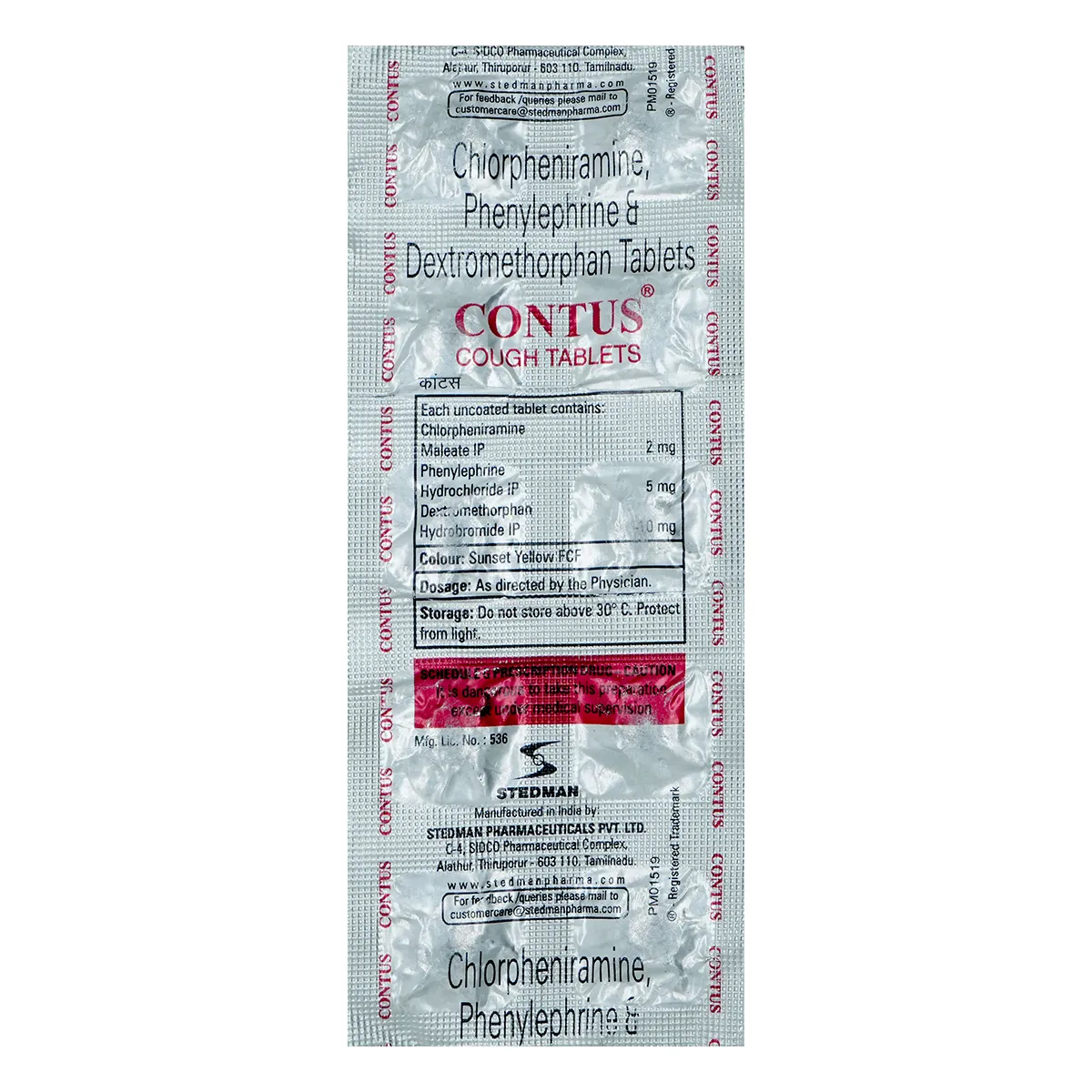
₹58
(Inclusive of all Taxes)
₹43 with coupons & bank offers*
Get Free delivery (₹99) with
Contus Tablet is an oral medication used to relieve symptoms associated with the common cold, flu, and upper respiratory allergies. It helps temporarily quiet a cough, thin out chest mucus, clear a stuffy nose, and reduce sneezing or a runny nose. By targeting multiple symptoms at once, it supports your recovery so you can rest more comfortably.
For best results, take this medicine consistently as directed, usually every 4 to 6 hours as needed, but do not exceed the recommended daily limit. You can take this medication with or without food. To help the medicine work more effectively, drink plenty of water throughout the day, as staying hydrated helps thin thick secretions in your airways.
Most people tolerate this medication well, but you may experience mild side effects such as drowsiness, dizziness, or a dry mouth. These symptoms are generally temporary, but if you experience serious issues like a rapid heart rate, severe anxiety, or a skin rash, stop taking the medication immediately. Always consult your doctor if any unexpected or severe symptoms occur.
Talk to your doctor before taking this medicine if you have certain pre-existing health conditions like high blood pressure, heart disease, diabetes, thyroid disorders, glaucoma, or trouble urinating due to an enlarged prostate. Do not take this if you are currently taking or have taken a monoamine oxidase inhibitor (MAOI) antidepressant within the past two weeks.
This medication can interact with other drugs, especially other sedatives, cold remedies, or blood pressure treatments, which may cause excessive sleepiness or a dangerous increase in blood pressure. If you are pregnant, breastfeeding, or managing medications for an elderly individual, consult your healthcare provider before starting this product to ensure safety.
Contus Tablet is used to treat symptoms associated with the common cold, flu, and upper respiratory allergies. The detailed uses of Contus Tablet are as follows:
Contus Tablet helps relieve multiple cold, cough, and allergy symptoms through a combination of active ingredients. By addressing several symptoms at once, it provides convenient symptom control and supports a more comfortable recovery.
Unsafe
Avoid consumption of alcohol with Contus Tablet as it may increase adverse effects. Please consult a doctor before consuming alcohol with Contus Tablet .
Caution
Please consult a doctor if you are pregnant. Contus Tablet is given to pregnant women only if the doctor thinks benefits outweigh risks.
Caution
It is unknown whether Contus Tablet is excreted in human milk. Contus Tablet is given to breastfeeding mothers only if the doctor thinks benefits are greater than risks.
Caution
Contus Tablet may impair thinking or cause blurred vision in some people. Therefore, drive only if you are alert after taking Contus Tablet .
Caution
Take Contus Tablet with caution, especially if you have a history of Liver diseases/conditions. The dose may be adjusted by your doctor as required.
Caution
Take Contus Tablet with caution, especially if you have a history of Kidney diseases/conditions. The dose may be adjusted by your doctor as required.
Consult your doctor
Please consult a doctor if you have any concerns regarding the usage of Contus Tablet for children.
Caution
Contus Tablet should be taken with caution in patients with heart problems. Please inform your doctor if you have any pre-existing heart problems. This medicine is contraindicated in patients with severe hypertension and coronary heart disease.
Caution
Extreme caution should be exercised in elderly patients during the treatment with Contus Tablet .
Have a query?
The time required for Contus Tablet to start to work: The time required for Contus Tablet to start to work is 30 minutes after administration. The time for which the effects of Contus Tablet last: The effect of Contus Tablet lasts for 6 to 8 hours.
Drug-Drug Interactions
Drug-Food Interactions
Drug-Disease Interactions
Login/Sign Up
Login/Sign Up
₹23.8
MRP ₹28
15% off
Disclaimer


